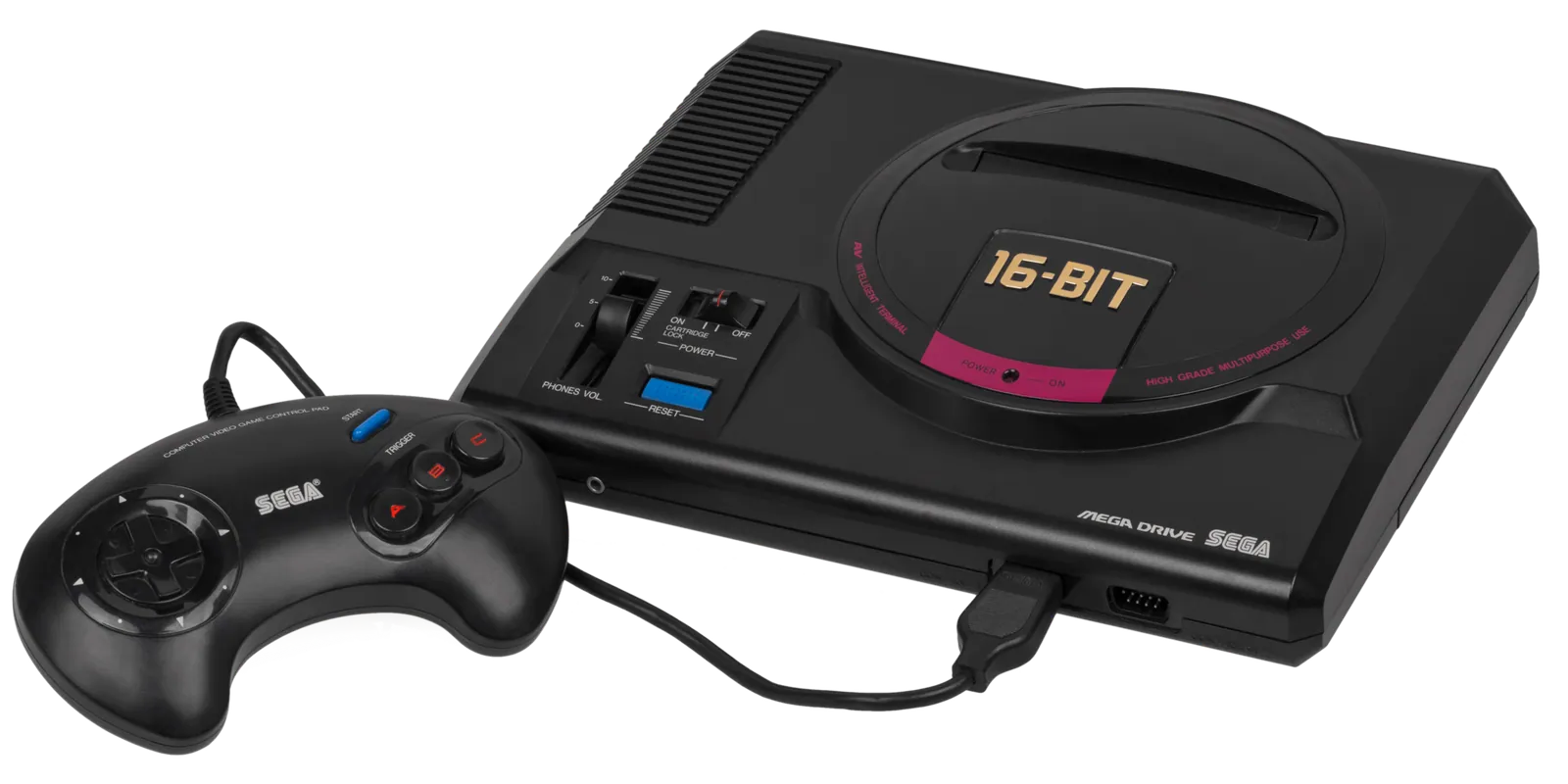
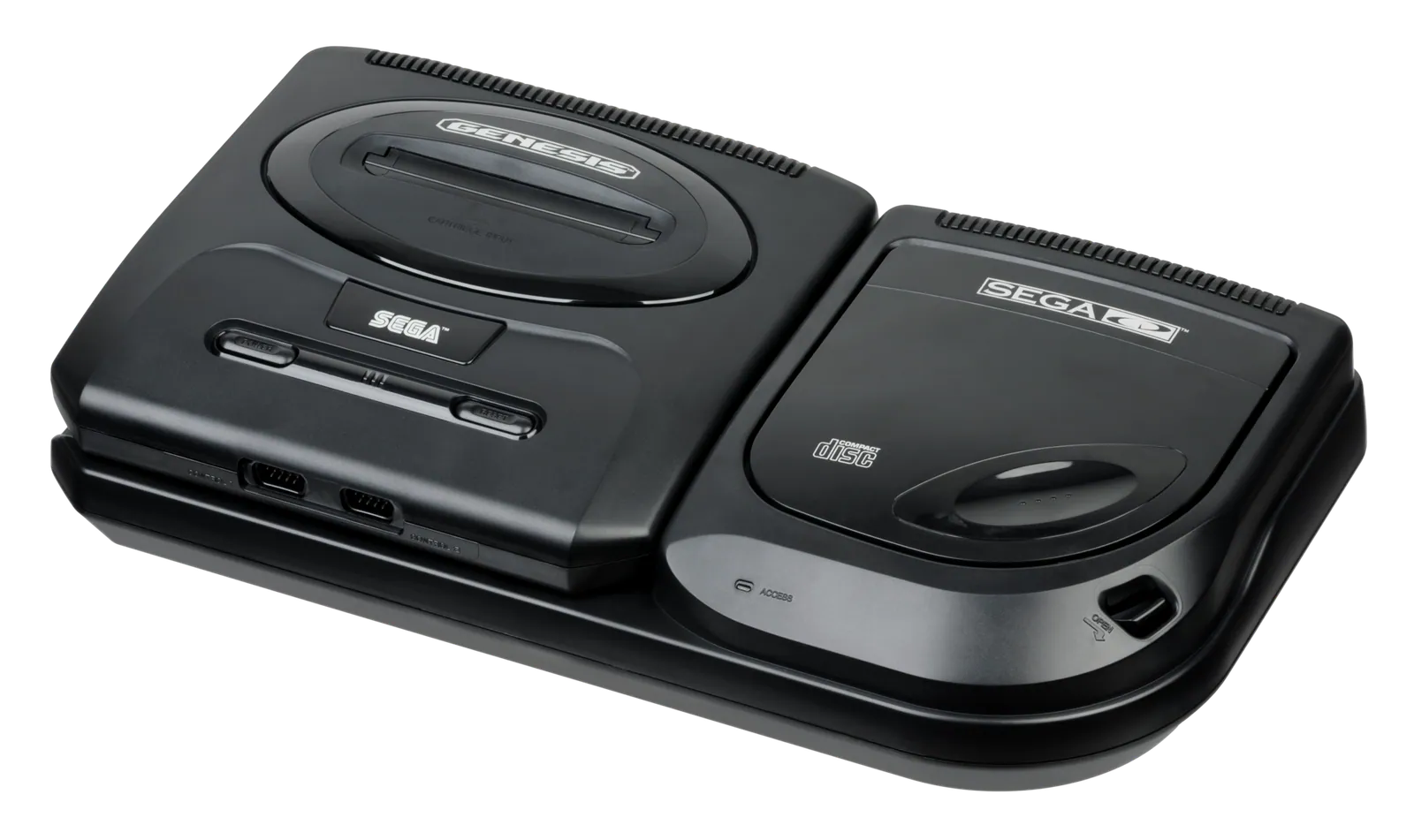
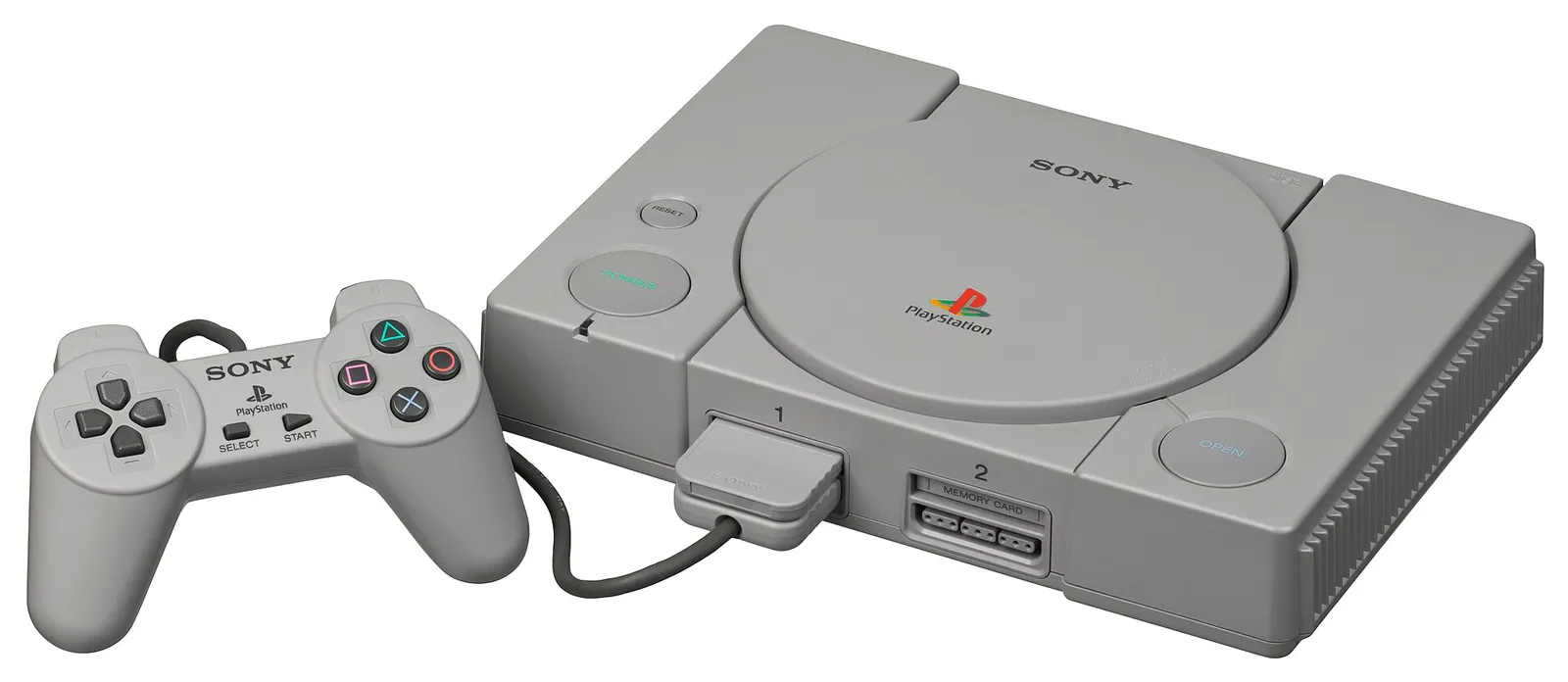
1983
■ GAMEPORT — Archive of Japanese Video Games
The Historyof JapaneseVideo Games.遊びが、文化になった。
04 — Opening
一本のカセットから、世界が始まった。
A whole worldinside a cartridge.This archive treats Japanese home and handheld consoles, and the games made for them, as a record of industrial design, technology and culture. Every date, price and specification is tied to a source, and every image on display has had its licence checked individually.
- Consoles
- 24
- Games
- 30
- Verified images
- 54
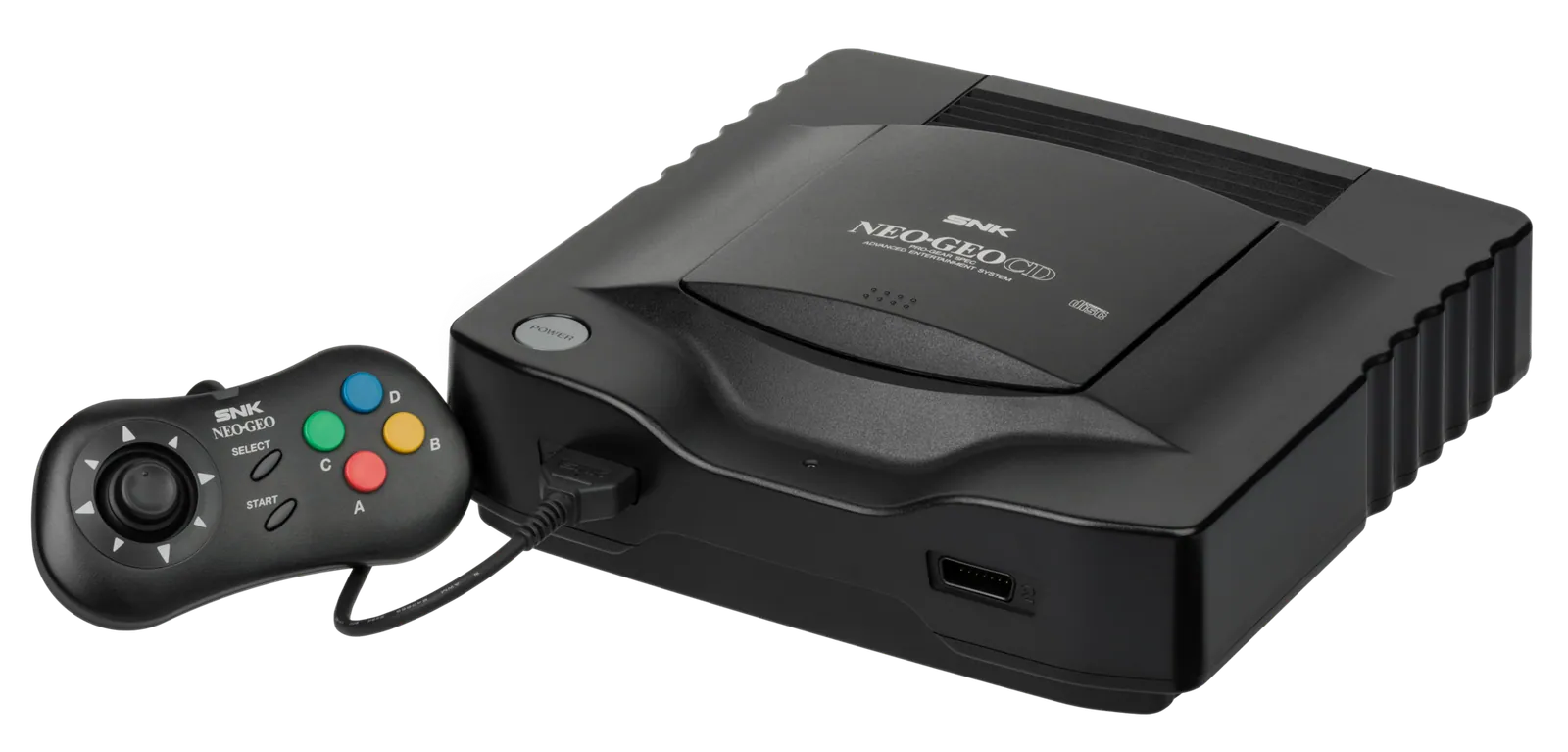
Neo Geo CD
SNK · 1994
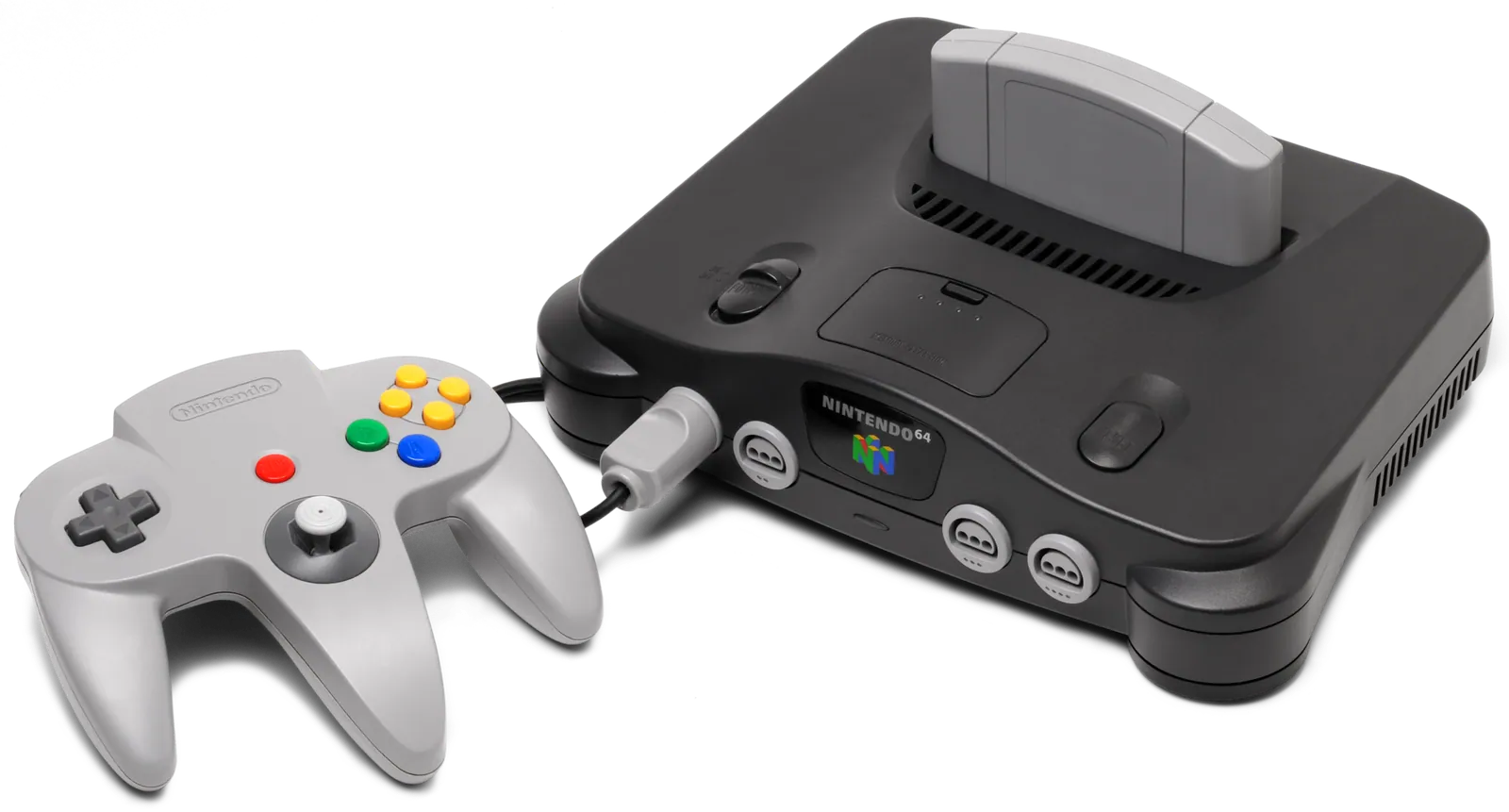
Nintendo 64
Nintendo · 1996
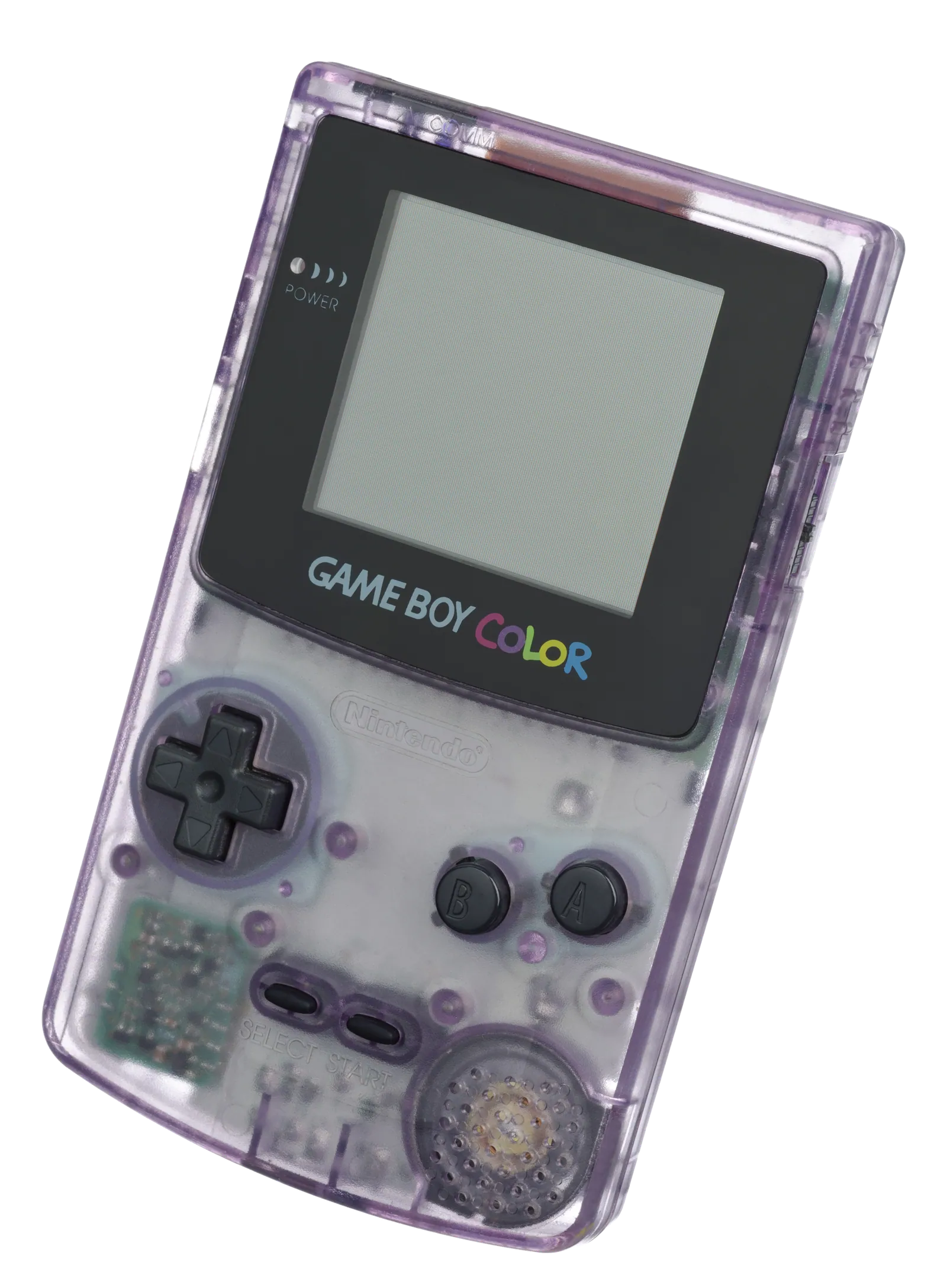
Game Boy Color
Nintendo · 1998
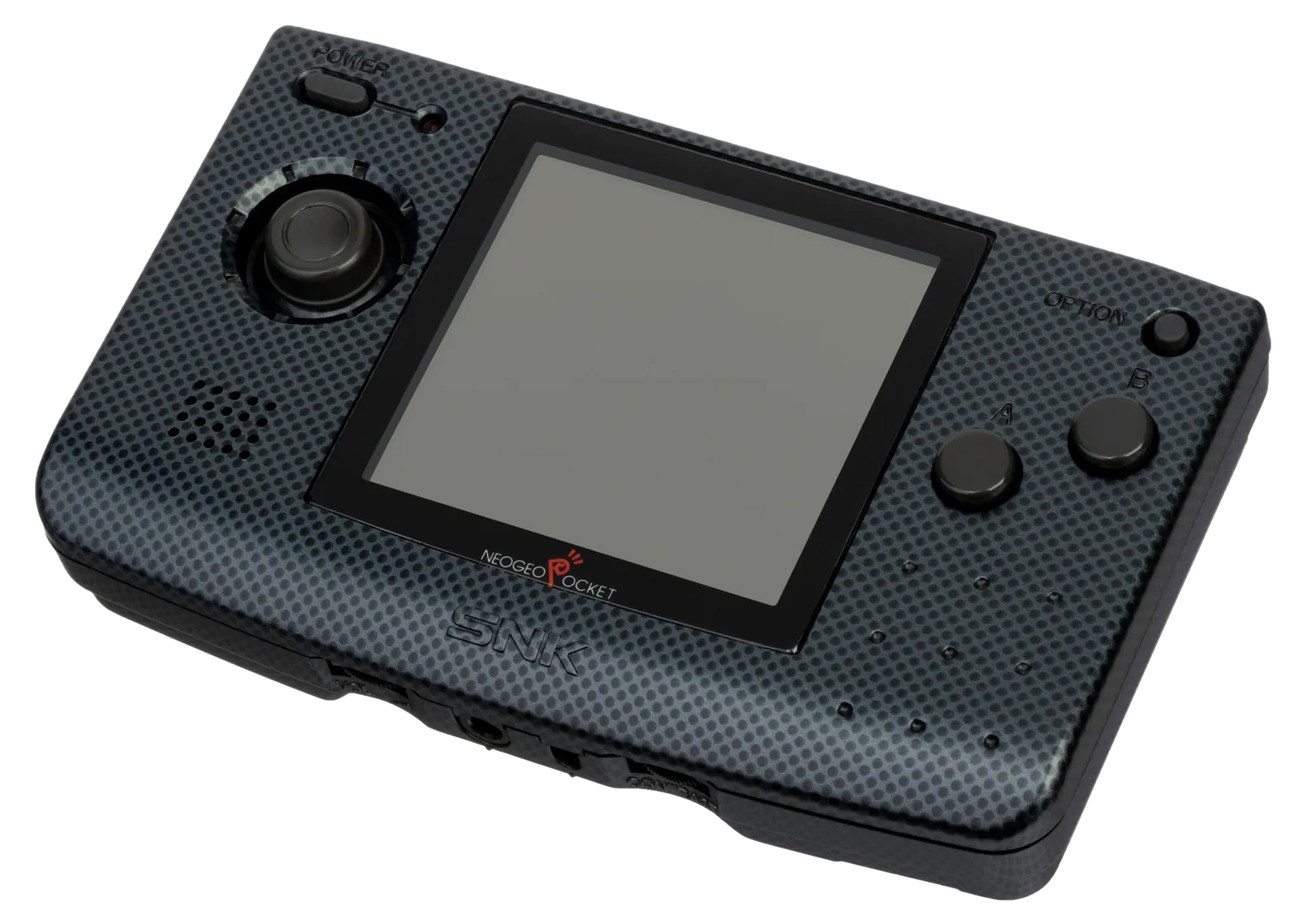
Neo Geo Pocket
SNK · 1998
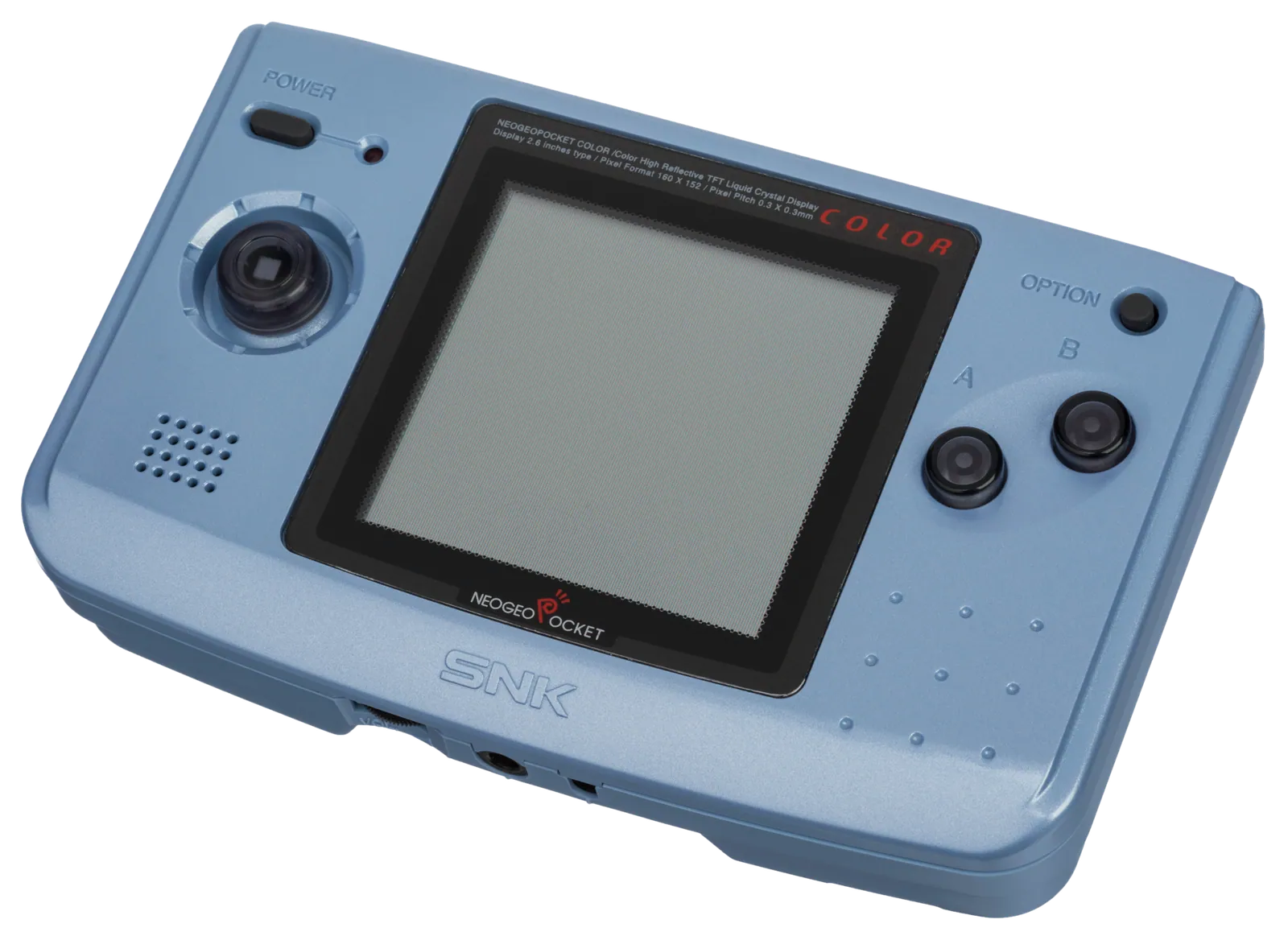
Neo Geo Pocket
SNK · 1998
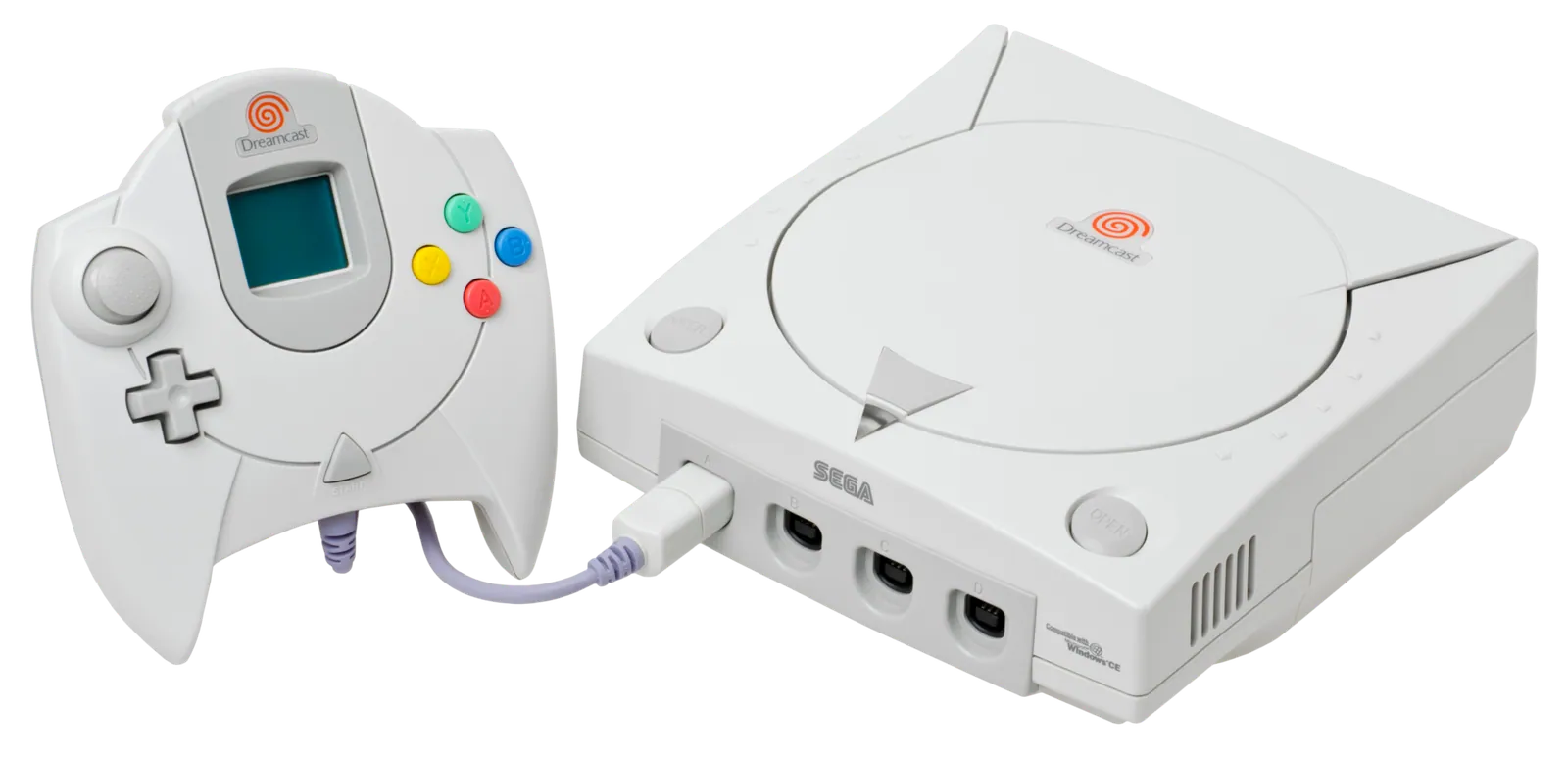
Dreamcast
SEGA · 1998
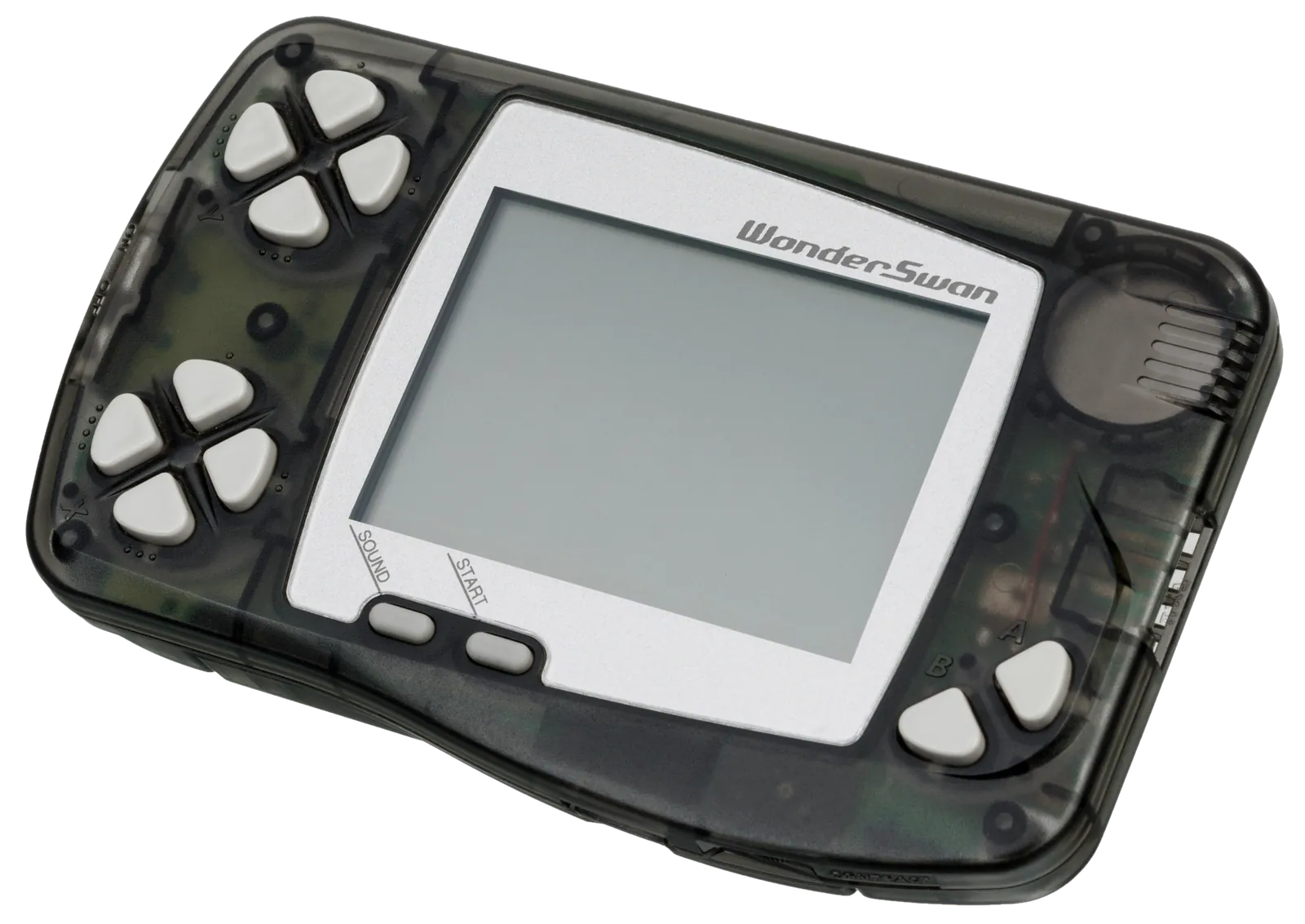
WonderSwan
Bandai · 1999
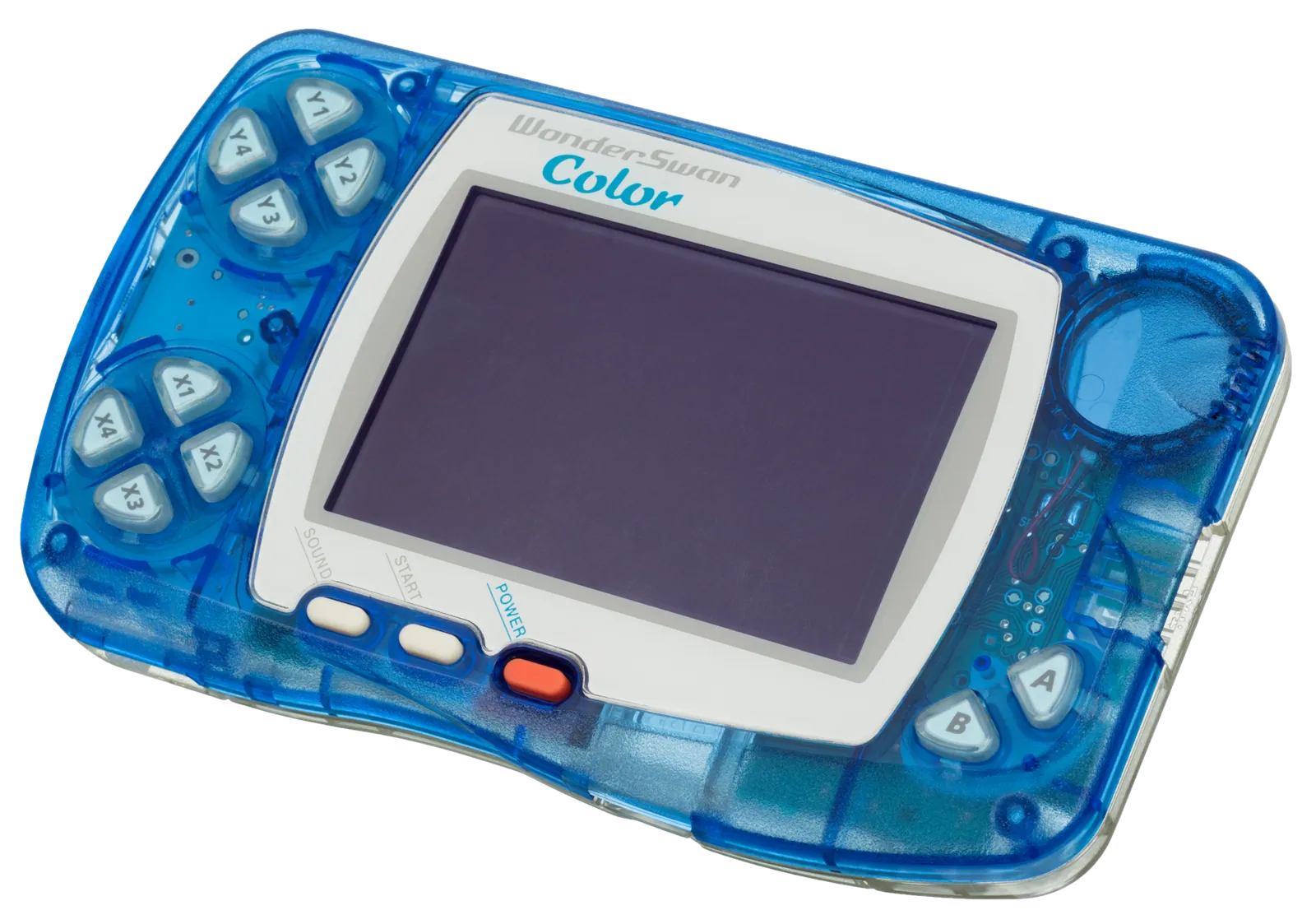
WonderSwan
Bandai · 1999
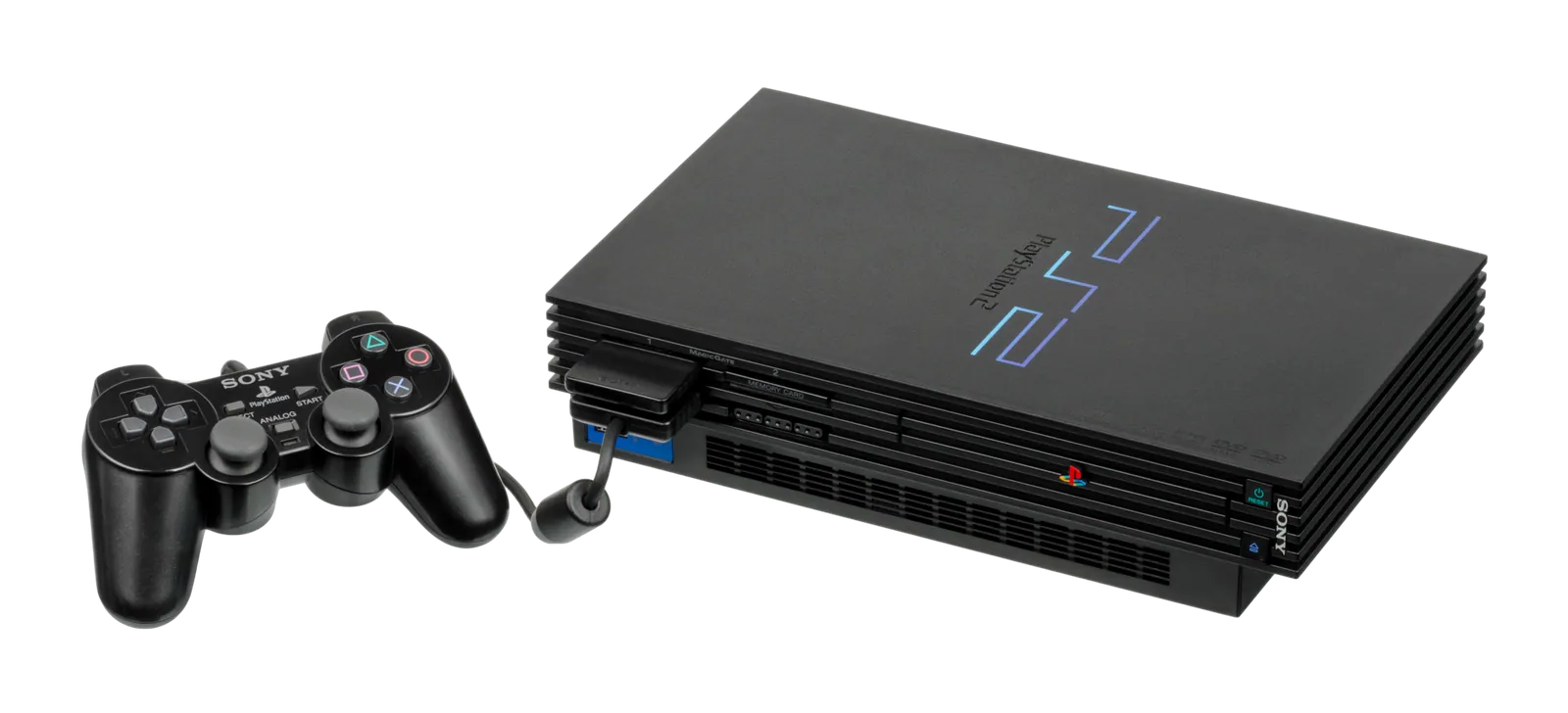
PlayStation 2
Sony · 2000
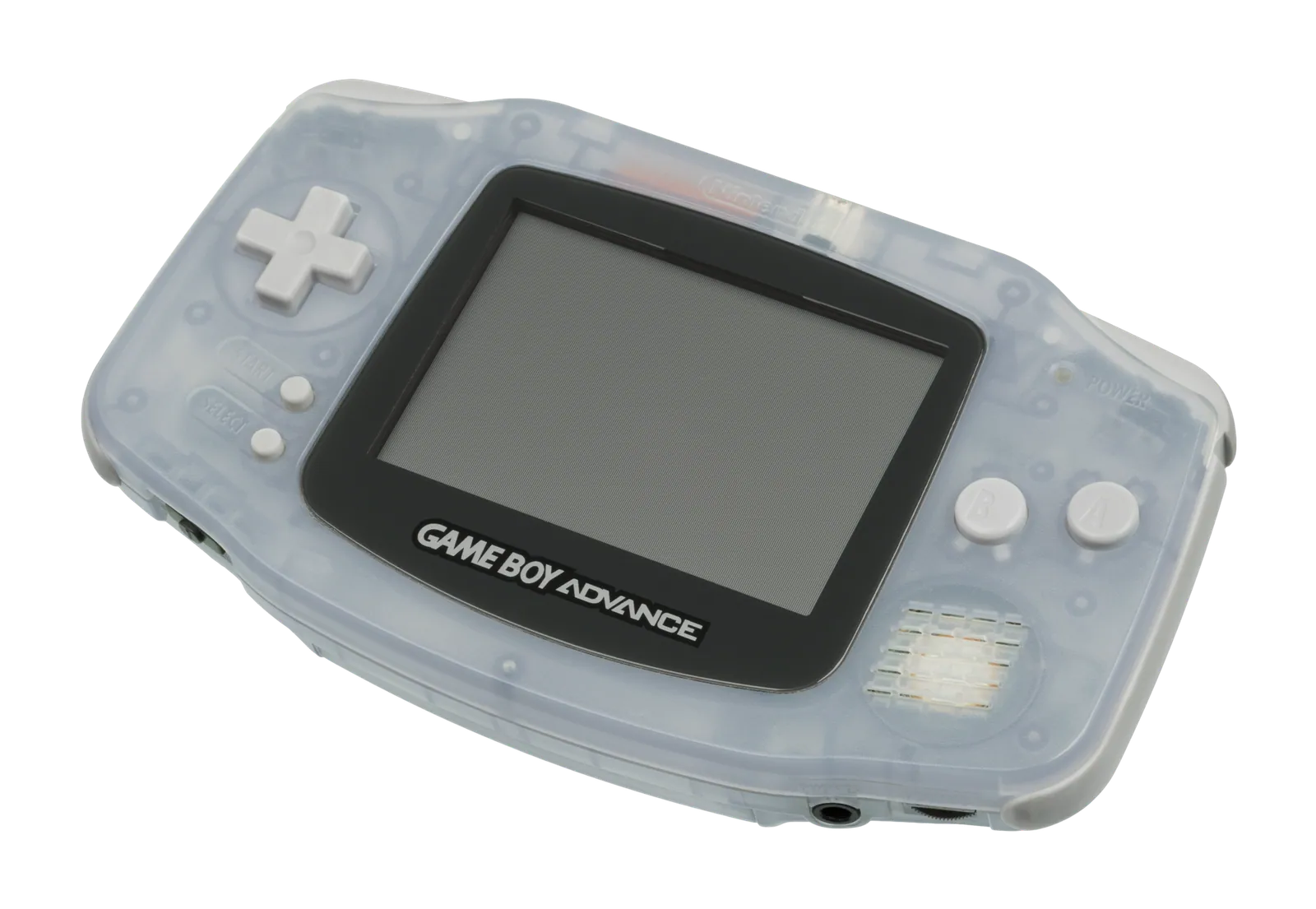
Game Boy Advance
Nintendo · 2001
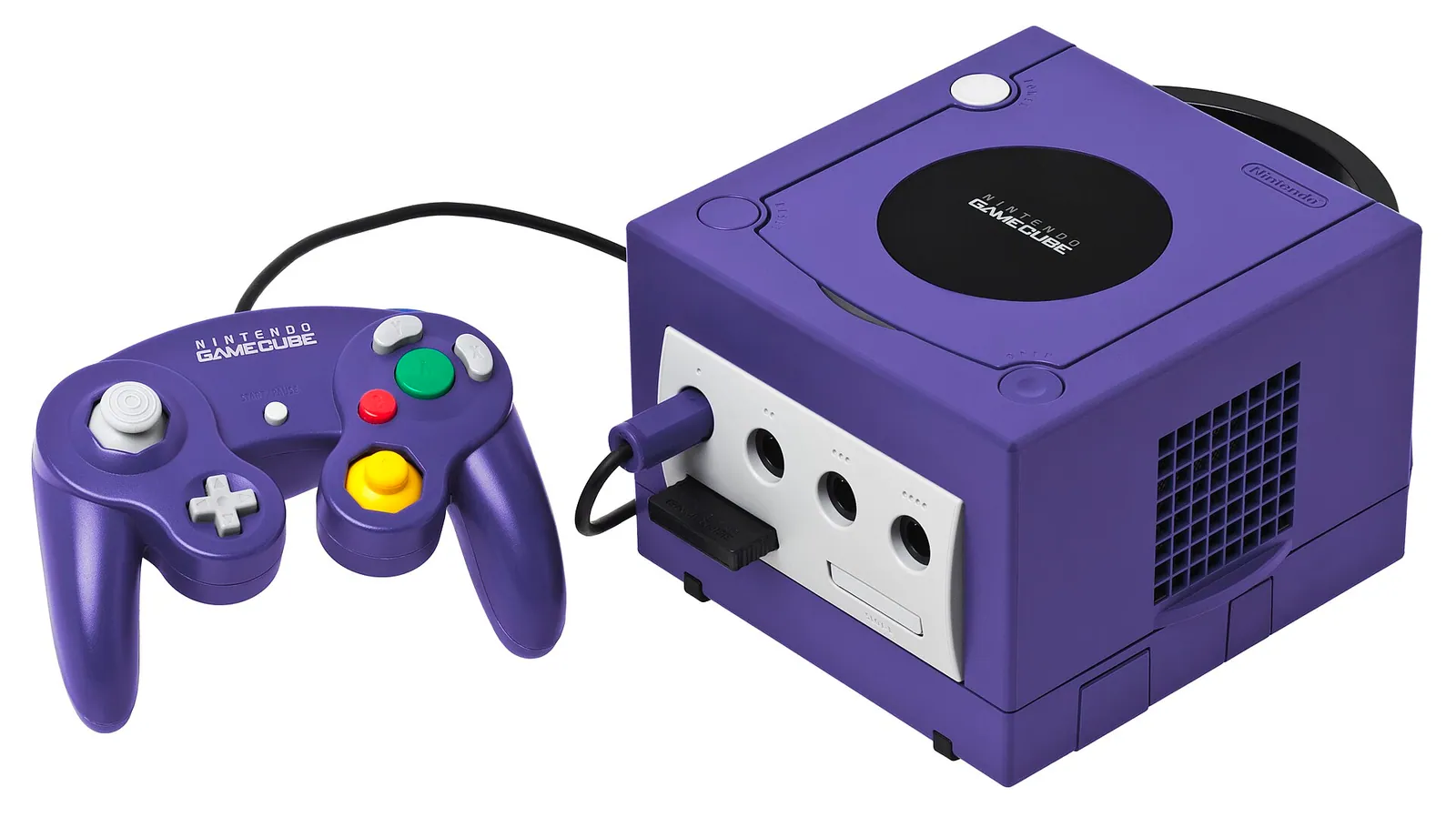
Nintendo GameCube
Nintendo · 2001
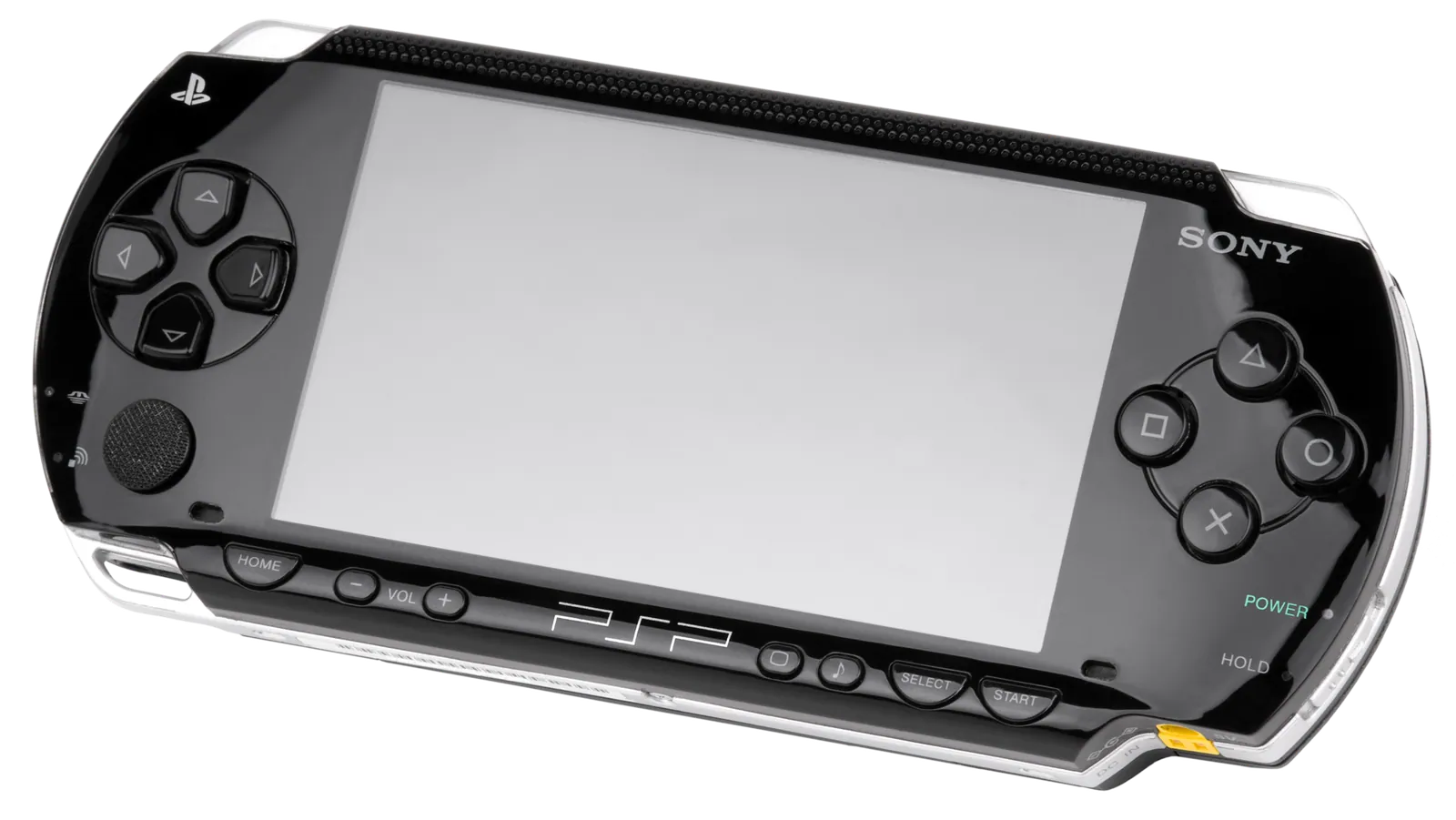
PlayStation Portable
Sony · 2004
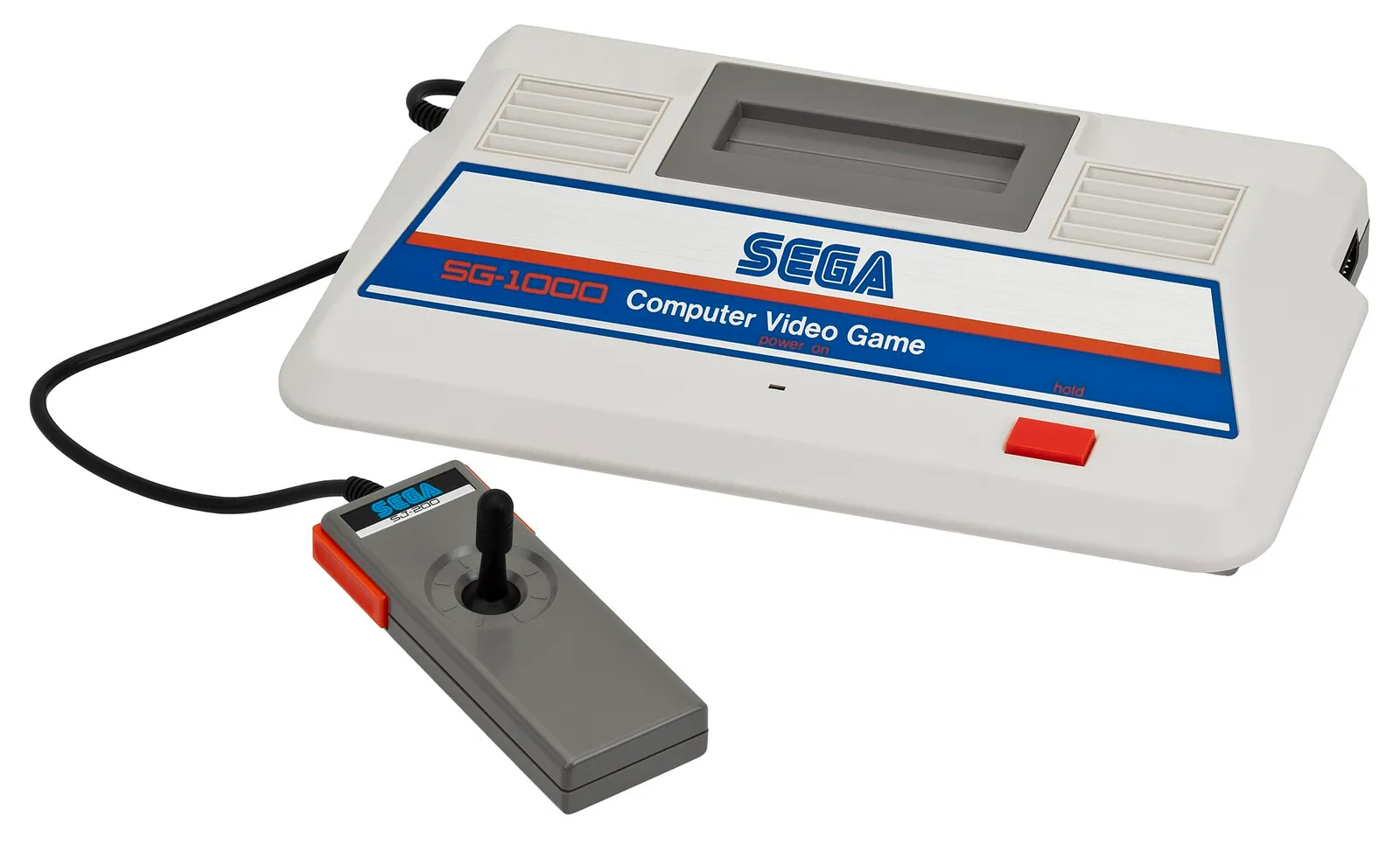
SG-1000
SEGA · 1983
06Consoles
Theconsoles.
Game consoles as industrial design
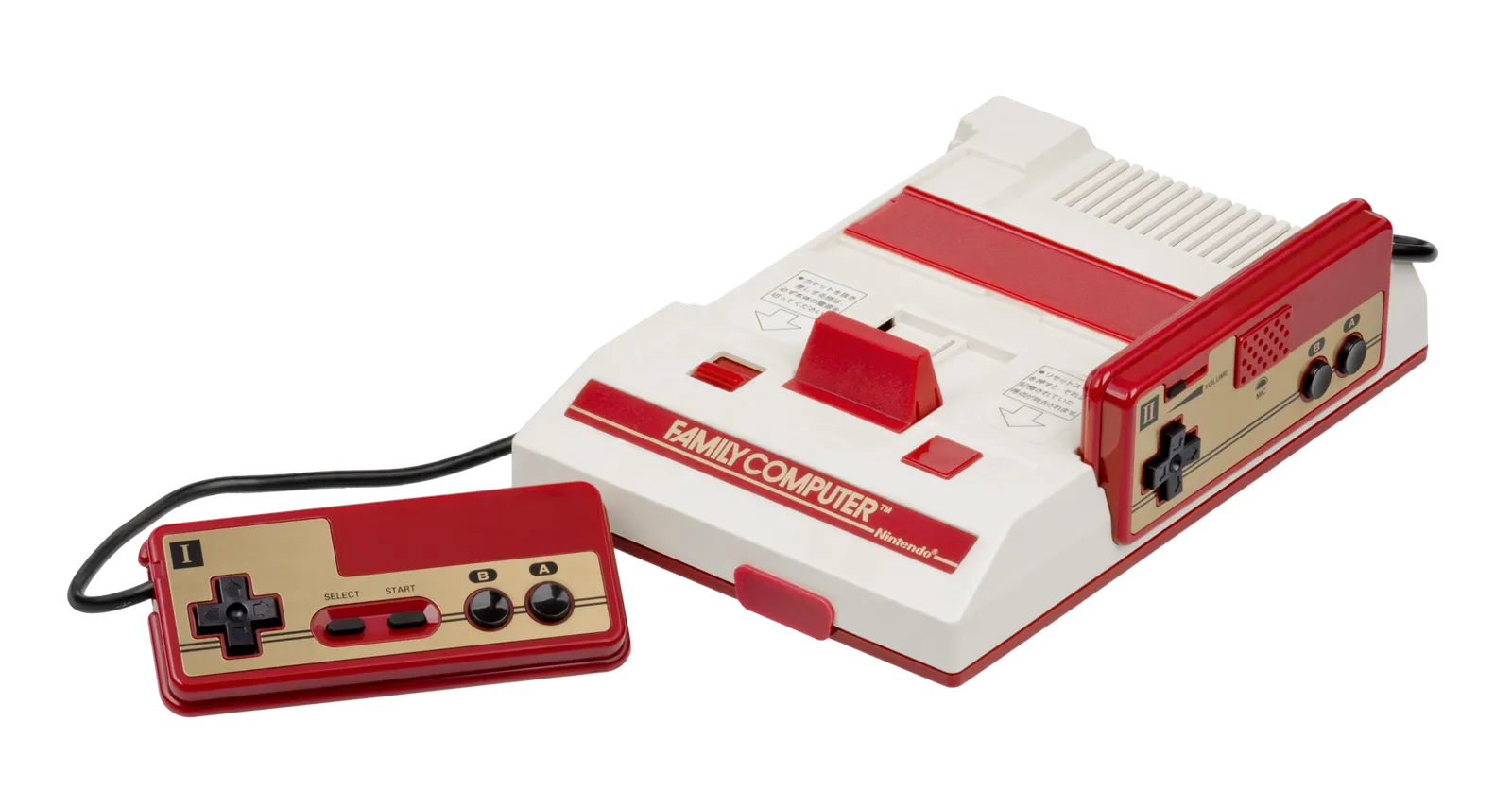
ファミリーコンピュータ
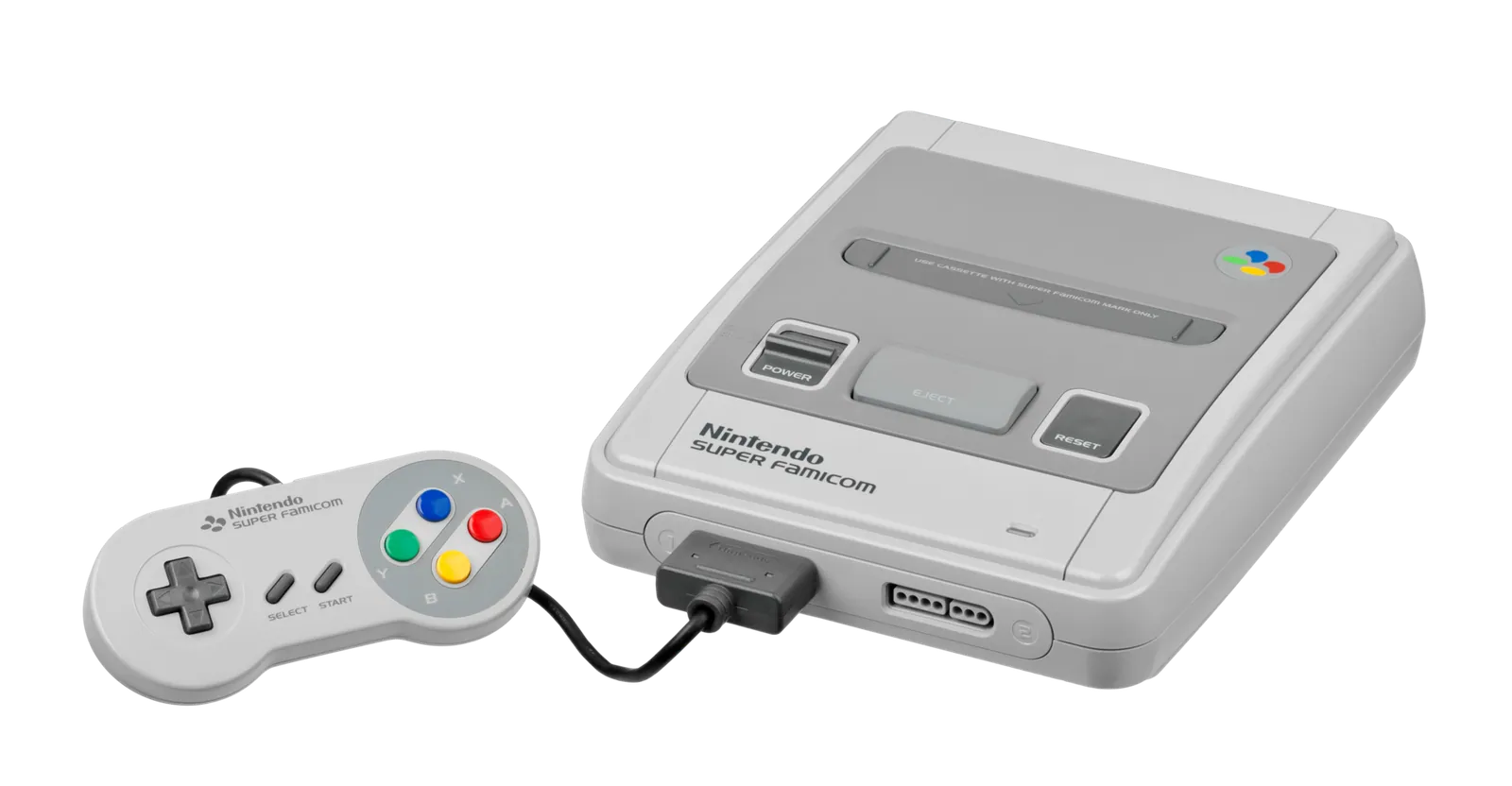
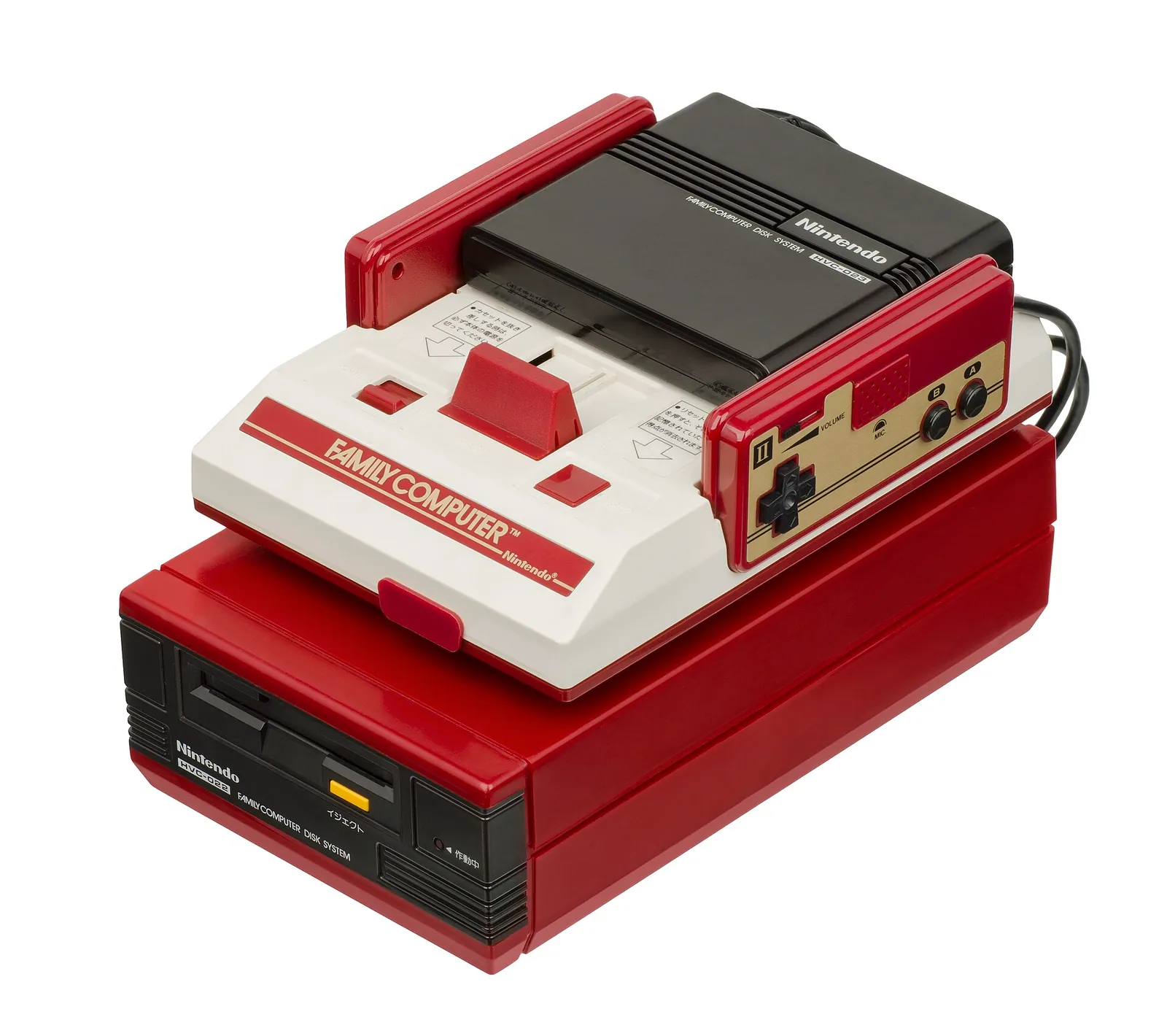
A home video game console released by Nintendo in 1983. It used the Ricoh RP2A03 CPU and ROM cartridges for software. In North America and Europe it was released with a redesigned body as the Nintendo Entertainment System.
No. 0011983
Family Computer
- Manufacturer
- Nintendo · 8-BIT
- Type
- Home video game console
07Through the generations
Play through the generations.
1983
Scroll to move through time
Ordered by Japanese release date. Generations follow Wikipedia's classification and are given for reference.
1983
1986
1987
1988
1988
1989
1990
1990
1990
1991
1994
1994
1994
1994
1996
1998
1998
1998
1999
2000
2001
2001
2004
081980s — Warm / Analog
The8-bitEra
A new world appearedin front of the television.
A decade in which consoles plugged into the family television changed the living room. ROM cartridges and disk cards, a cross-shaped pad and two buttons — the grammar of play was written within tight limits of colour and memory.
- Family Computer1983
- SG-10001983
- Famicom Disk System1986
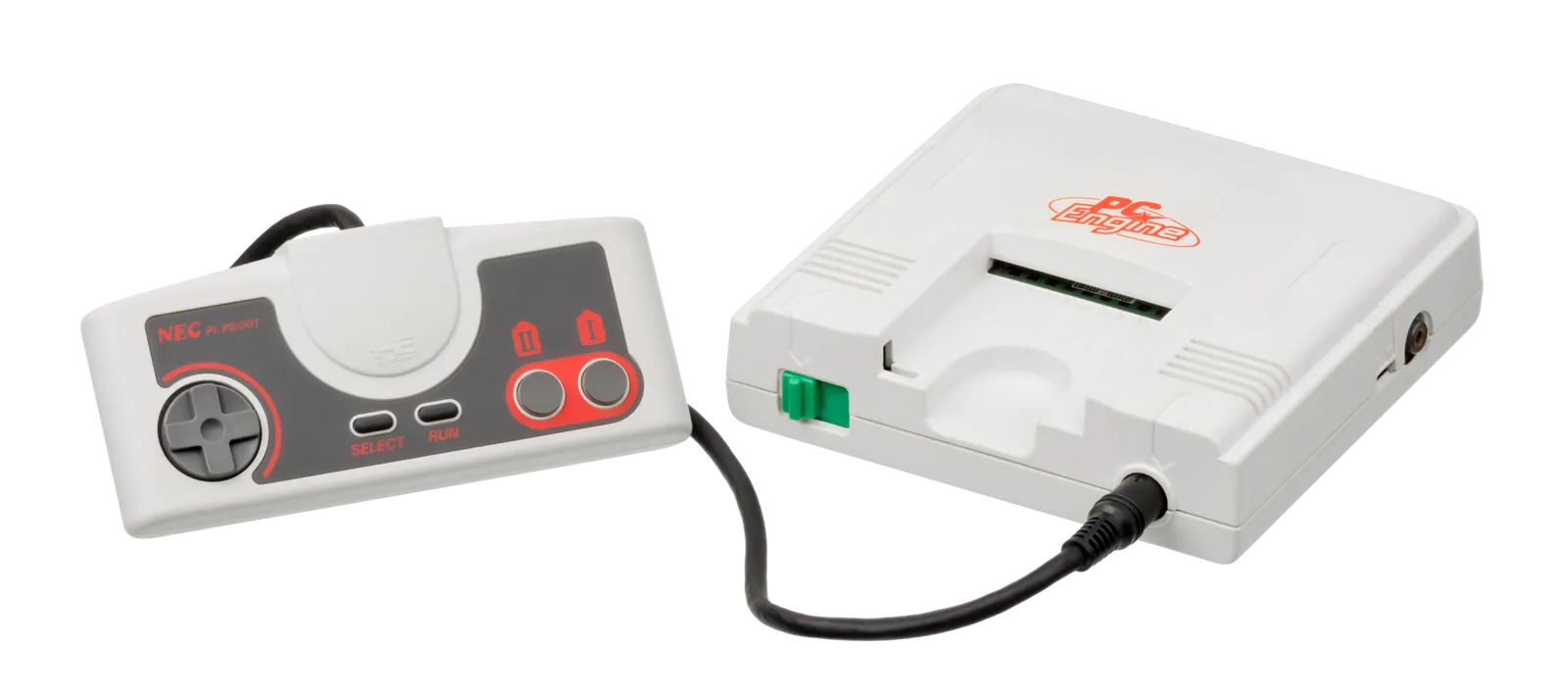
- PC Engine1987
- Mega Drive1988
- PC Engine CD-ROM² System1988
- Game Boy1989
09 — Beyond the bits
01 / 08
1983
A button pressed in front of the television. Every story began with those two words.
- Family Computer 1983
- SG-1000 1983
Bit counts are period terminology, not a performance ranking.
10Games
The gamesthat definedgenerations.
Games as cultural works

No. G-001
1985
Family Computer · ファミリーコンピュータ
Super Mario Bros.
スーパーマリオブラザーズ
A side-scrolling platform game released by Nintendo for the Famicom in 1985. Players guide Mario (and Luigi in two-player mode) across eight worlds to rescue Princess Toadstool from Bowser. It was directed by Shigeru Miyamoto, with music by Koji Kondo.
- Japan release
- 13 Sep 1985
- Publisher
- Nintendo
- Genre
- Platformer / Action
- Director
- Shigeru Miyamoto
- Composer
- Koji Kondo
- G-0021986Family Computer
Dragon Quest
ドラゴンクエスト
- Release
- JP 1986.05.27
- Dev
- Chunsoft
- Genre
- RPG / JRPG
- G-0031986Famicom Disk System
The Legend of Zelda
ゼルダの伝説
- Release
- JP 1986.02.21
- Dev
- Nintendo R&D4
- Genre
- Action-adventure
- G-0041987Family Computer
Final Fantasy
ファイナルファンタジー
- Release
- JP 1987.12.18
- Dev
- Square
- Genre
- RPG / JRPG
- G-0051991Mega Drive
Sonic the Hedgehog
ソニック・ザ・ヘッジホッグ
- Release
- JP 1991.07.26
- Dev
- Sonic Team
- Genre
- Platformer / Action
- G-0061992Super Famicom
Street Fighter II: The World Warrior
ストリートファイターII
- Release
- JP 1992.06.10
- Dev
- Capcom
- Genre
- Fighting
- G-0071996Game Boy
Pokémon Red and Green
ポケットモンスター 赤・緑
- Release
- JP 1996.02.27
- Dev
- Game Freak
- Genre
- RPG / JRPG
- G-0081996Nintendo 64
Super Mario 64
スーパーマリオ64
- Release
- JP 1996.06.23
- Dev
- Nintendo EAD
- Genre
- Platformer / Action-adventure
- G-0091997PlayStation
Final Fantasy VII
ファイナルファンタジーVII
- Release
- JP 1997.01.31
- Dev
- Square
- Genre
- RPG / JRPG
Box art and screenshots are not shown because their rights cannot be individually verified. Artwork is an abstract pattern generated from each title's data.
111990s — Cool / Digital
The16-bit & 32-bitEra
Pixels, in time,became polygons.
CD-ROM loosened the limits of storage and polygons gave the screen depth. More companies built home consoles, each pursuing the next form of expression with different technology and design philosophies.
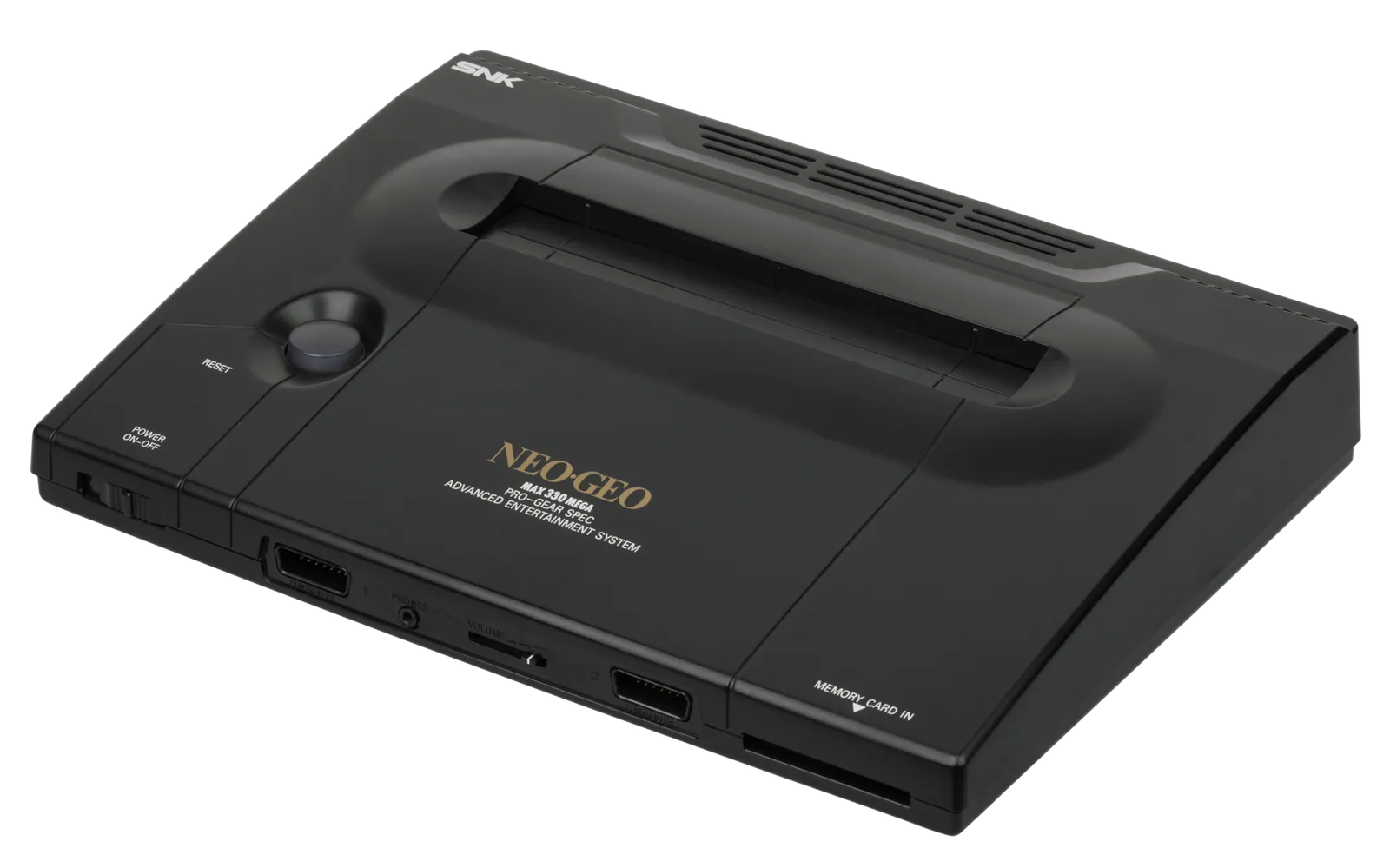
- Neo Geo AES1990
- Game Gear1990
- Super Famicom1990
- Mega-CD1991
- Neo Geo CD1994
- Sega Saturn1994
- PlayStation1994
- PC-FX1994
- Nintendo 641996
- Game Boy Color1998
- Neo Geo Pocket1998
- Dreamcast1998
- WonderSwan1999
12A change in representation
From8-bitto 3D.
From dots to polygons. Every figure here is an abstract form — not a reproduction of any real game character or screen.
8-BITFIG. A — Pixel
The screen was a grid. With few colours and little memory, every shape was designed as an arrangement of individual dots.
16-BITFIG. B — Tone & depth
More colours and new capabilities brought dithered gradients and tilted planes that suggested depth on a flat screen.
3DFIG. C — Polygon
Shapes came to be described by vertices, edges and faces. Cameras could move around them, and space itself became something to design.
13Controllers
Controllersthat changedhow we play.
A cross-shaped pad, shoulder buttons, six face buttons, an analog stick. Each time the tool in the hand changed shape, so did the way we played.
← Scroll sideways →
- 198301
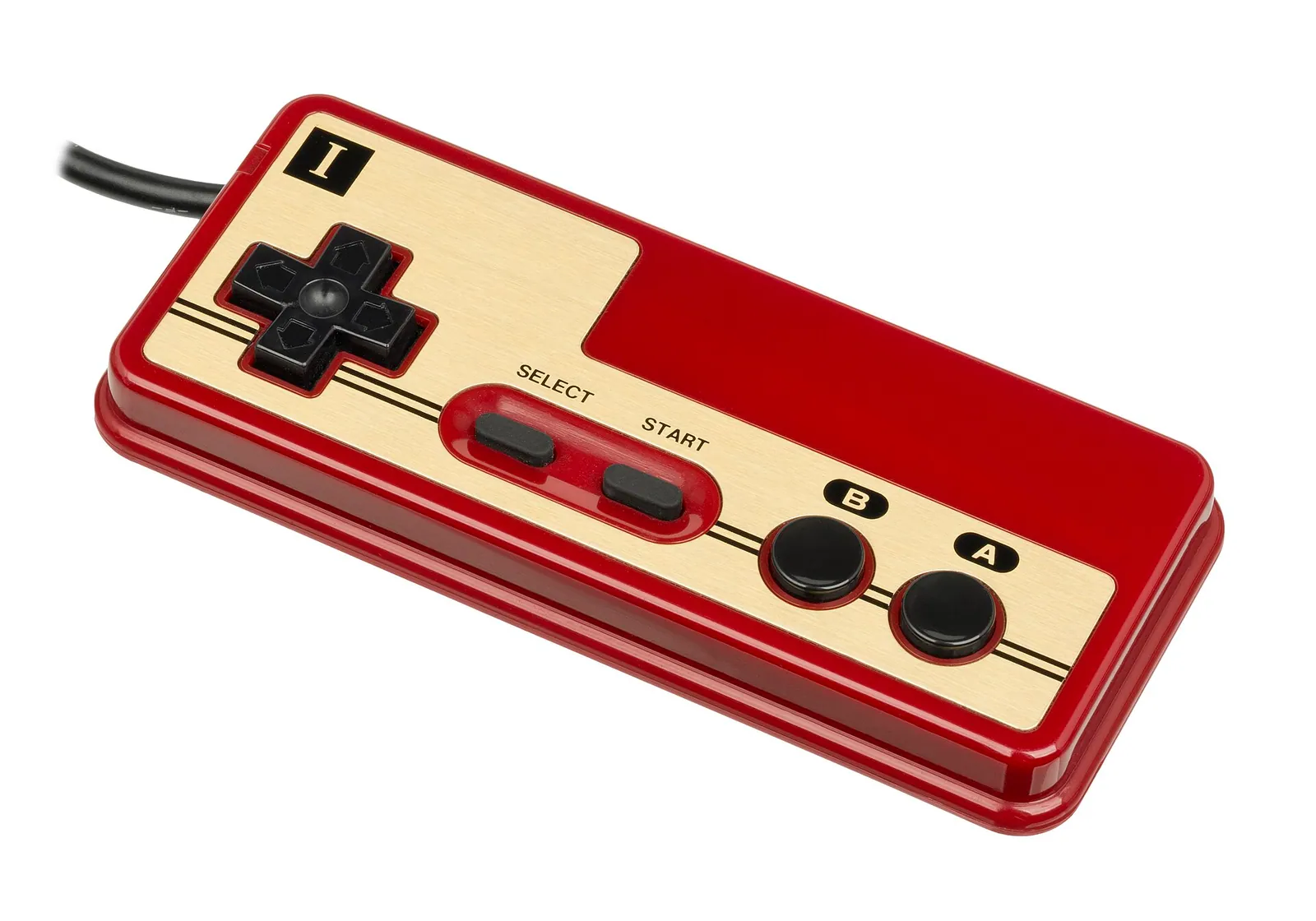
Family Computer Controller I
Nintendo · Console launch 1983
Two controllers were hard-wired to the original console; the pad uses a cross-shaped D-pad with A and B buttons, and Controller II has a built-in microphone.
- 199002
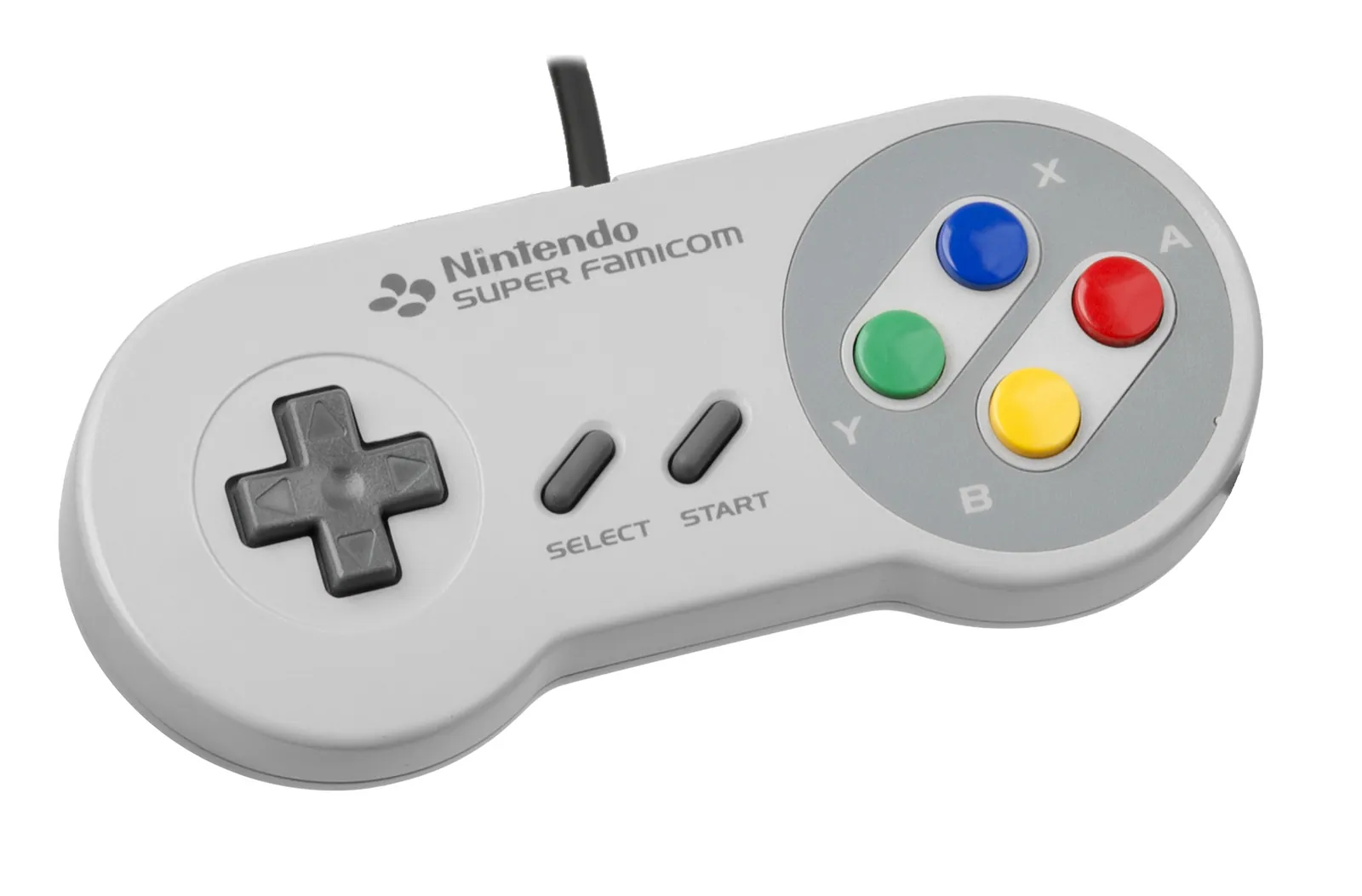
Super Famicom controller
Nintendo · Console launch 1990
The controller adds X and Y to the A and B face buttons in a diamond arrangement, plus L and R shoulder buttons.
- 199003
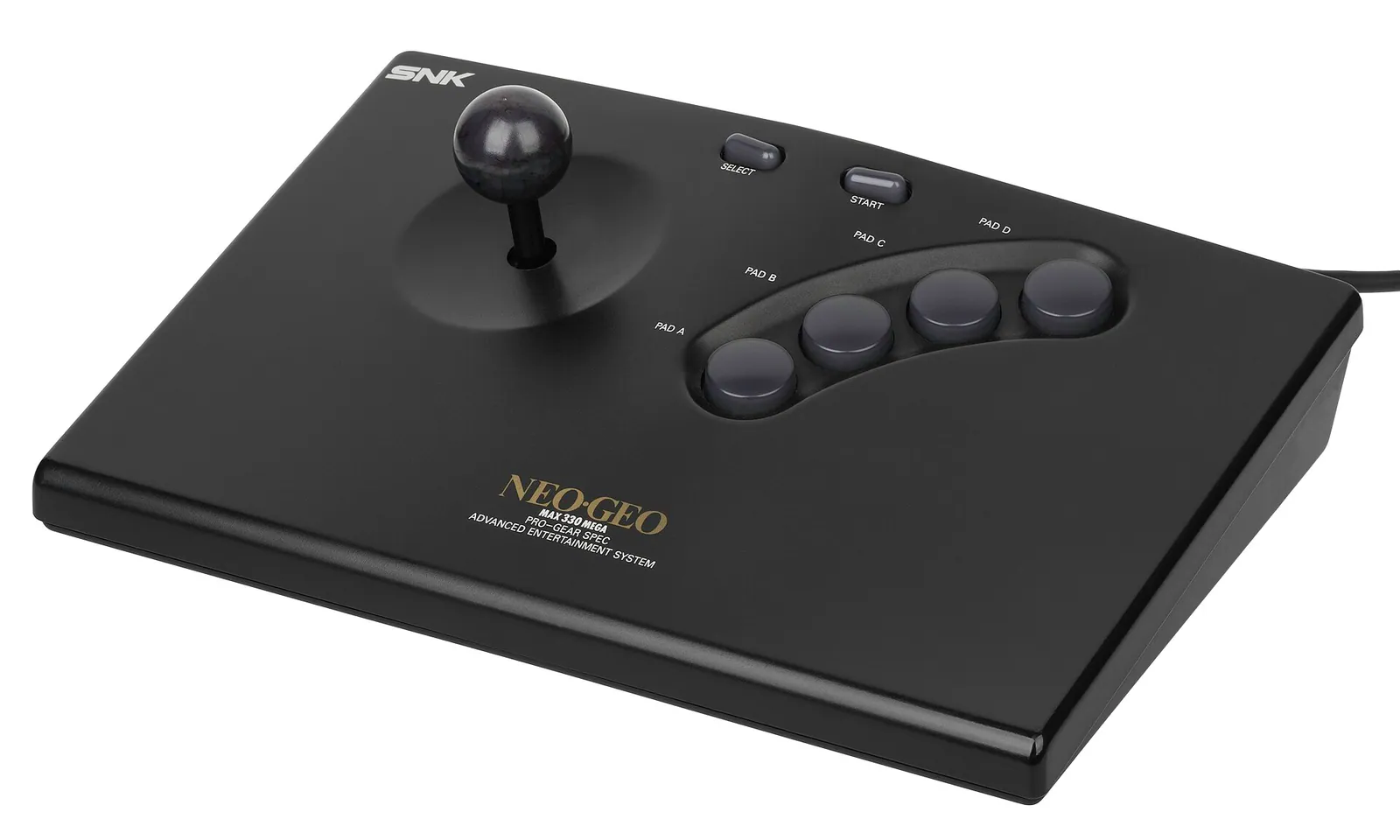
Neo Geo AES joystick controller
SNK · Console launch 1990
A large arcade-style controller with a lever stick and four buttons arranged in a gentle arc.
- 198804
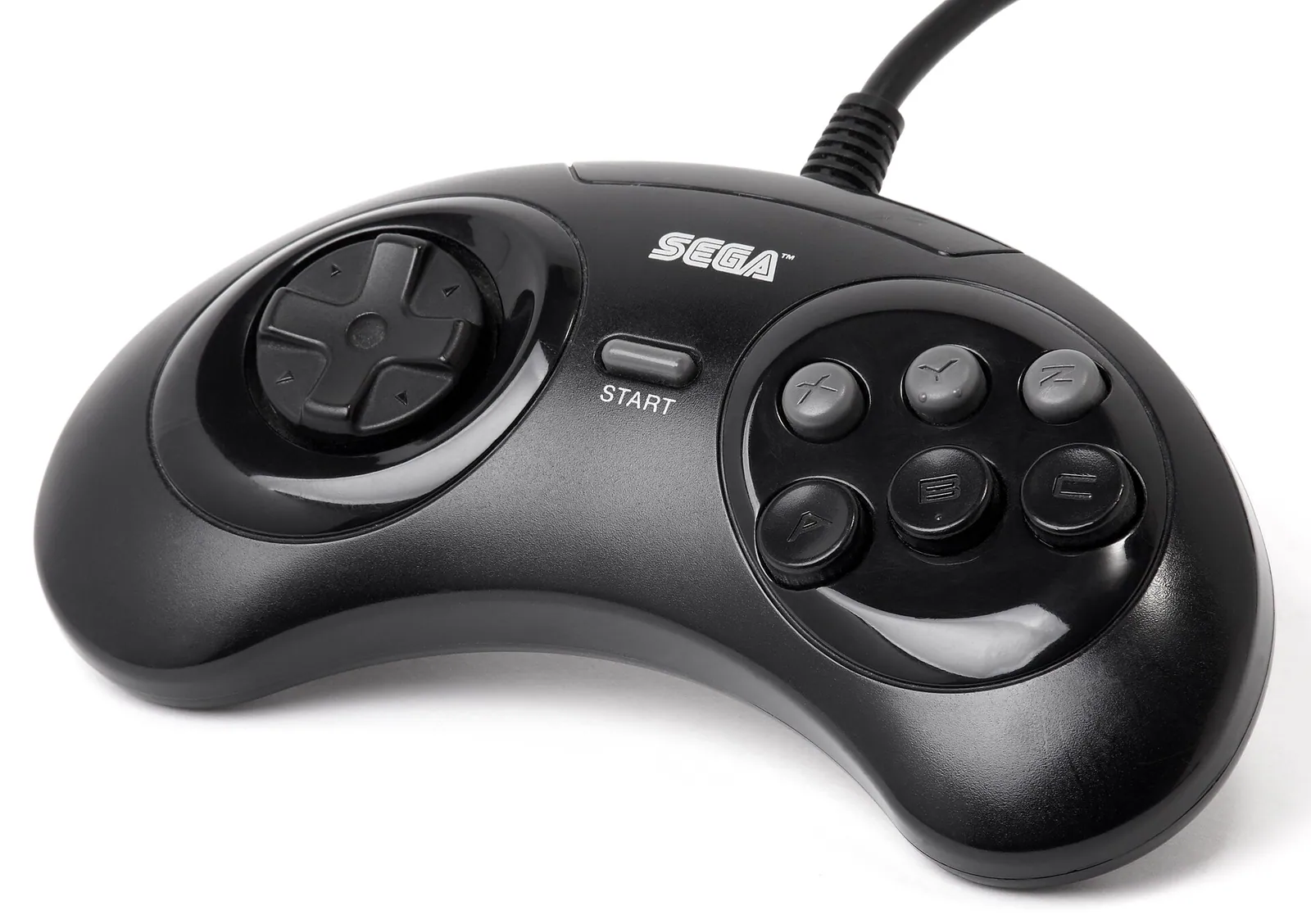
Six-button control pad (North American Genesis version)
SEGA · Console launch 1988
Launched with a three-button control pad.
- 199405
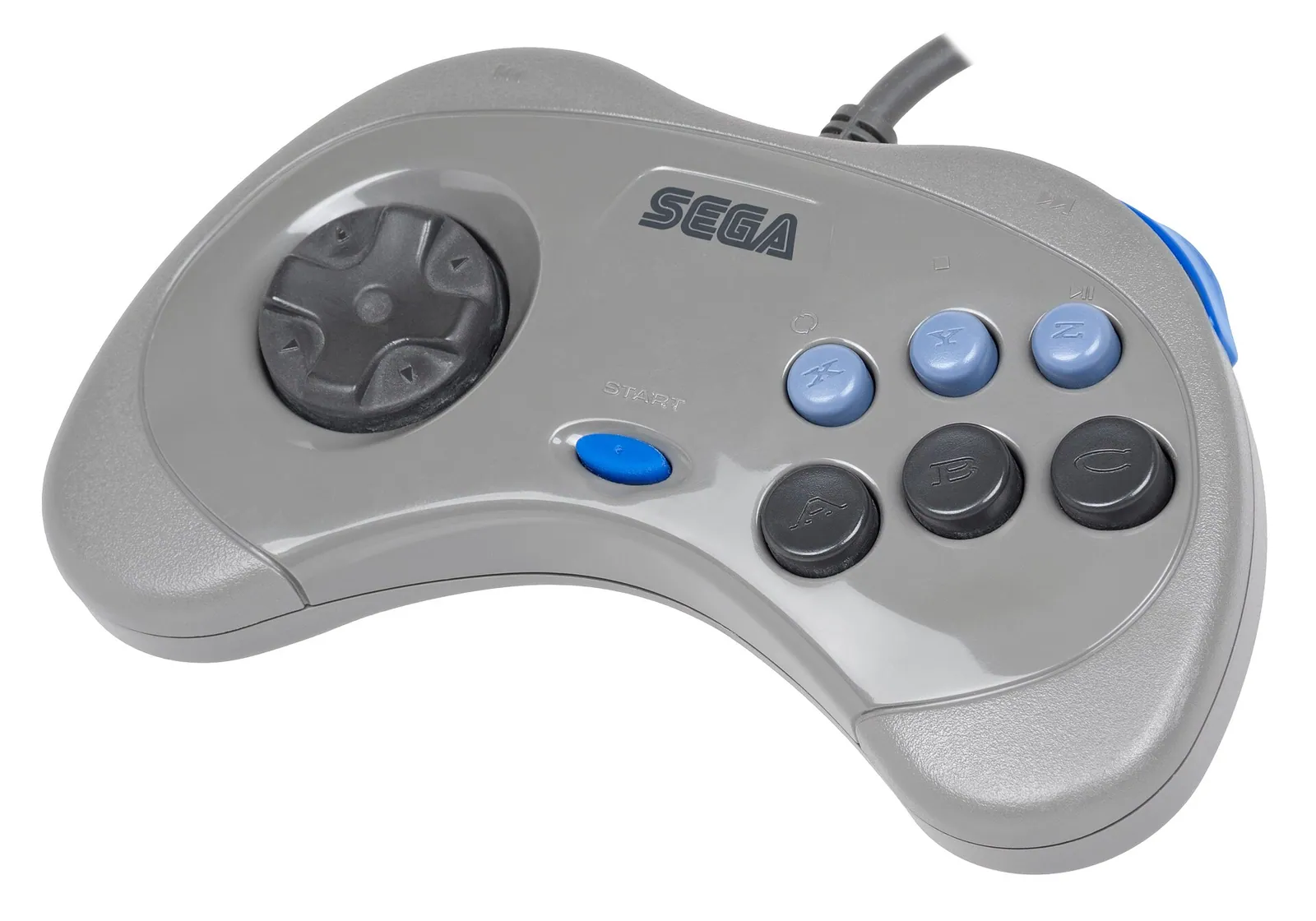
SEGA Saturn controller (Japanese model 1)
SEGA · Console launch 1994
Six-button pad (A, B, C, X, Y, Z) plus Start.
- 199406
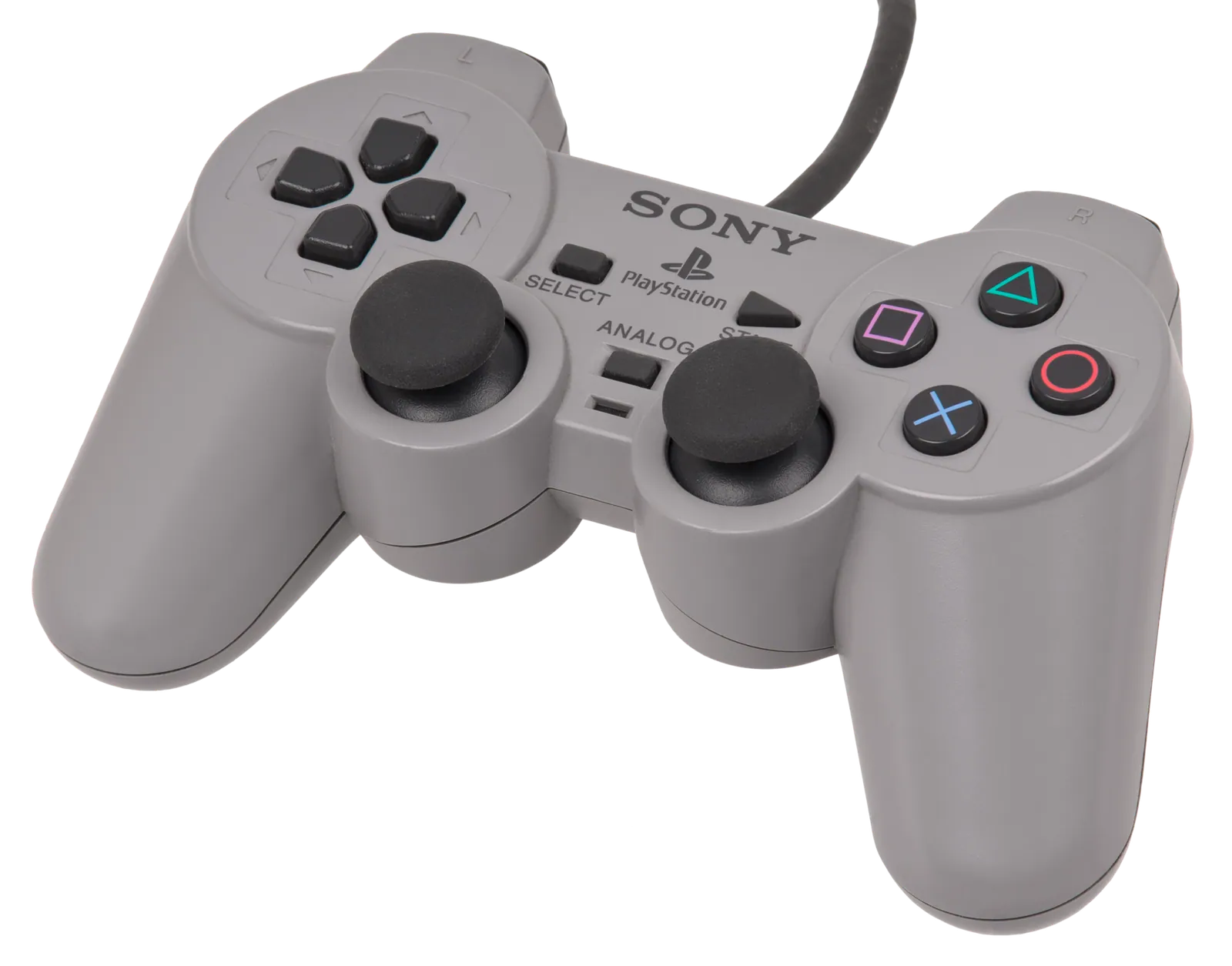
DualShock analog controller
Sony · Console launch 1994
Grip-style controller designed by Teiyu Goto, with four face buttons marked by a green triangle, red circle, blue cross and pink square.
- 199607
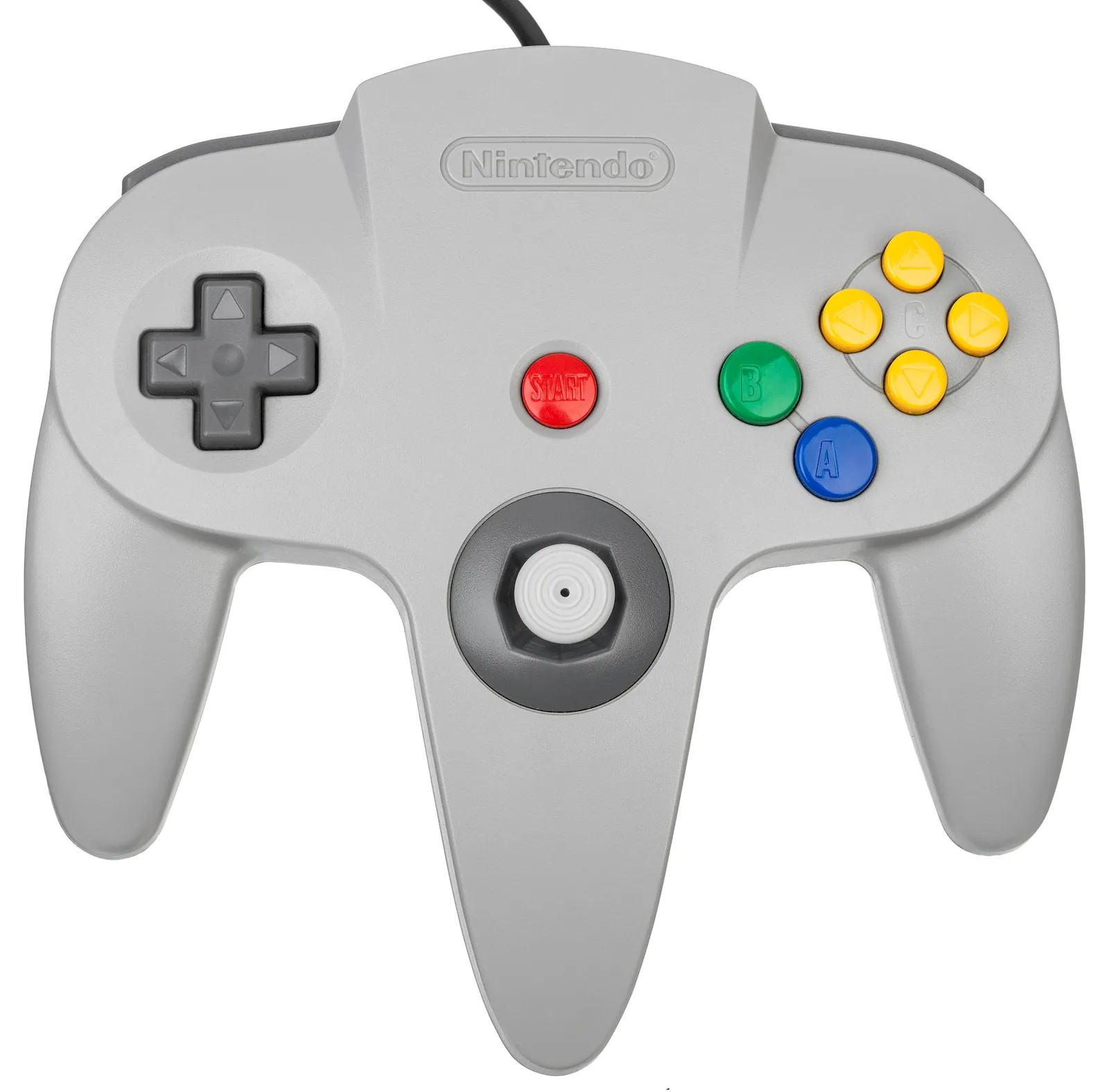
Nintendo 64 controller
Nintendo · Console launch 1996
A three-pronged M-shaped controller with an analog Control Stick (3D Stick) as standard, a Z trigger on the back, four C buttons, a D-pad, A/B and L/R buttons, and an expansion slot for the Controller Pak on the underside.
- 199808
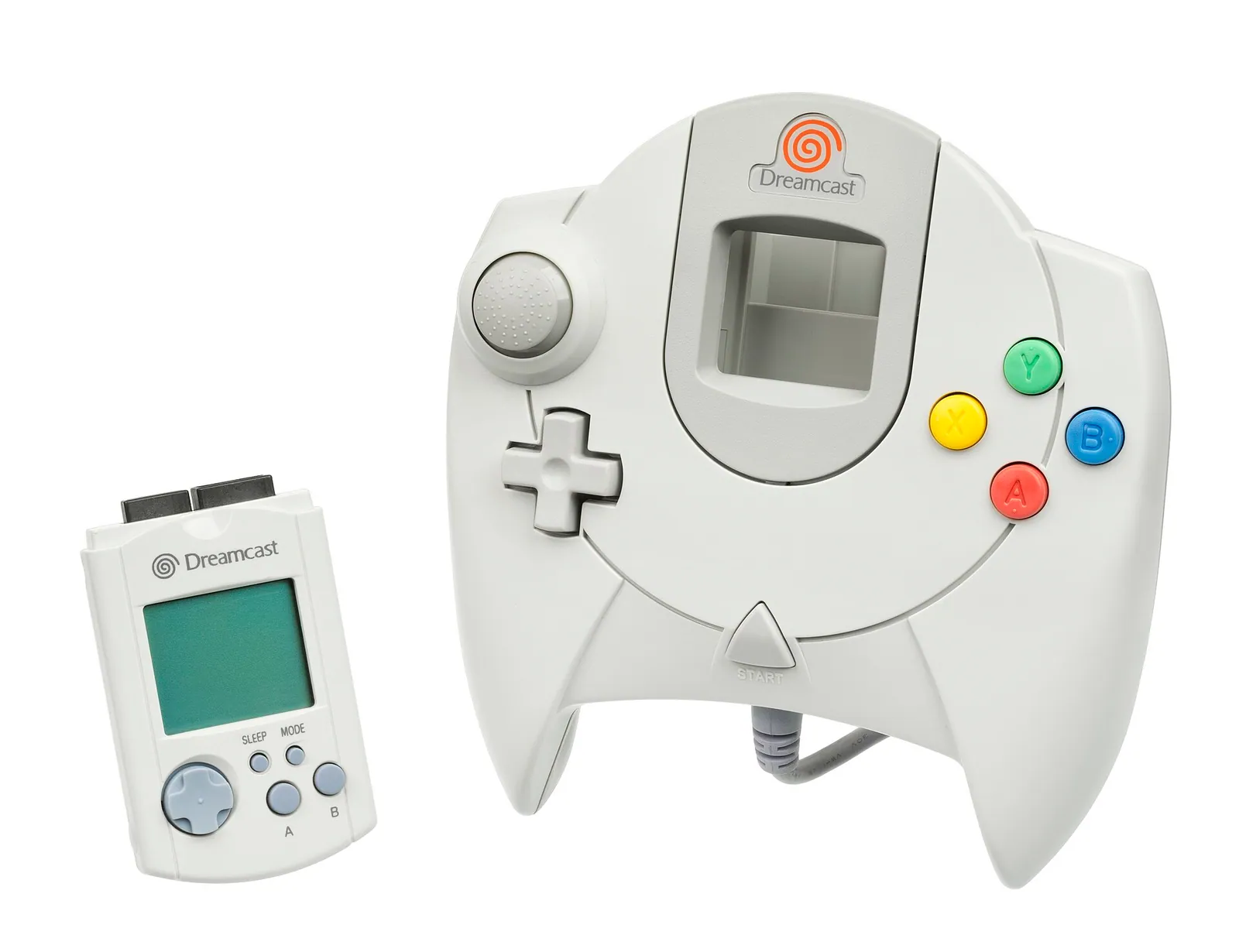
Dreamcast controller and Visual Memory unit
SEGA · Console launch 1998
Analog stick, D-pad, four face buttons and two analog triggers, with two expansion sockets for the VMU memory card.
- 200009
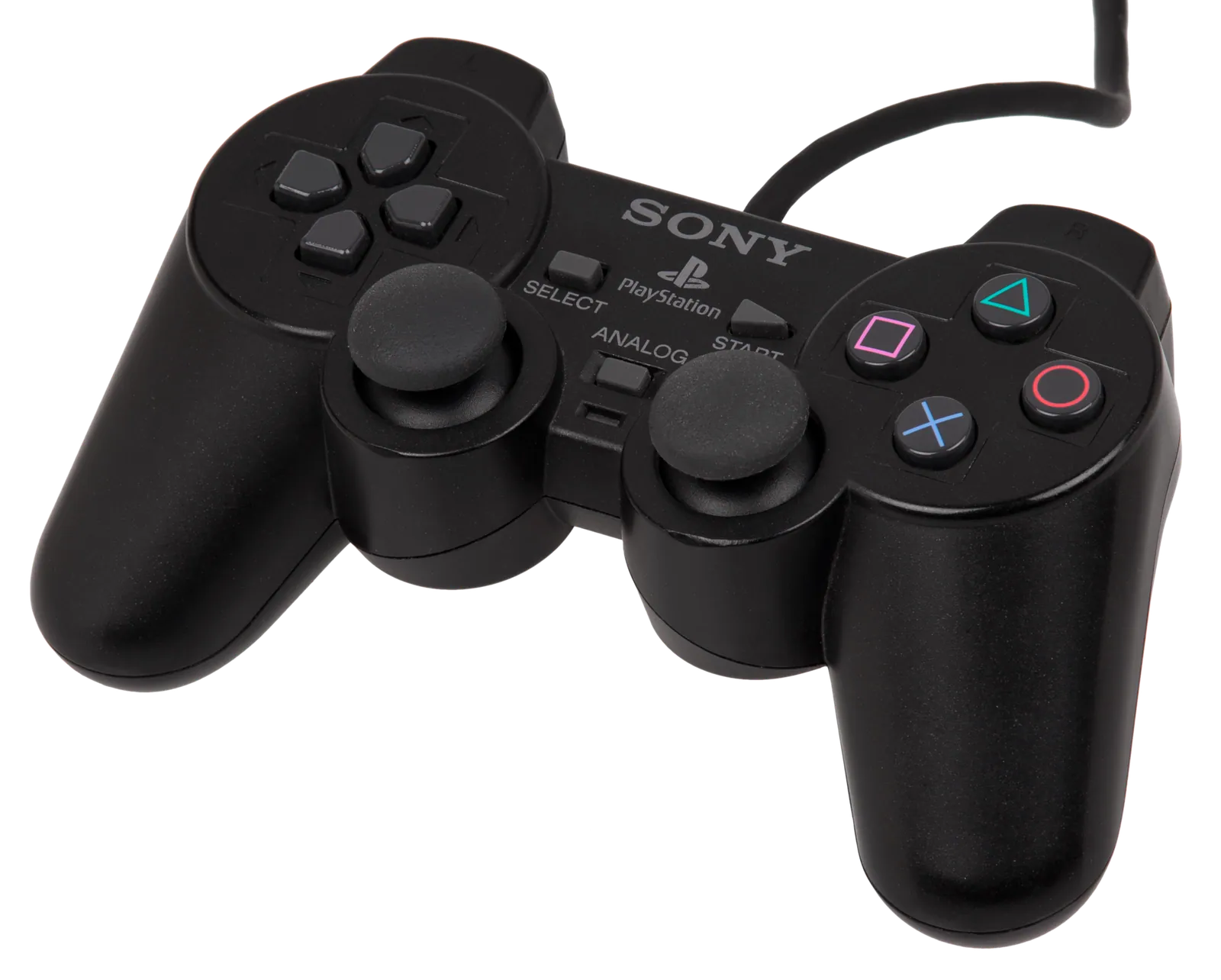
DualShock 2
Sony · Console launch 2000
Shipped with the DualShock 2 controller.
- 200110
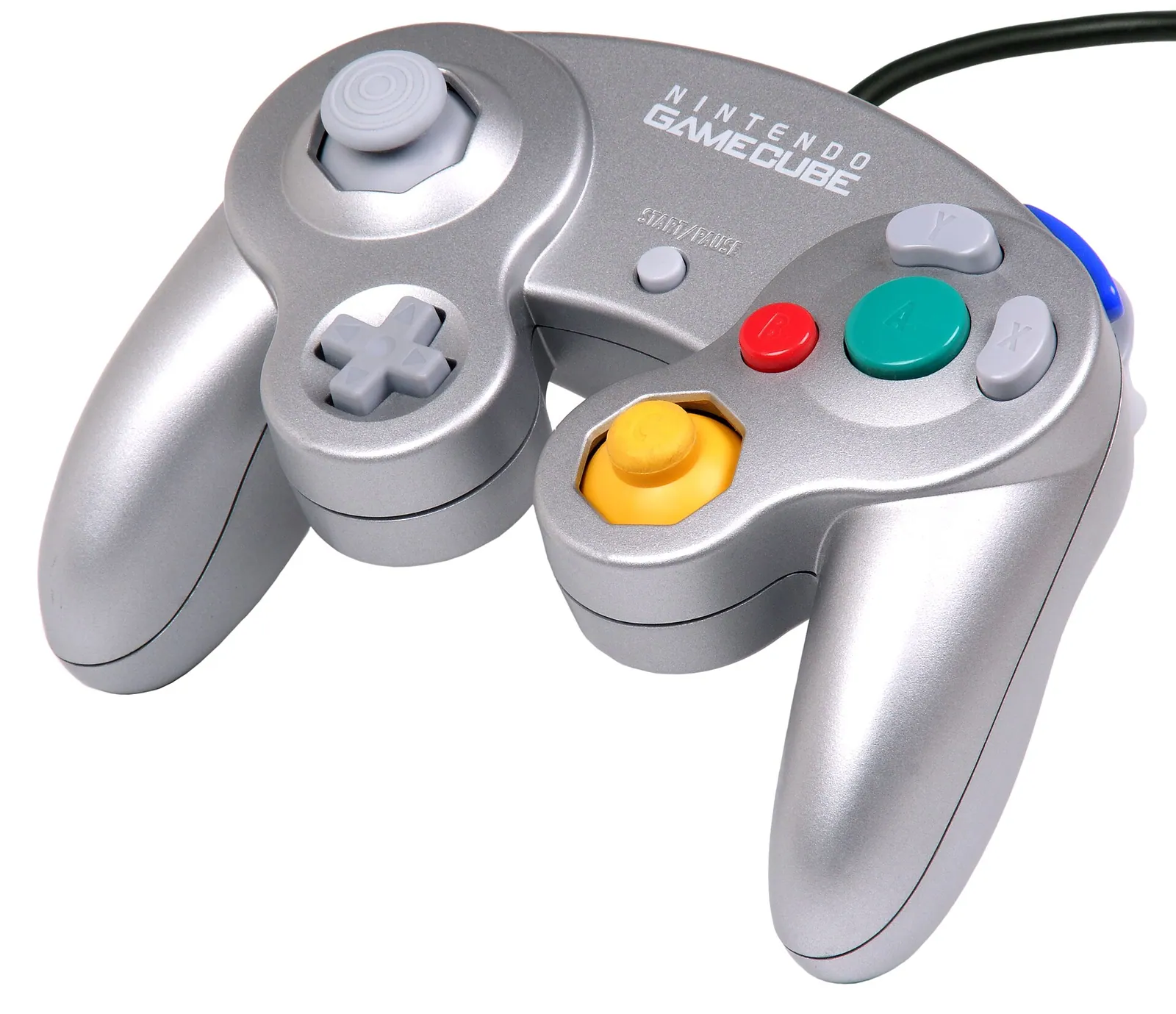
Nintendo GameCube controller
Nintendo · Console launch 2001
Centred on a large green A button, with an analog stick, a yellow C-stick, pressure-sensitive analog L/R triggers with a digital click, and built-in rumble.
14Media evolution
Cartridgeto disc.
ROM cartridges, disk cards, HuCARDs, CD-ROM and each maker's optical discs. As the vessel that carried software changed, so did the scale and shape of play.
- M-011983
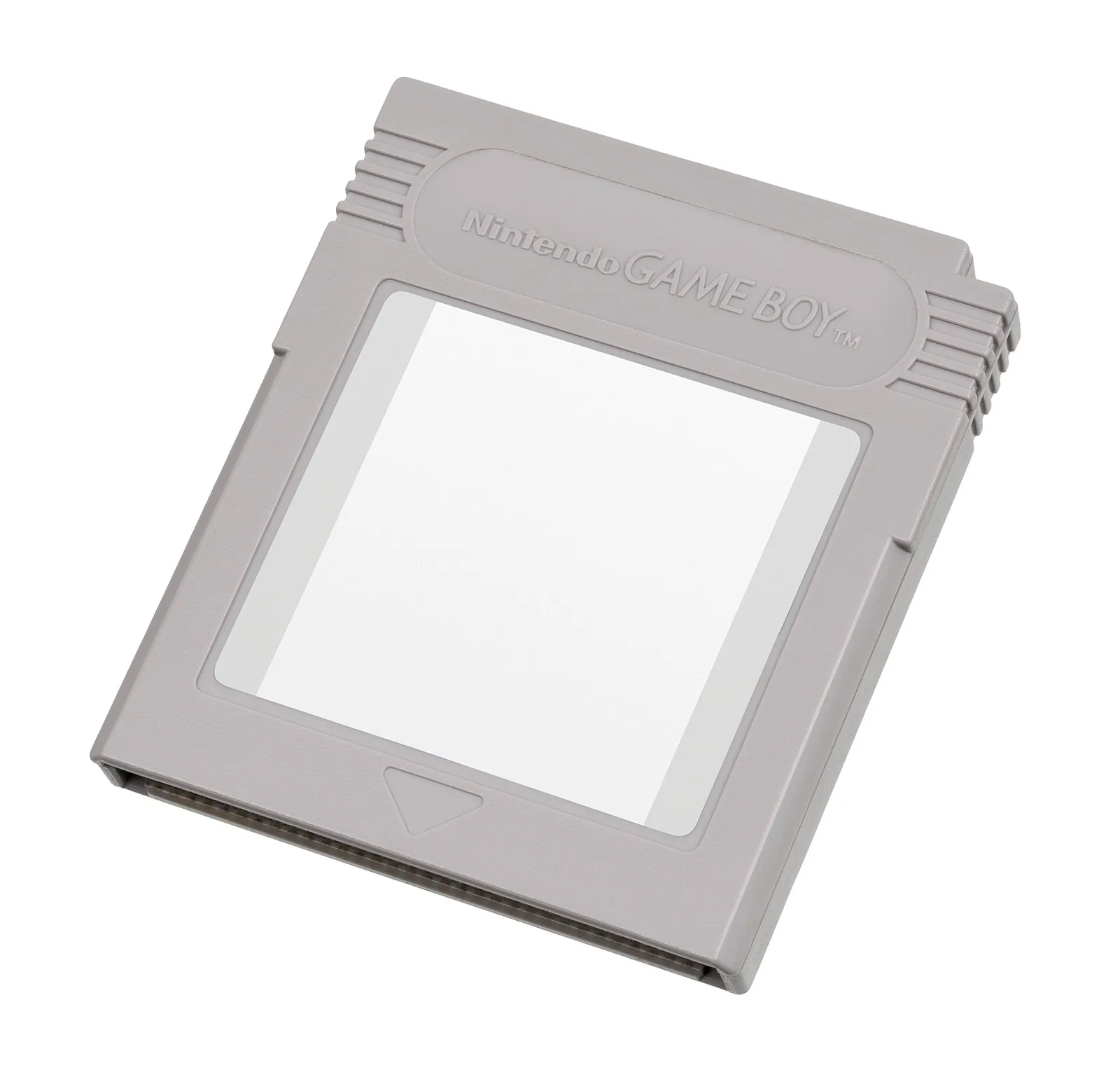
ROM cartridge
ROMカセット
A software medium housing ROM chips on a circuit board inside a plastic shell. The Famicom used this format from its 1983 launch; Nintendo's Western packaging called them 'Game Paks'.
Famicom launch title Donkey Kong: 192 kilobits (24 KB); Neo Geo cartridges later reached 716 megabits
Family Computer / Neo Geo AES / Neo Geo Pocket / WonderSwan / SG-1000
- M-021986
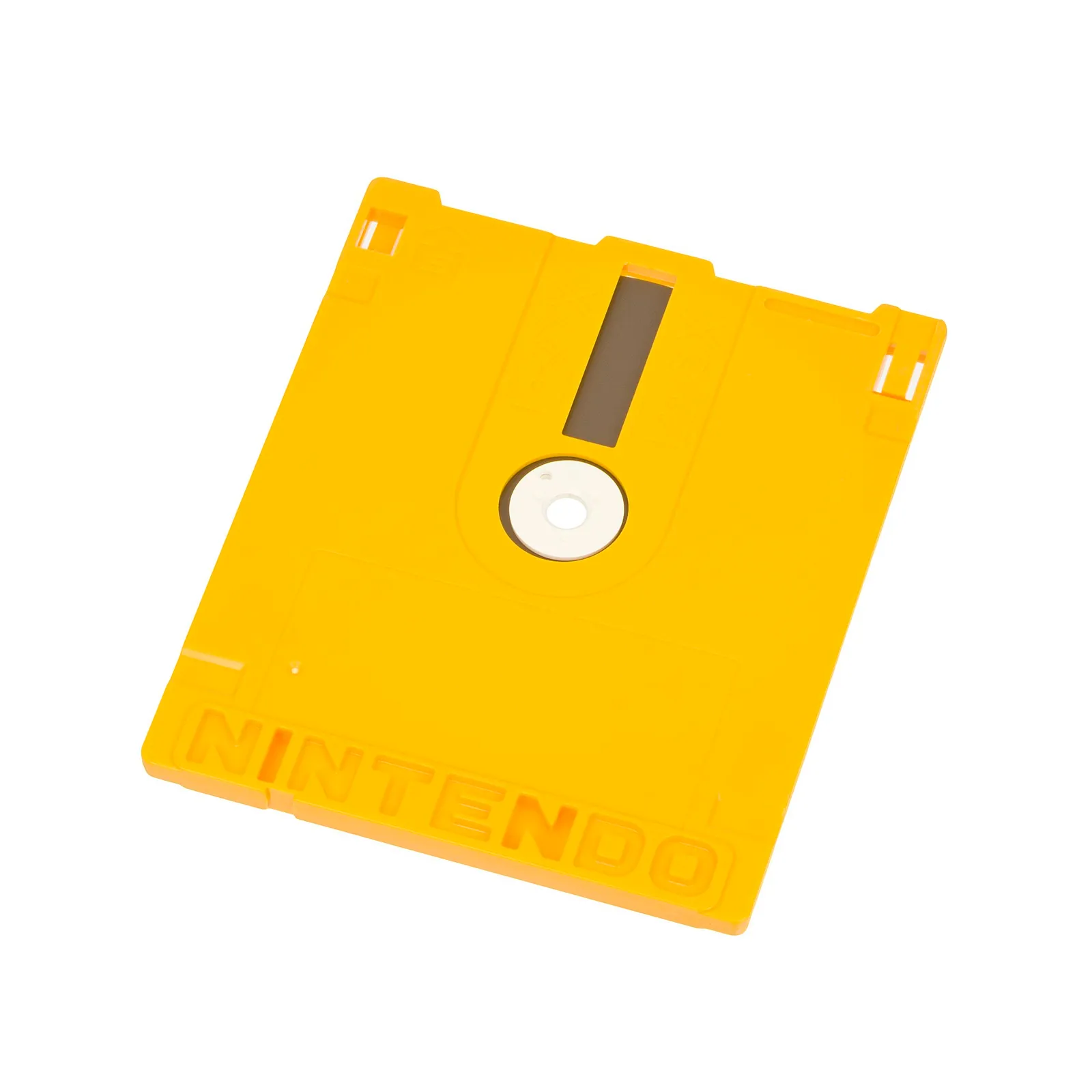
Disk Card
ディスクカード
The magnetic disk medium of the Famicom Disk System, based on Mitsumi's Quick Disk. Disks could be rewritten with a different game at in-store Disk Writer kiosks for ¥500.
56 KB per side, 112 KB per disk
Famicom Disk System
- M-031987
HuCard
HuCARD
A thin, credit-card-sized ROM cartridge designed by Hudson Soft, introduced in 1987 as the PC Engine's software medium.
1–20 Mbit (early cards up to 2 Mbit)
PC Engine
- M-041988
CD-ROM
CD-ROM
Optical discs sharing the audio CD format, used for data. Sources describe the PC Engine's CD-ROM² (1988) as the first use of CD-ROM as a home console game medium.
Approx. 540 MB (as cited for CD-ROM²)
PC Engine CD-ROM² System / PC-FX / Mega-CD / Neo Geo CD / PlayStation
- M-051994
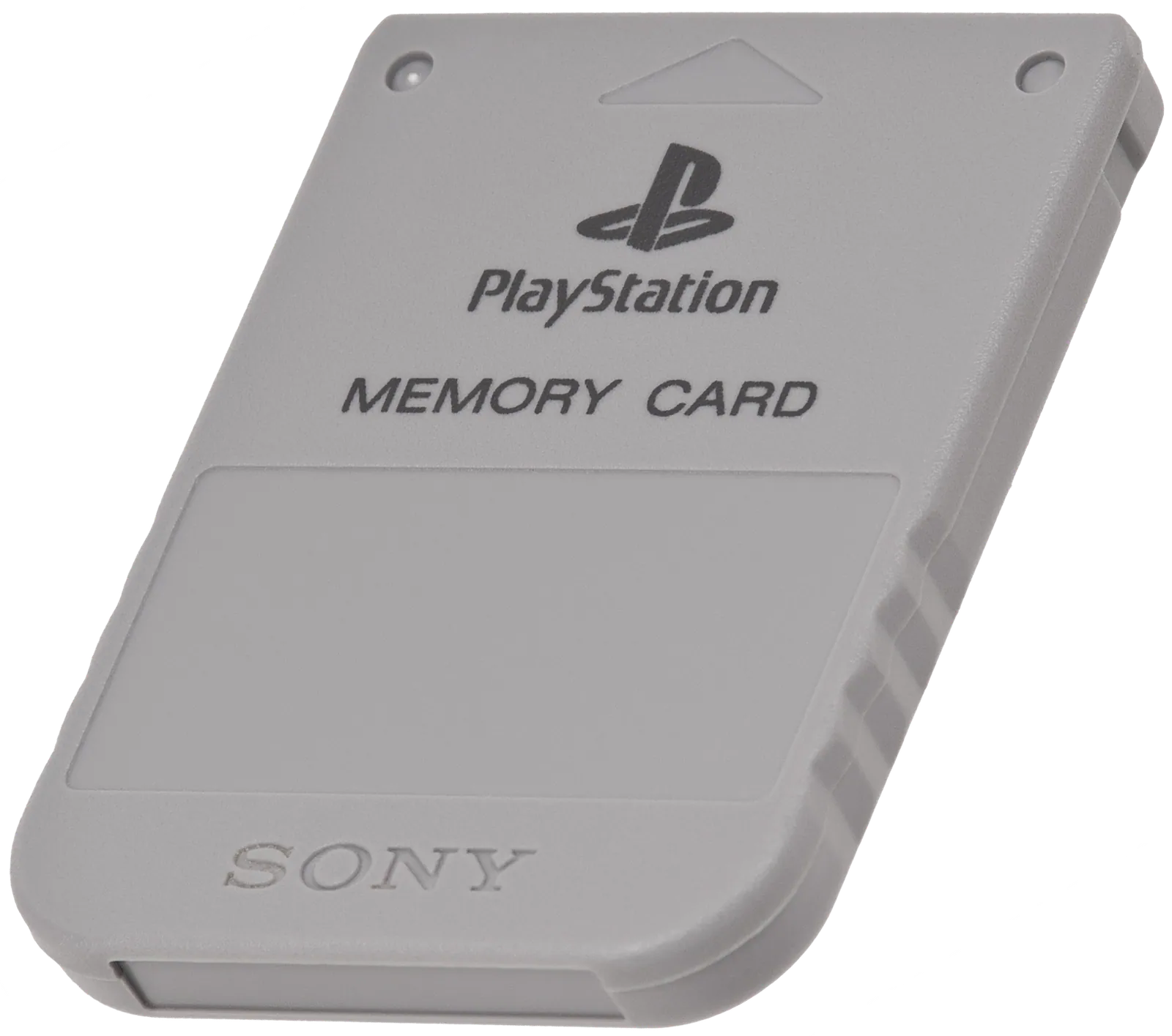
PlayStation Memory Card
メモリーカード(プレイステーション)
A flash-memory card for storing PlayStation save data. Its 1-megabit (128 KB) capacity is divided into 15 usable blocks.
128 KB (1 Mbit), 15 blocks
PlayStation / Neo Geo AES
- M-061998
GD-ROM
GD-ROM
A proprietary optical disc developed by Sega and Yamaha for the Dreamcast. It could be mass-produced at a cost similar to CD-ROM, avoiding the expense of DVD-ROM.
Up to 1 GB
Dreamcast
- M-072000
DVD-ROM
DVD-ROM
The primary software medium of the PlayStation 2, which could also play DVD films.
PlayStation 2
- M-082001
Nintendo GameCube Game Disc
ゲームキューブ用光ディスク(8cm)
An 8 cm proprietary optical disc based on miniDVD technology, created by Matsushita/Panasonic.
1.46 GB
Nintendo GameCube
- M-092004
Universal Media Disc (UMD)
UMD(ユニバーサル・メディア・ディスク)
A roughly 64 mm optical disc developed by Sony for the PSP, used for games as well as films and music.
Up to 1.8 GB (dual-layer); 900 MB single-layer
PlayStation Portable
Years are the Japanese launch year of the console that used each format, per sources. Formats without a verified photograph are shown as diagrams.
15Handhelds
Portableworlds.
From the living-room television to the palm of the hand. Small battery-powered screens changed where and when play could happen.
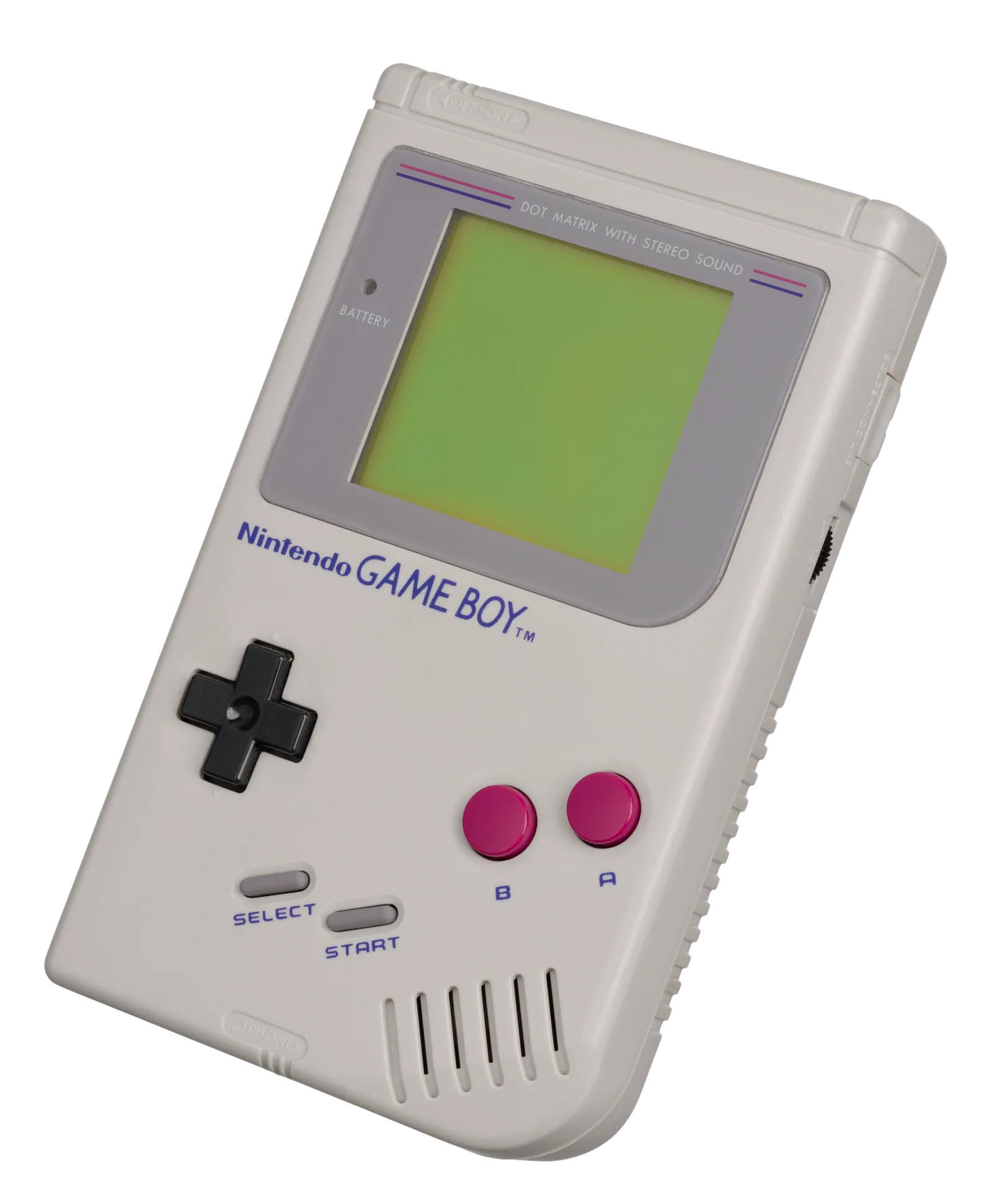
Game Boy
1989ゲームボーイ
Nintendo · JP 1989.04.21
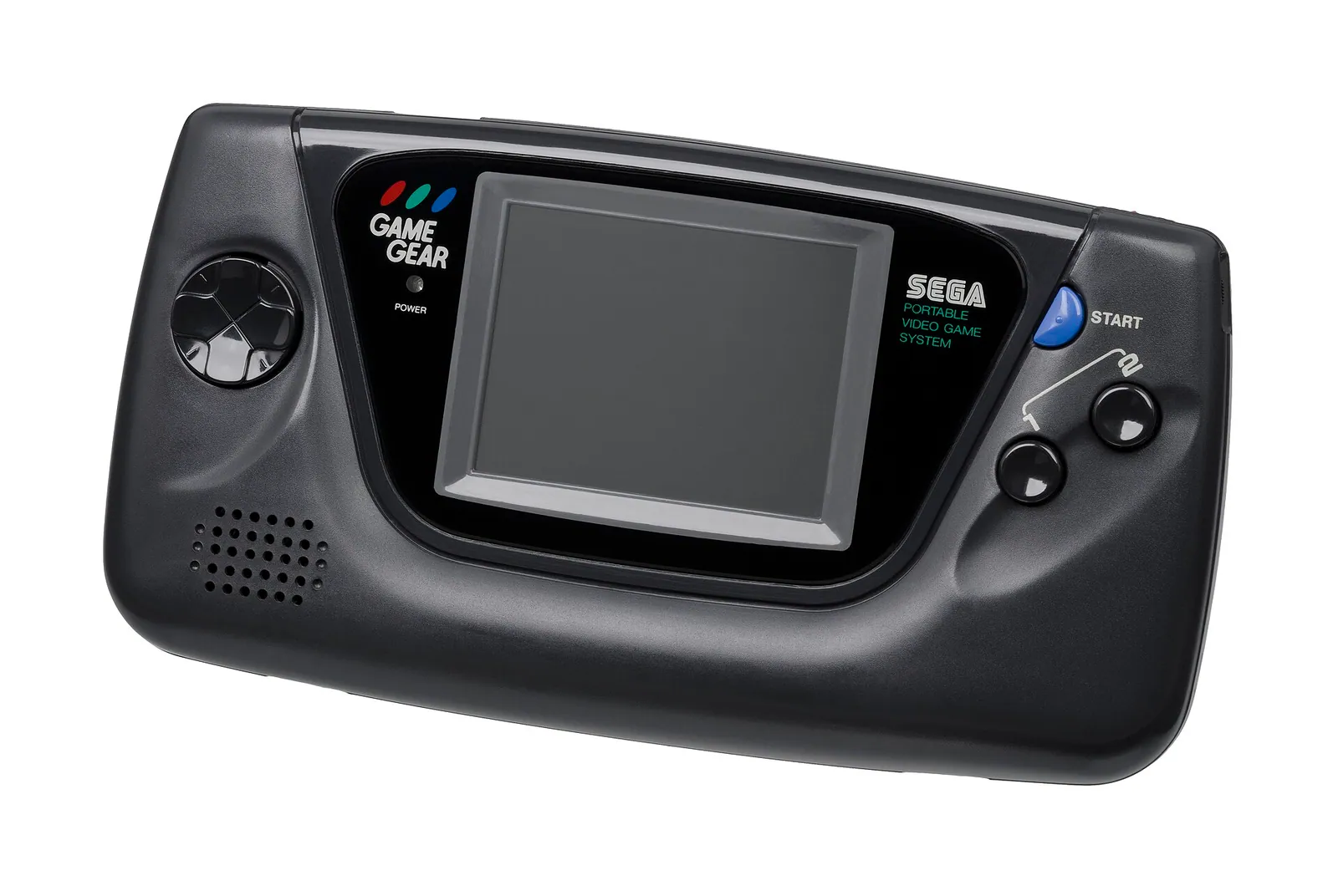
Game Gear
1990ゲームギア
SEGA · JP 1990.10.06
Neo Geo Pocket
1998ネオジオポケット
SNK · JP 1998.10.28
Game Boy Color
1998ゲームボーイカラー
Nintendo · JP 1998.10.21
WonderSwan
1999ワンダースワン
Bandai · JP 1999.03.04
Game Boy Advance
2001ゲームボーイアドバンス
Nintendo · JP 2001.03.21
PlayStation Portable
2004プレイステーション・ポータブル
Sony · JP 2004.12.12
16Creators
Creatorsbehindthe games.
Only documented roles and works are listed. No evaluations or unverified information about individuals.
- 01Shigeru Miyamoto宮本茂b. 1952Game designer / Producer / DirectorDonkey Kong · Super Mario Bros. · The Legend of Zelda · Star Fox
- 02Gunpei Yokoi横井軍平b. 1941 – d. 1997Toy designer / Game designer / ProducerUltra Hand · Game & Watch · Game Boy · Metroid
- 03Yuji Horii堀井雄二b. 1954Game designer / Scenario writer / DirectorThe Portopia Serial Murder Case · Dragon Quest · Chrono Trigger · Itadaki Street
- 04Hironobu Sakaguchi坂口博信b. 1962Game designer / Director / ProducerFinal Fantasy · Chrono Trigger · Final Fantasy VII · Blue Dragon
- 05Hideo Kojima小島秀夫b. 1963Game designer / Director / WriterMetal Gear · Snatcher · Policenauts · Metal Gear Solid
- 06Koji Kondo近藤浩治b. 1961Composer / Sound designerSuper Mario Bros. · The Legend of Zelda · Super Mario 64 · Yoshi's Island
- 07Nobuo Uematsu植松伸夫b. 1959Composer / KeyboardistFinal Fantasy · Chrono Trigger · Blue Dragon · Lost Odyssey
- 08Satoshi Tajiri田尻智b. 1965Game designer / Director / ProducerQuinty · Pokémon Red and Green · Pokémon Gold and Silver · Pokémon Ruby and Sapphire
- 09Yu Suzuki鈴木裕b. 1958Game designer / Producer / DirectorHang-On · Space Harrier · Out Run · After Burner
- 10Yuji Naka中裕司b. 1965Programmer / Game designer / ProducerSonic the Hedgehog · Nights into Dreams · Sonic Adventure · Phantasy Star Online
- End of list
17Japan to the world
From Japanto the world.
Consoles born in Japan crossed the ocean, often under new names and in new cases. This chart plots only sourced dates: the Japanese launch and the North American launch.
- Family Computer→ Nintendo Entertainment System+27 mo
- PC Engine→ TurboGrafx-16+22 mo
- Mega Drive→ Genesis+9 mo*
- Game Boy+3 mo
- Neo Geo AES→ Neo Geo+14 mo
- Game Gear+6 mo*
- Super Famicom→ Super Nintendo Entertainment System+9 mo
- Mega-CD→ Sega CD+10 mo
- Sega Saturn+6 mo
- PlayStation+9 mo
- Nintendo 64+3 mo
- Game Boy Color+1 mo
- Dreamcast+9 mo
- PlayStation 2+8 mo
- Game Boy Advance+3 mo
- Nintendo GameCube+2 mo
- PlayStation Portable+3 mo
Titles that crossed the ocean
- スーパーマリオブラザーズ→ Super Mario Bros.1985
- ドラゴンクエスト→ Dragon Quest1986
- メトロイド→ Metroid1986
- ゼルダの伝説→ The Legend of ZeldaNA 1987.08.22
- ファイナルファンタジー→ Final Fantasy1987
- ロックマン→ Mega Man1987
- PC原人→ Bonk's Adventure1989
- イースI・II→ Ys I & IINA 1990.05.23
- スーパーマリオワールド→ Super Mario WorldNA 1991.08.23
- ソニック・ザ・ヘッジホッグ→ Sonic the HedgehogNA 1991.06.23
18Editorial
105 daysin 1994.
One winter, four answers.
In the 105 days between 9 Sep 1994 and 23 Dec 1994, 4 CD-ROM-based home platforms went on sale in Japan. Not which was better — but what each one chose, laid side by side from the record.
- Day 0 · 011994.09.09
Neo Geo CD
ネオジオCD — SNK
- CPU
- Motorola 68000 @ 12 MHz + Z80 @ 4 MHz
- Media
- CD-ROM
- JP launch price
- ¥49,800 (フロントローディング型)
- Day 74 · 021994.11.22
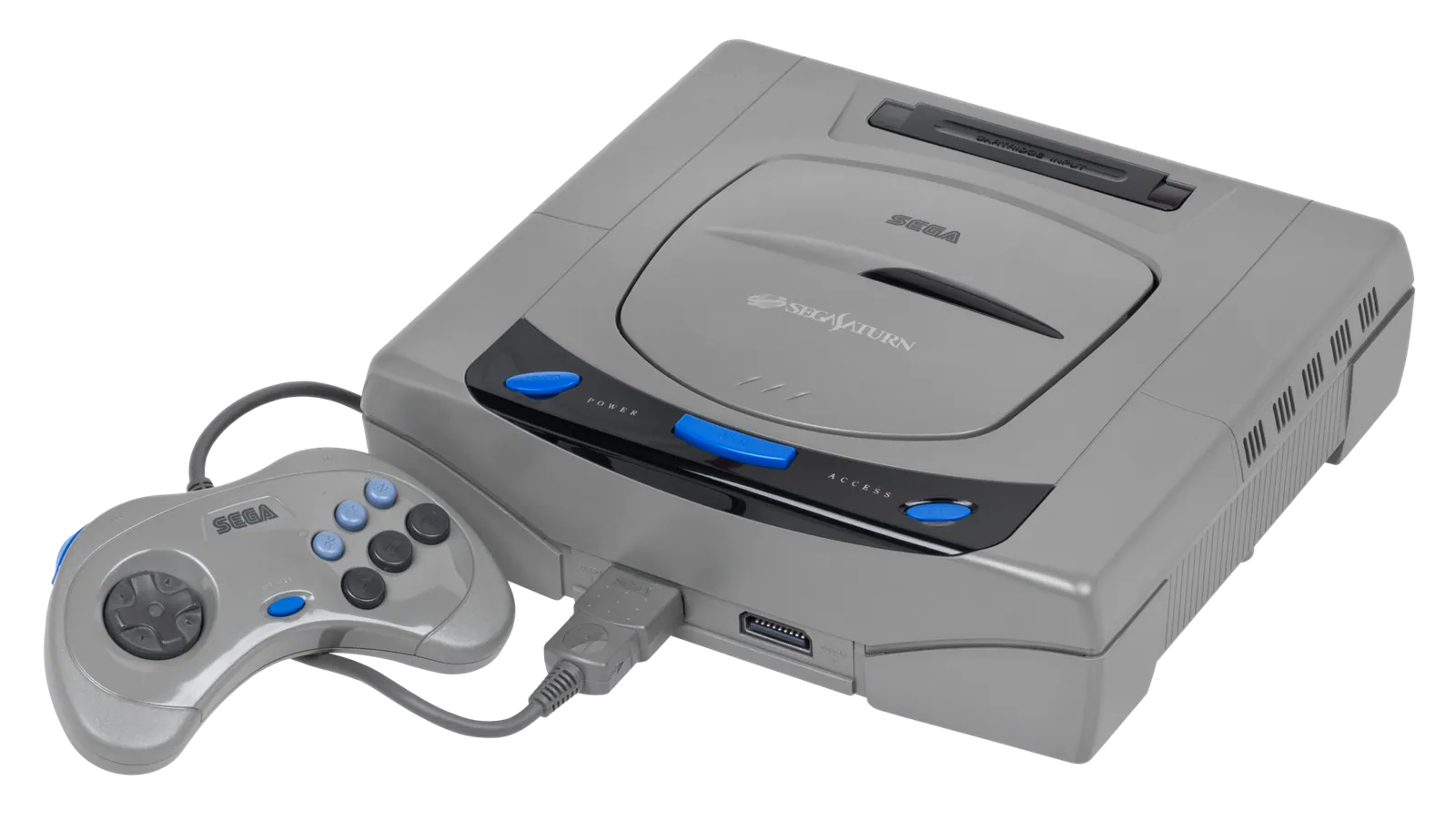
Sega Saturn
セガサターン — SEGA
- CPU
- Hitachi SH-2 ×2 @ 28.6 MHz
- Media
- CD-ROM
- JP launch price
- ¥44,800 (1996年3月に20,000円へ値下げ)
- Day 85 · 031994.12.03
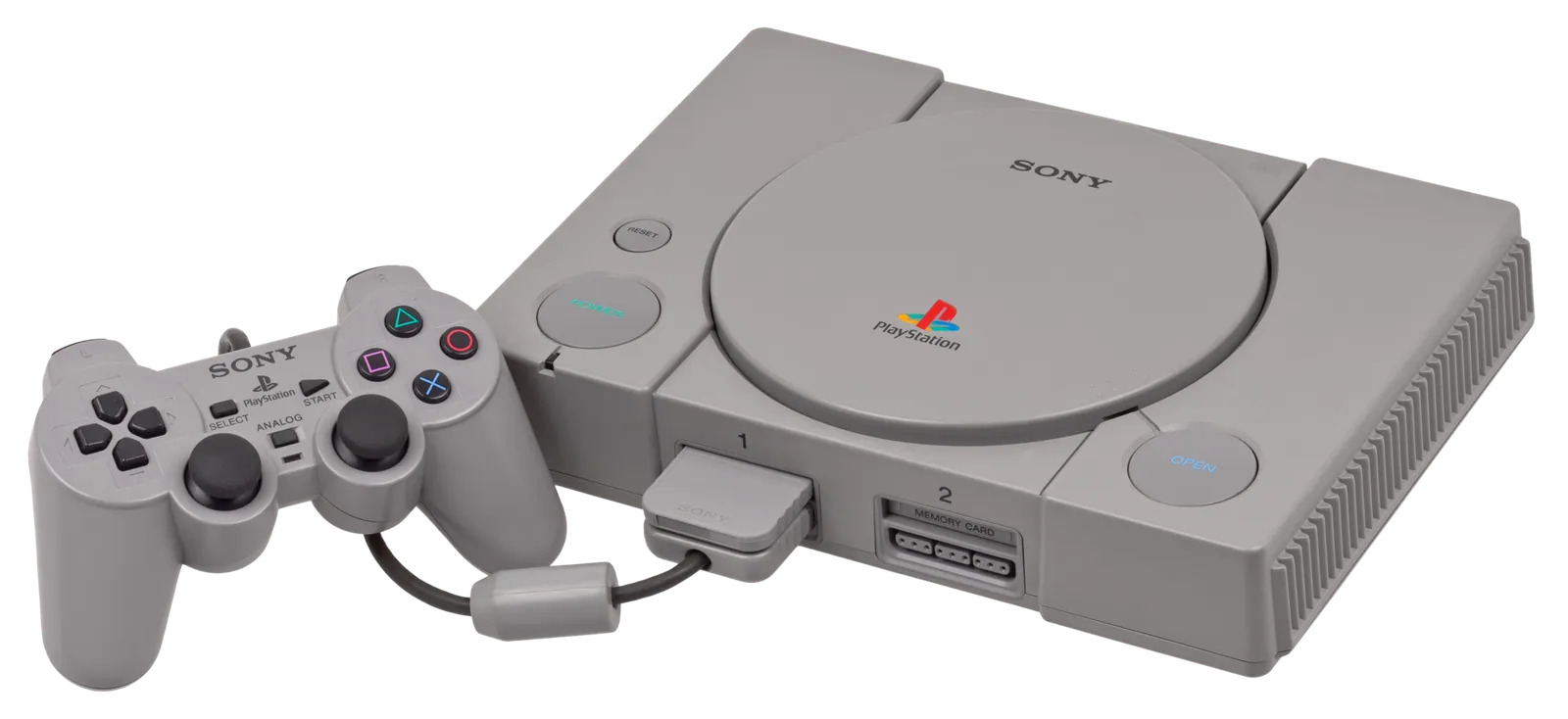
PlayStation
プレイステーション — Sony
- CPU
- MIPS R3000A @ 33.8688 MHz + GTE (geometry coprocessor)
- Media
- CD-ROM
- JP launch price
- ¥39,800
- Day 105 · 041994.12.23
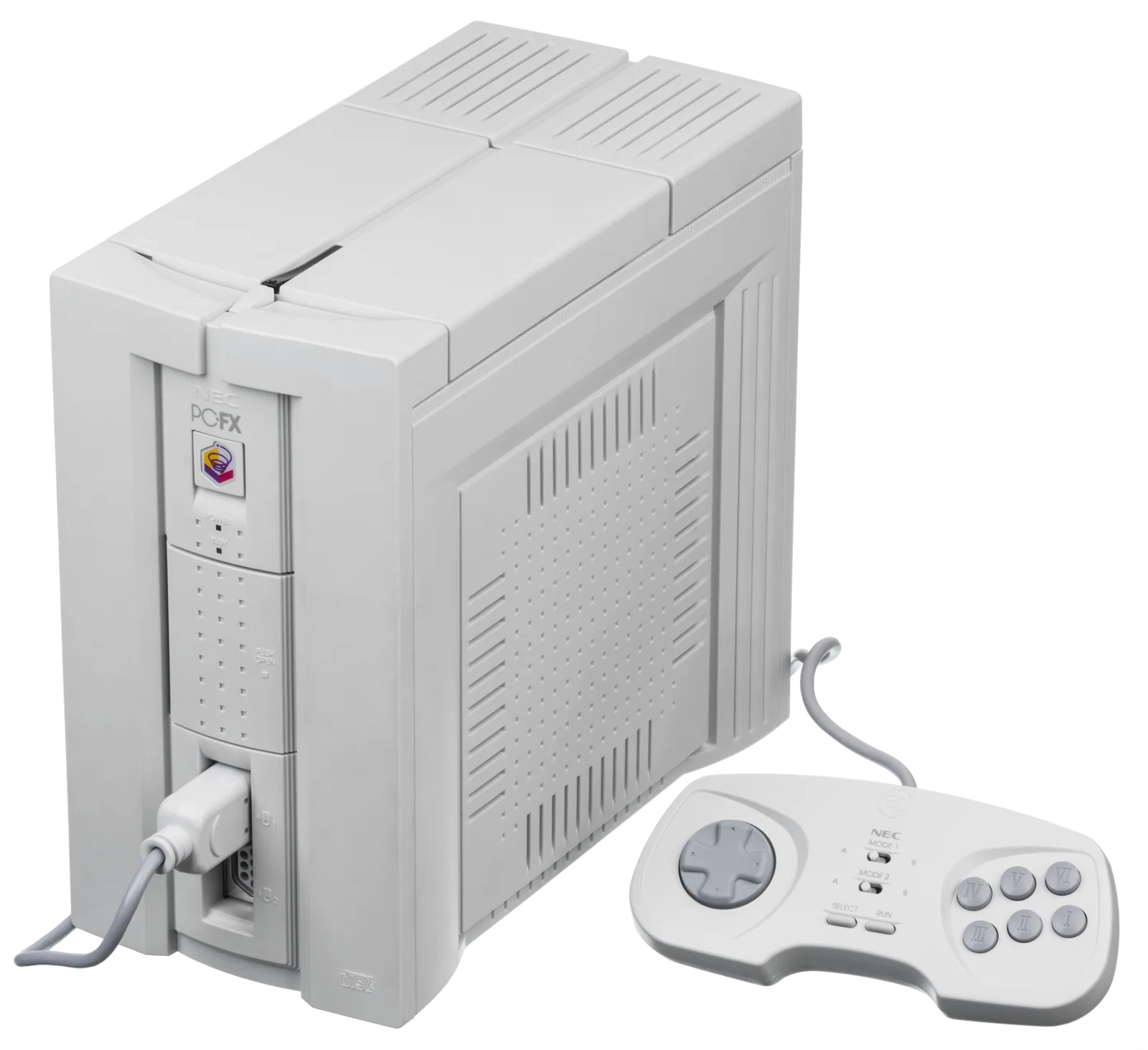
PC-FX
PC-FX — NEC
- CPU
- NEC V810 @ 21.475 MHz
- Media
- CD-ROM
- JP launch price
- ¥49,800
Specifications and prices are from the sources listed on each console page.
20Controllers · Cartridges · Handhelds · Accessories
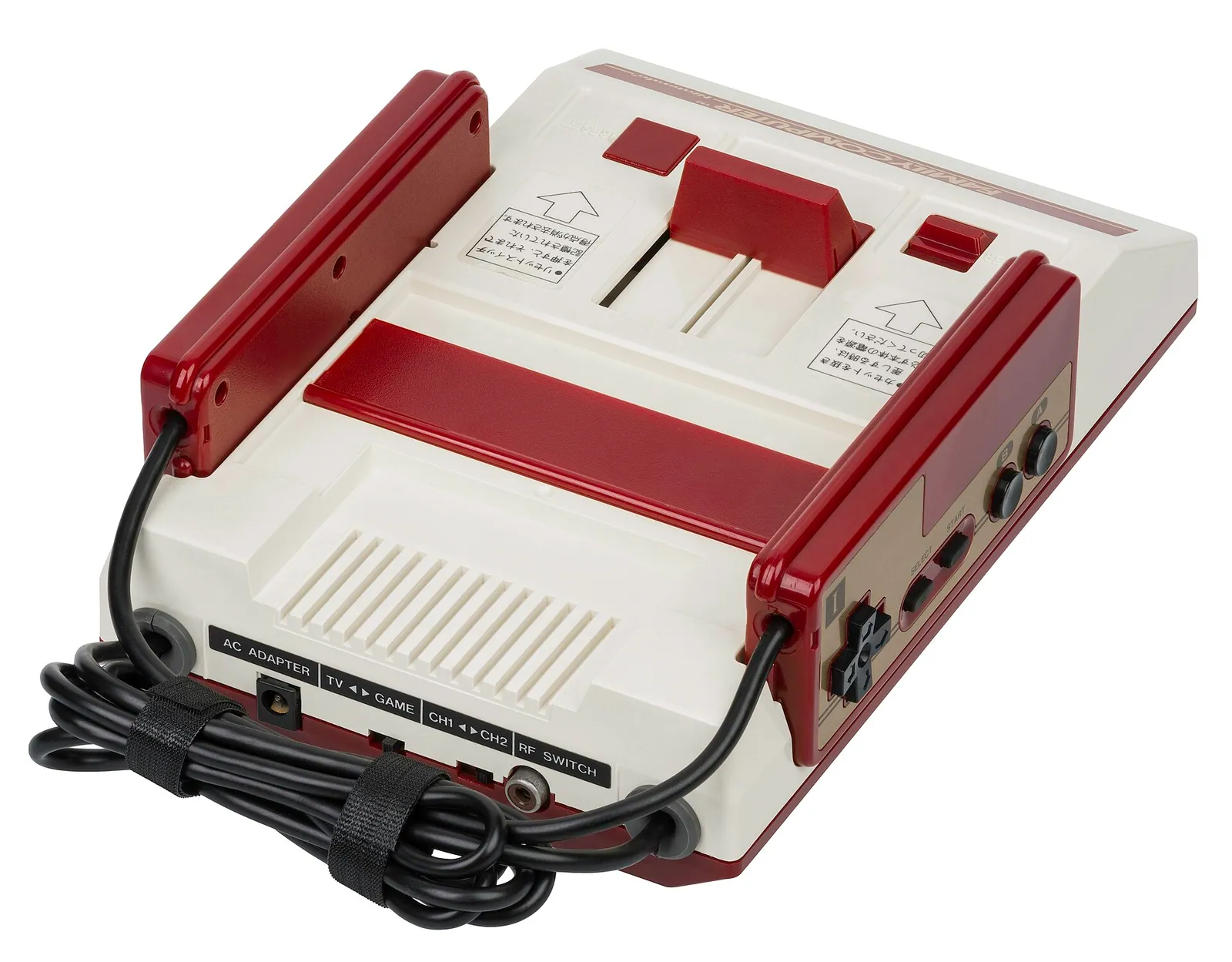
Family Computer, rear view
Nintendo · 1983
Family Computer Controller I
Nintendo · 1983
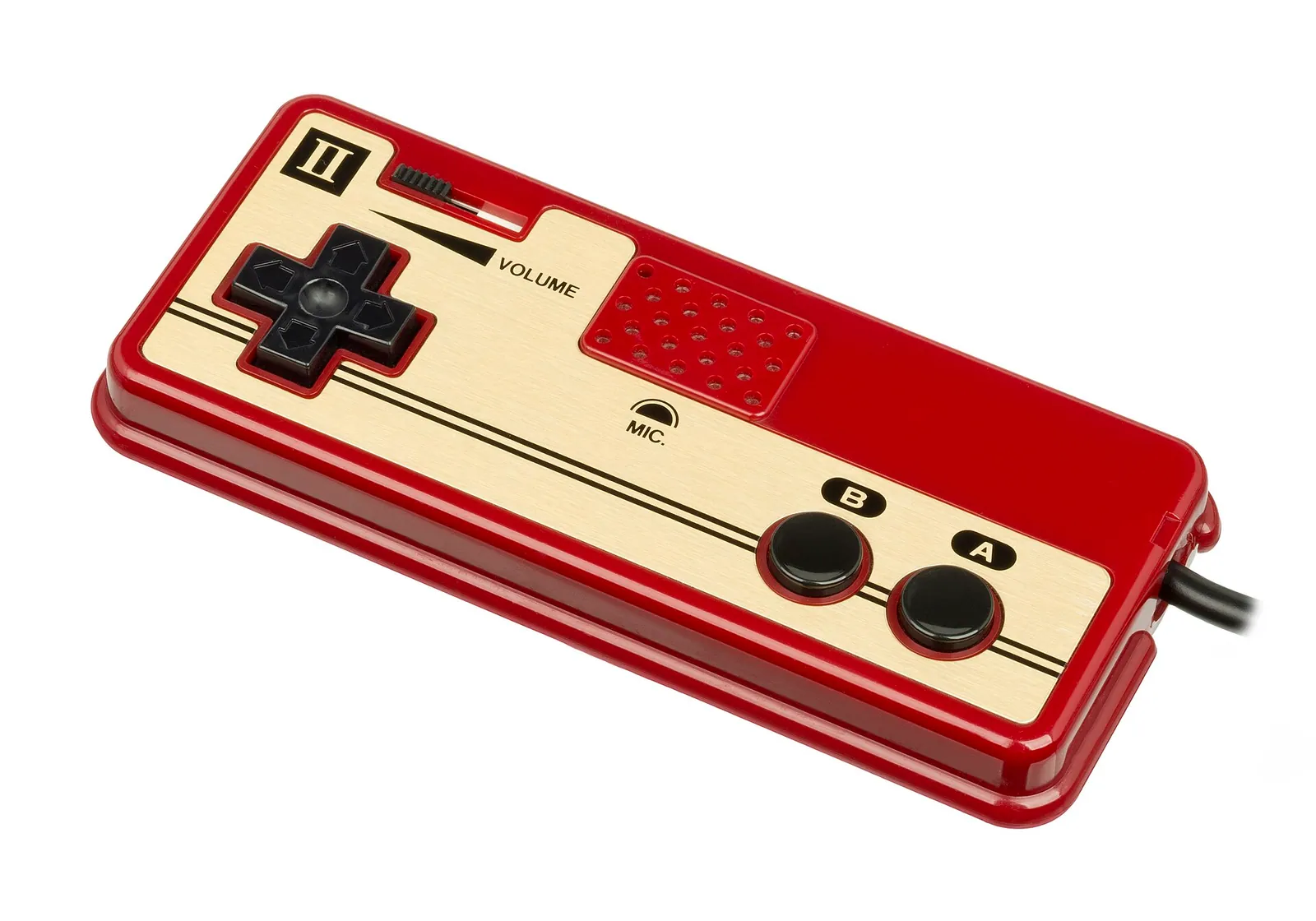
Family Computer Controller II
Nintendo · 1983
Famicom Disk System disk card
Nintendo · 1986
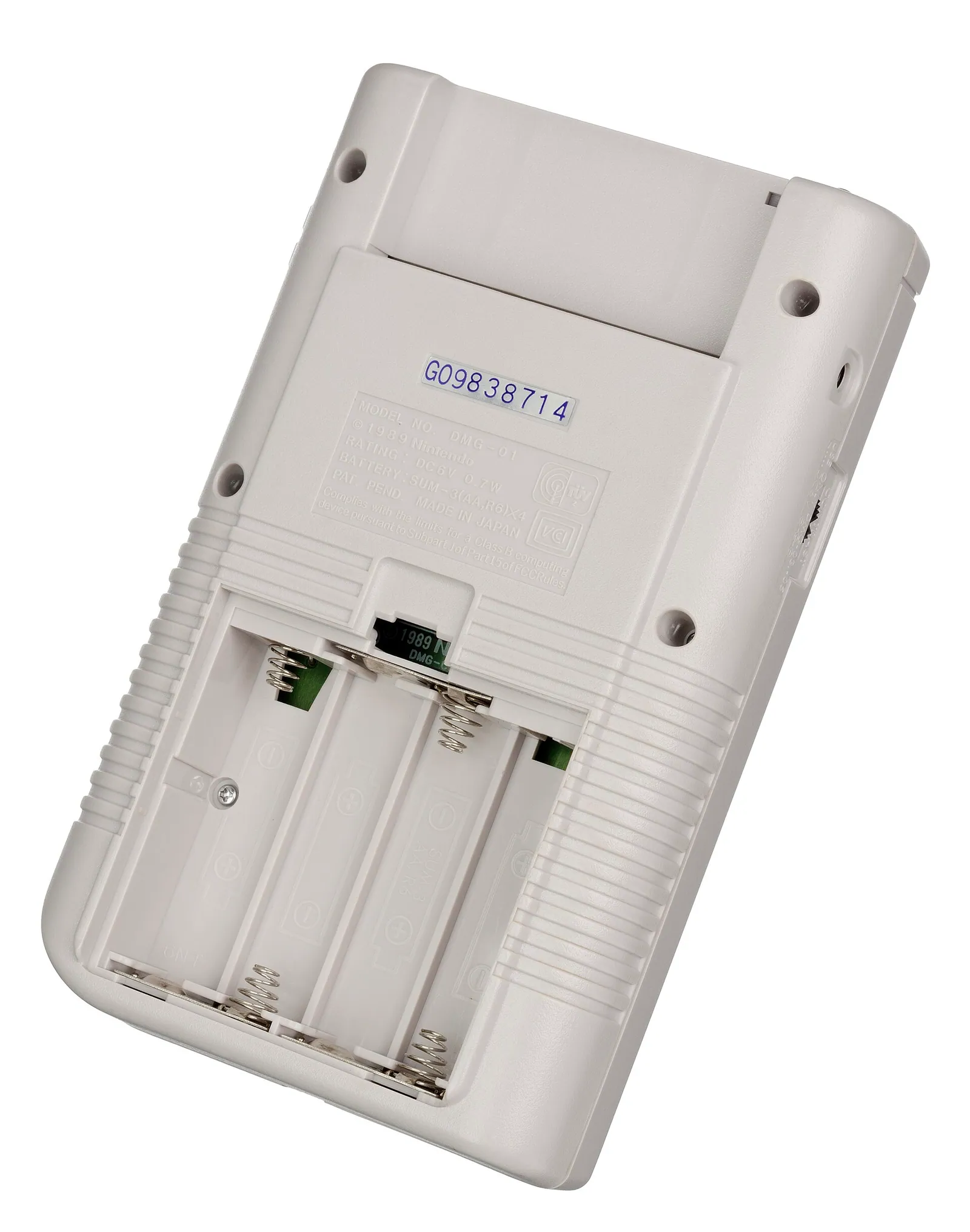
Game Boy, rear with battery cover open
Nintendo · 1989
Super Famicom controller
Nintendo · 1990
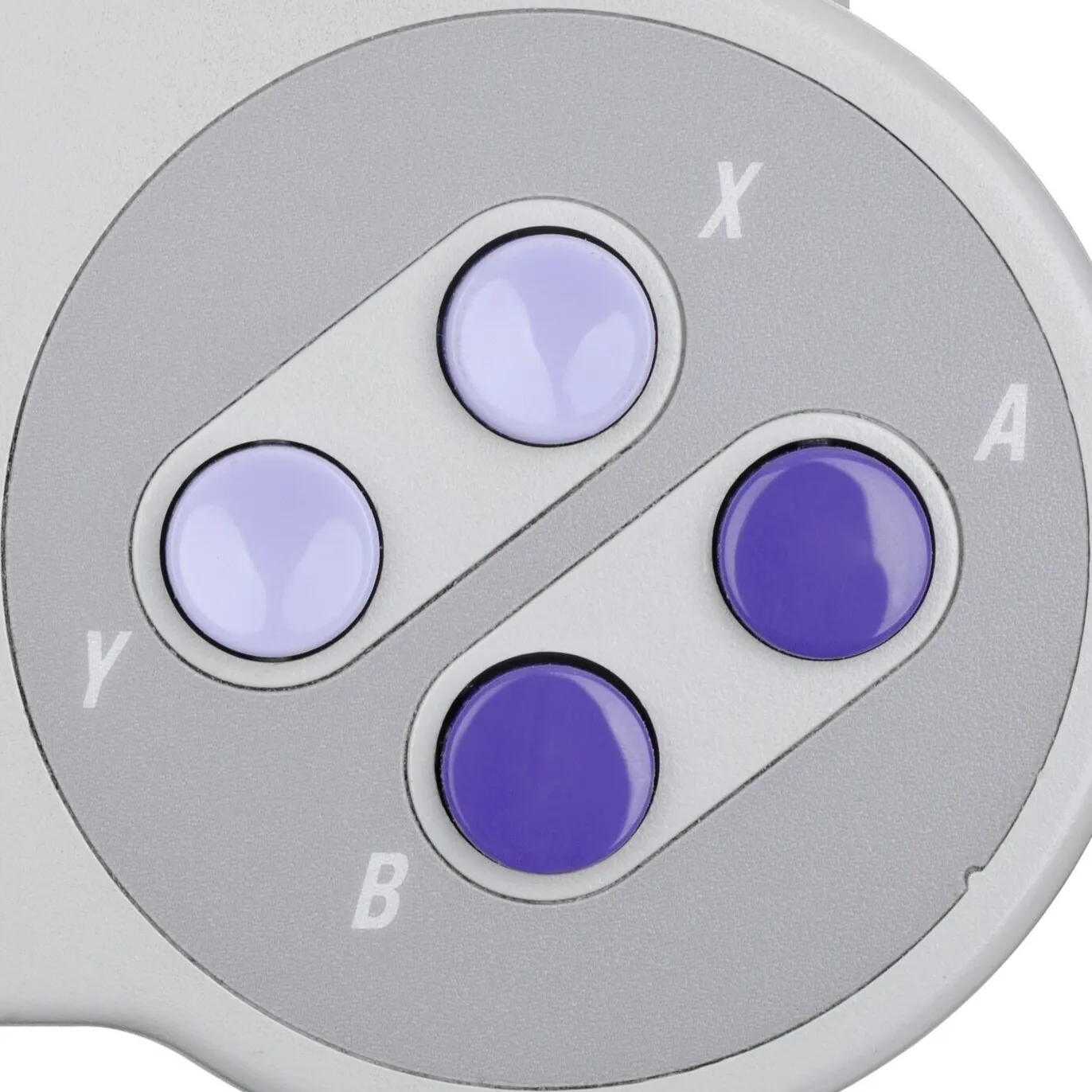
Super Famicom / SNES controller face buttons
Nintendo · 1990
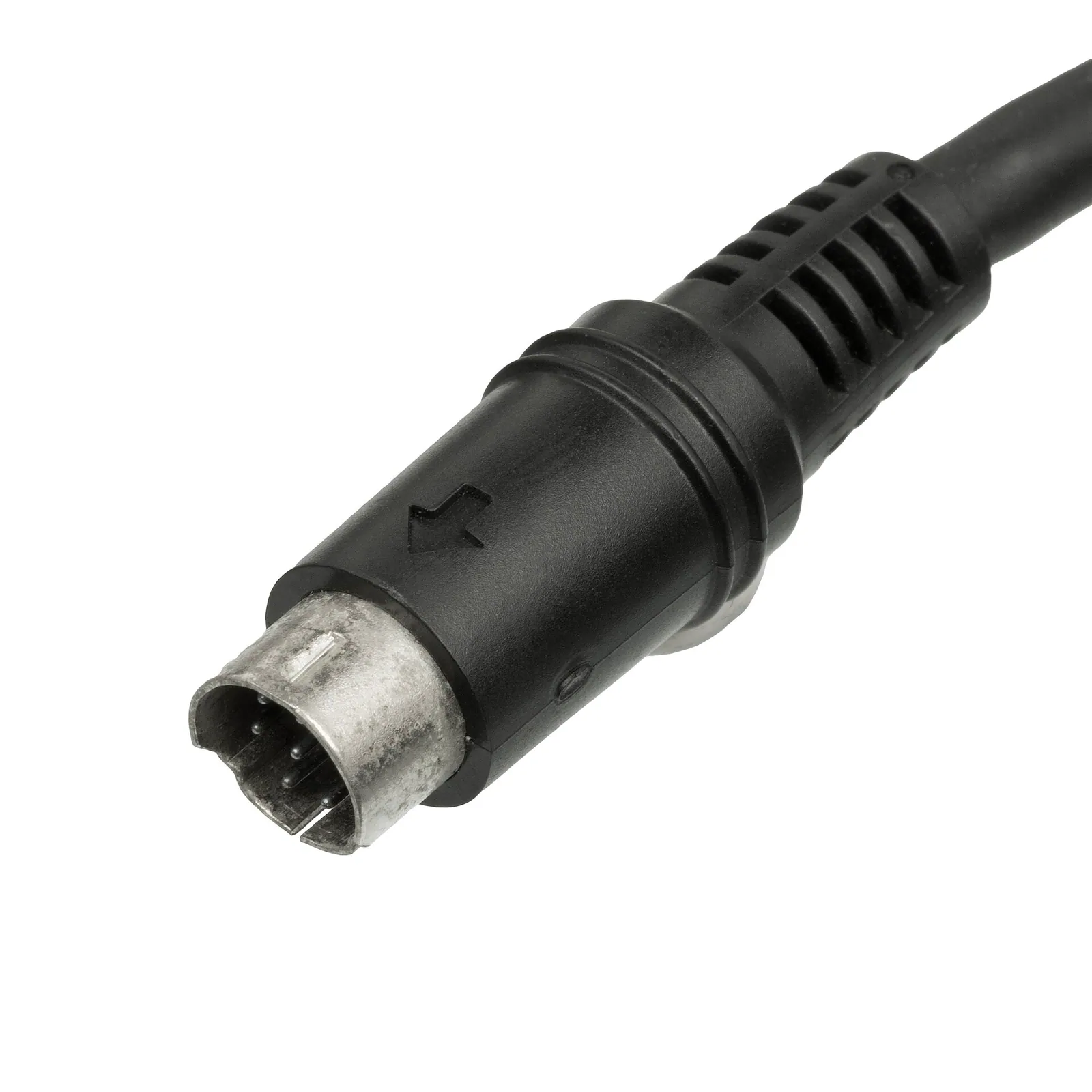
PC Engine controller plug
NEC · 1987
Six-button control pad (North American Genesis version)
SEGA · 1988
Neo Geo AES joystick controller
SNK · 1990
SEGA Saturn controller (Japanese model 1)
SEGA · 1994
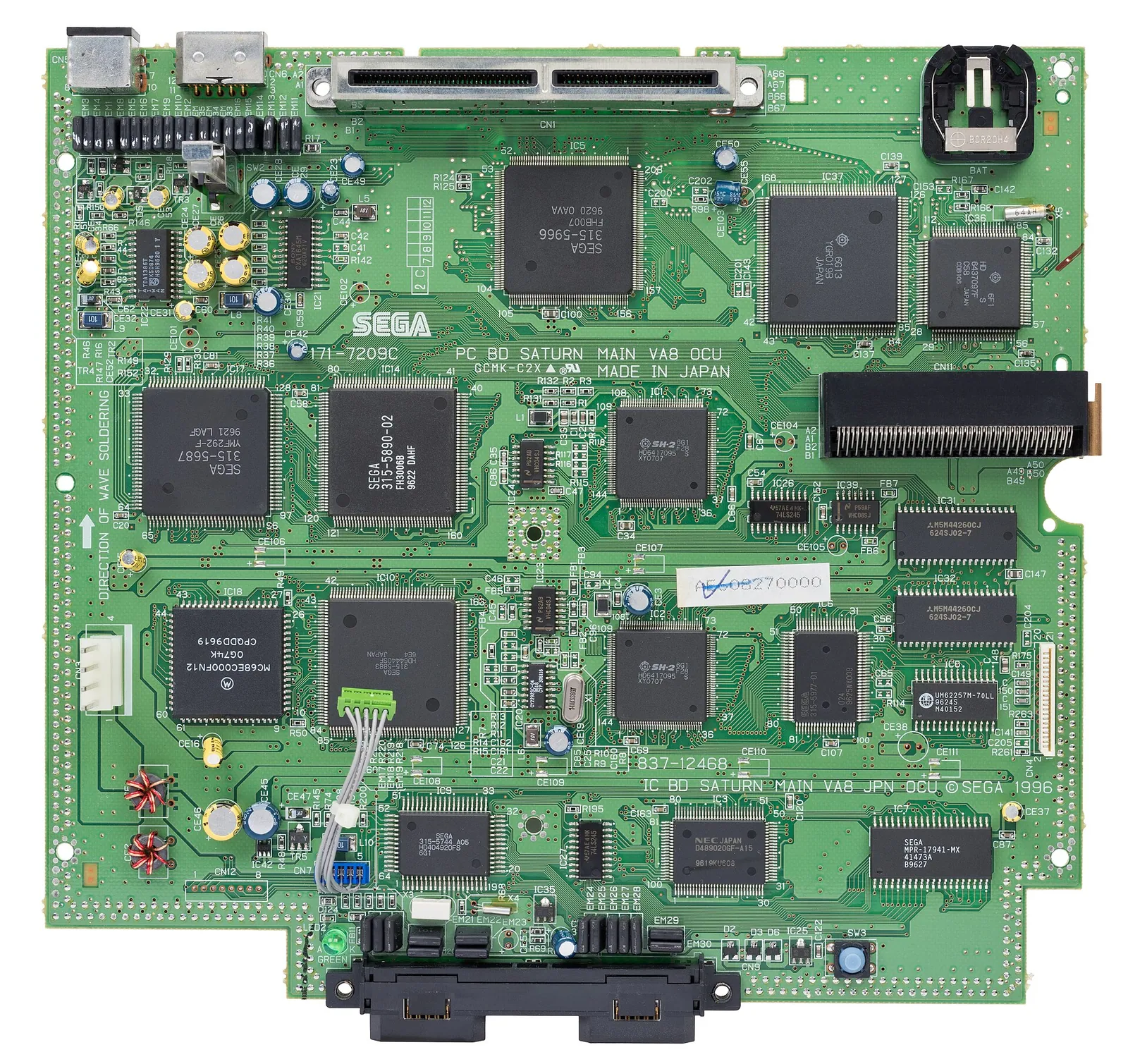
SEGA Saturn motherboard
SEGA · 1994
DualShock analog controller
Sony · 1994
PlayStation Memory Card
Sony · 1994
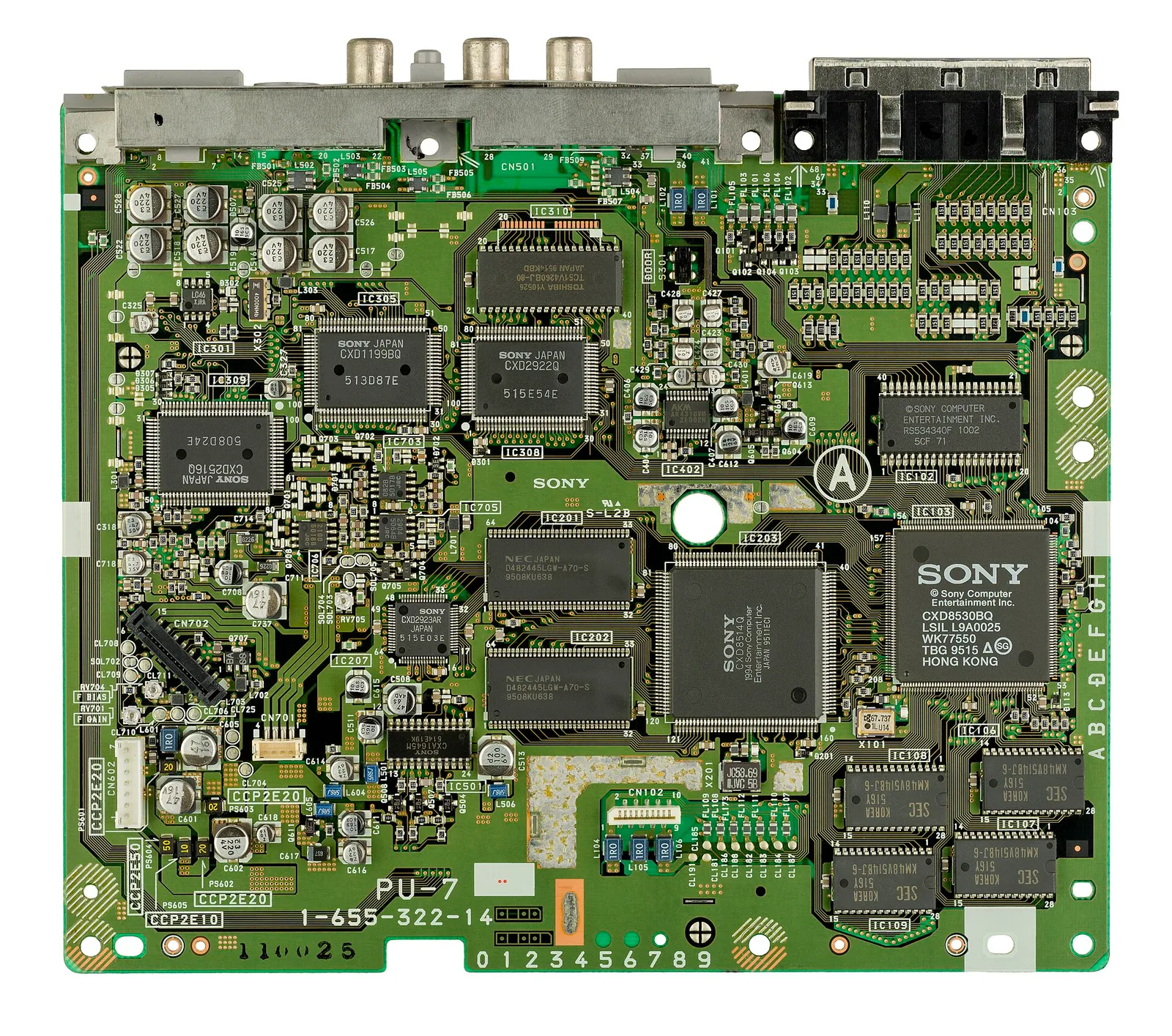
PlayStation (SCPH-1000) motherboard
Sony · 1994
Nintendo 64 controller
Nintendo · 1996
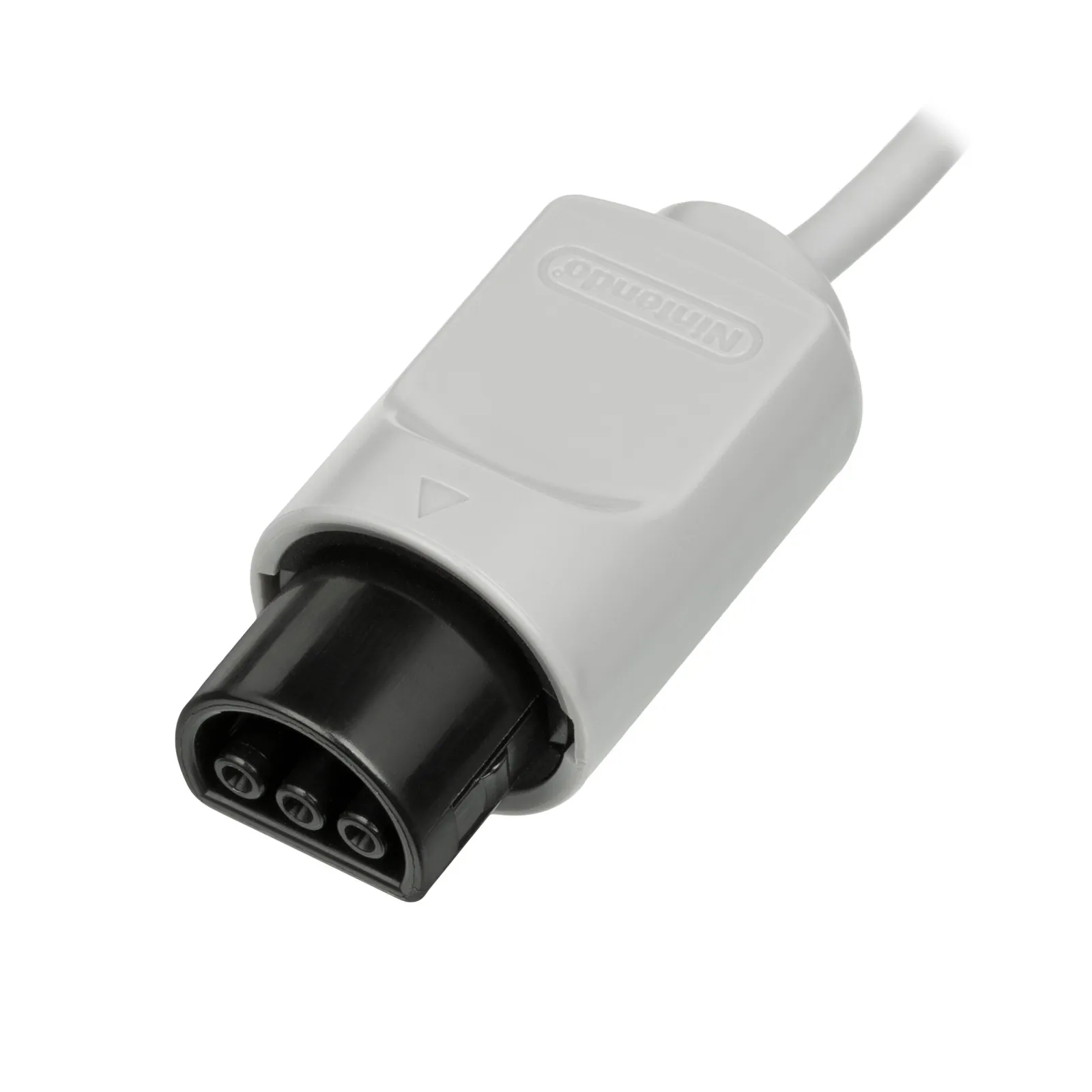
Nintendo 64 controller plug
Nintendo · 1996
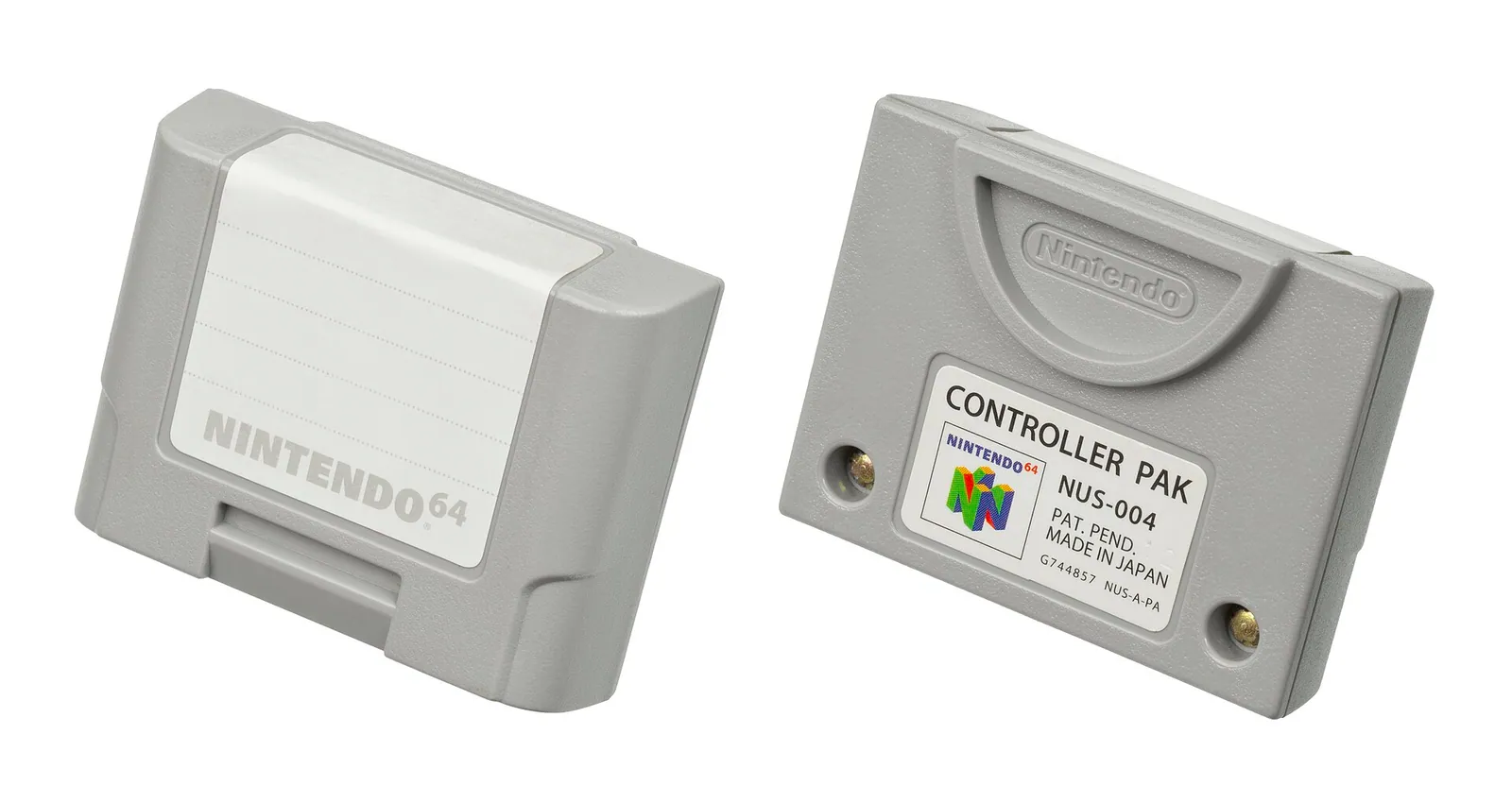
Nintendo 64 Controller Pak
Nintendo · 1996
Dreamcast controller and Visual Memory unit
SEGA · 1998
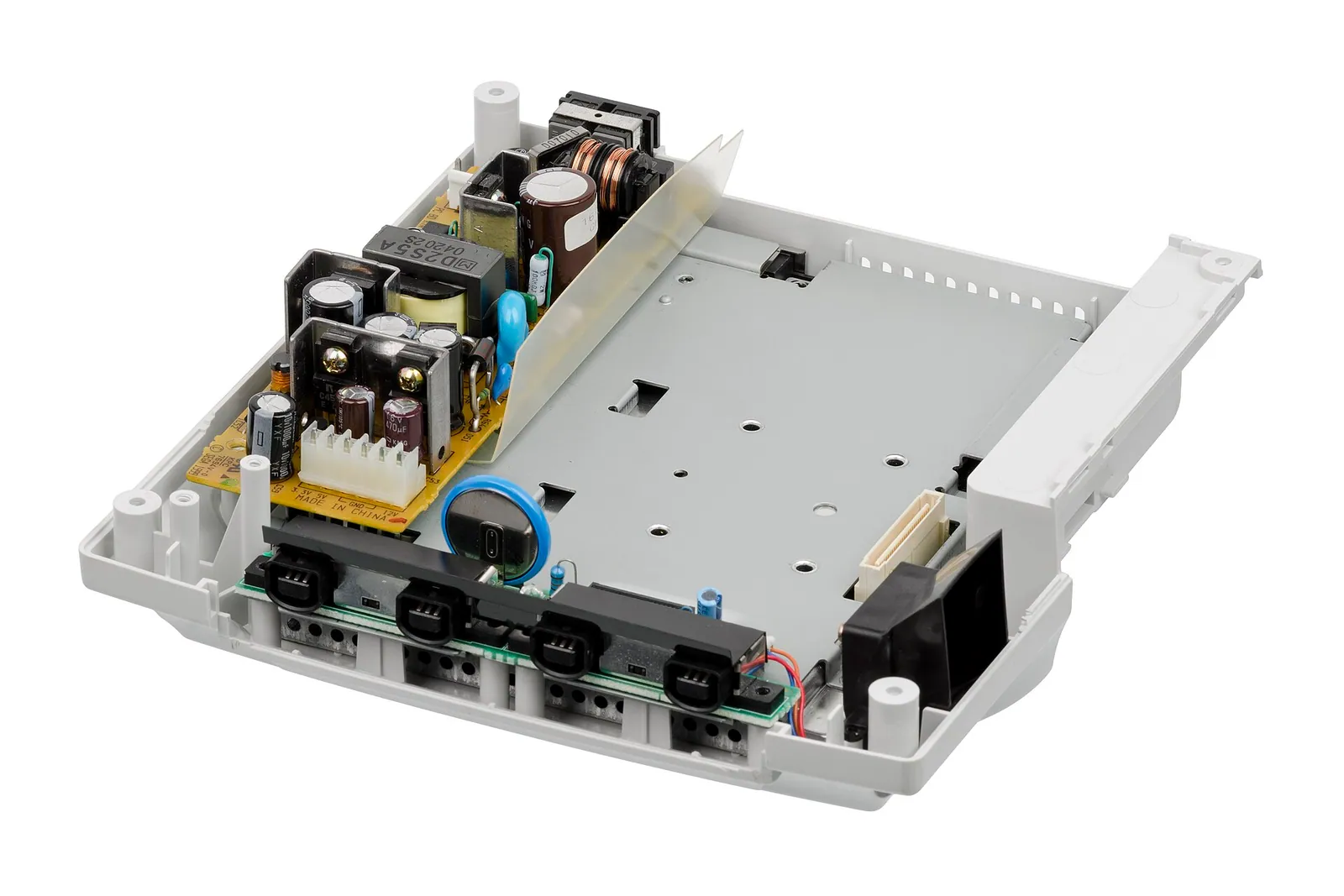
Dreamcast disassembled
SEGA · 1998
DualShock 2
Sony · 2000
Nintendo GameCube controller
Nintendo · 2001
Game Boy Game Pak (cartridge)
Nintendo · 1989
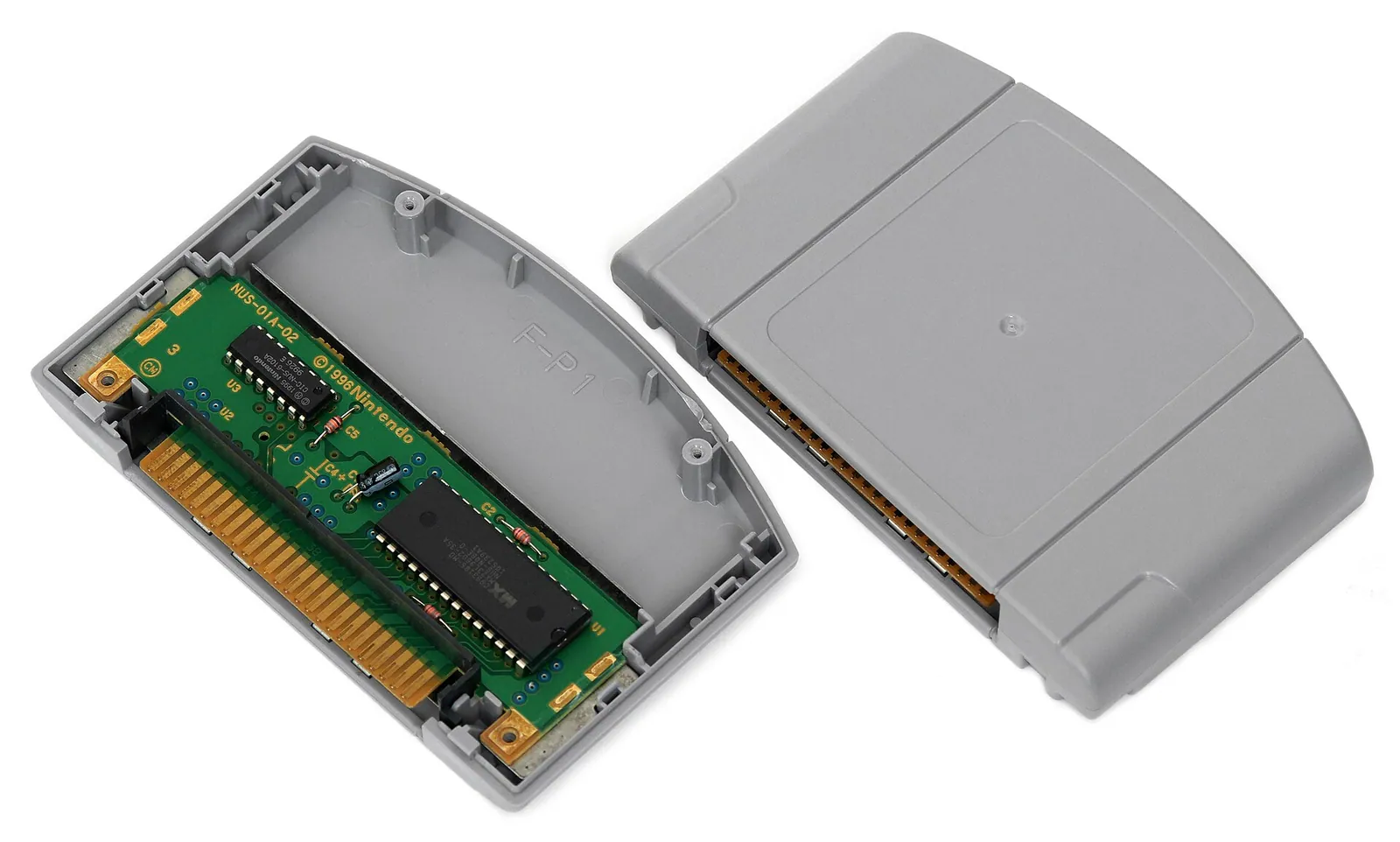
Nintendo 64 Game Pak (cartridge)
Nintendo · 1996
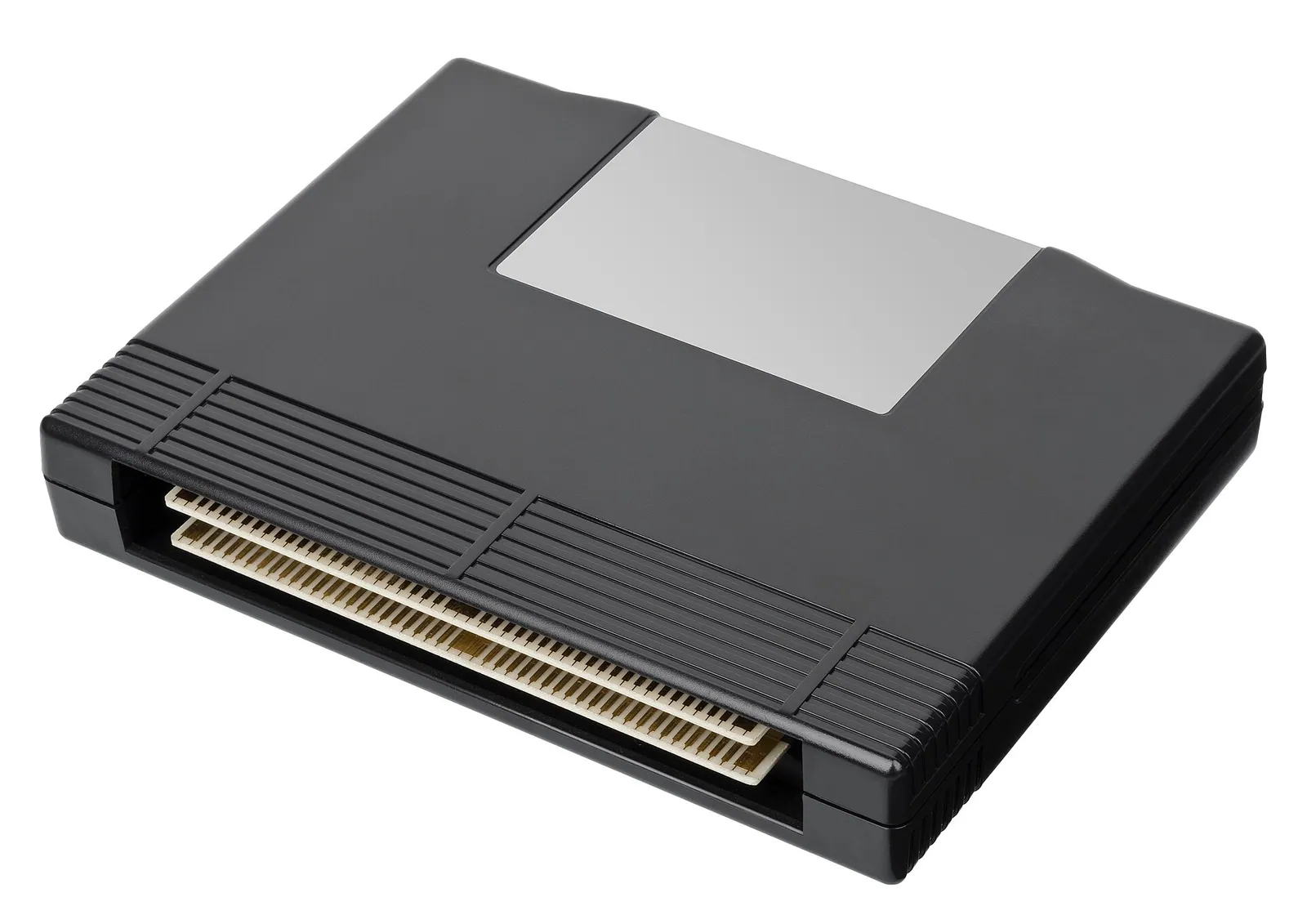
Neo Geo AES cartridge (connector edge)
SNK · 1990
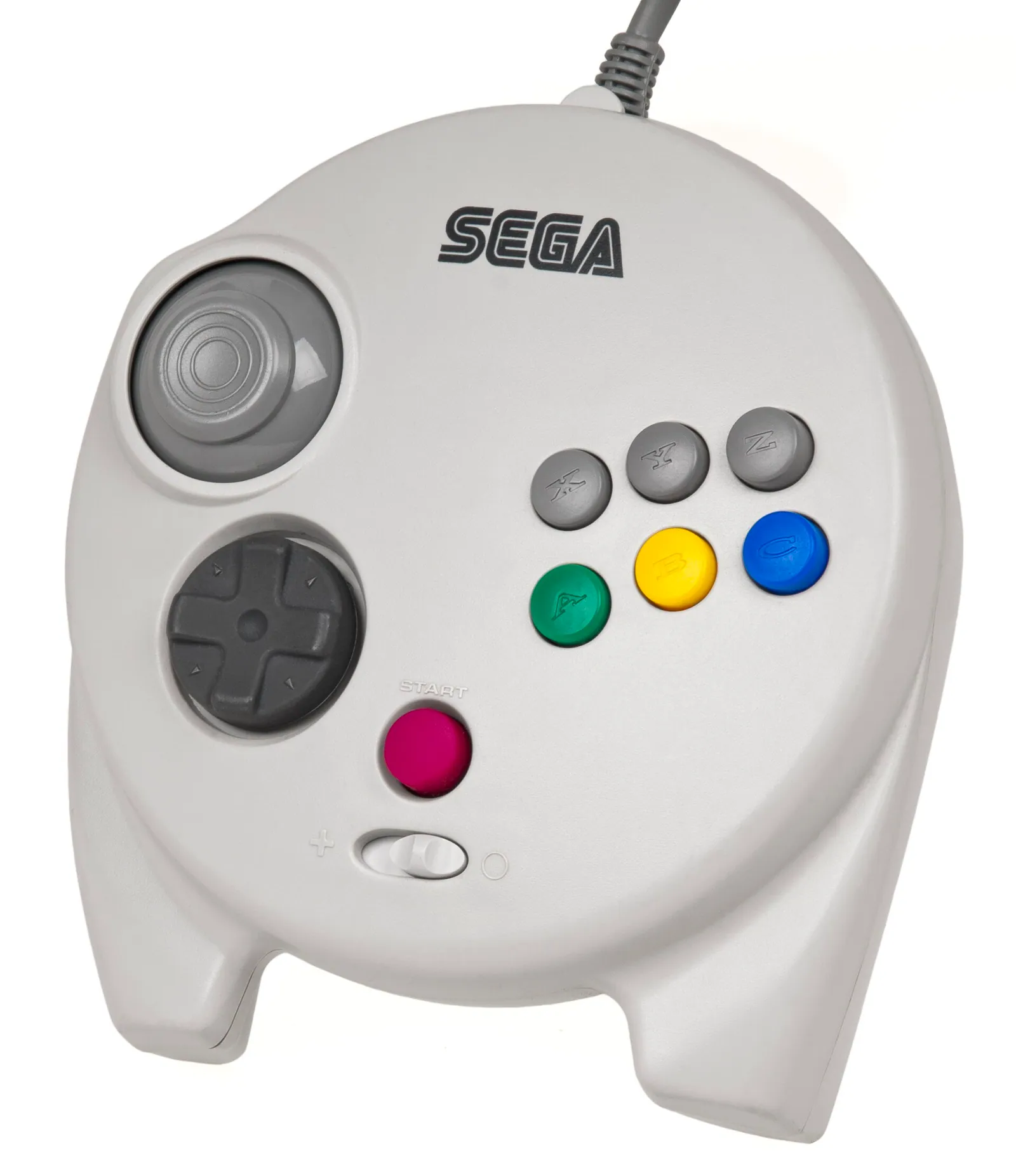
SEGA Saturn 3D Control Pad (Japanese)
SEGA · 1994
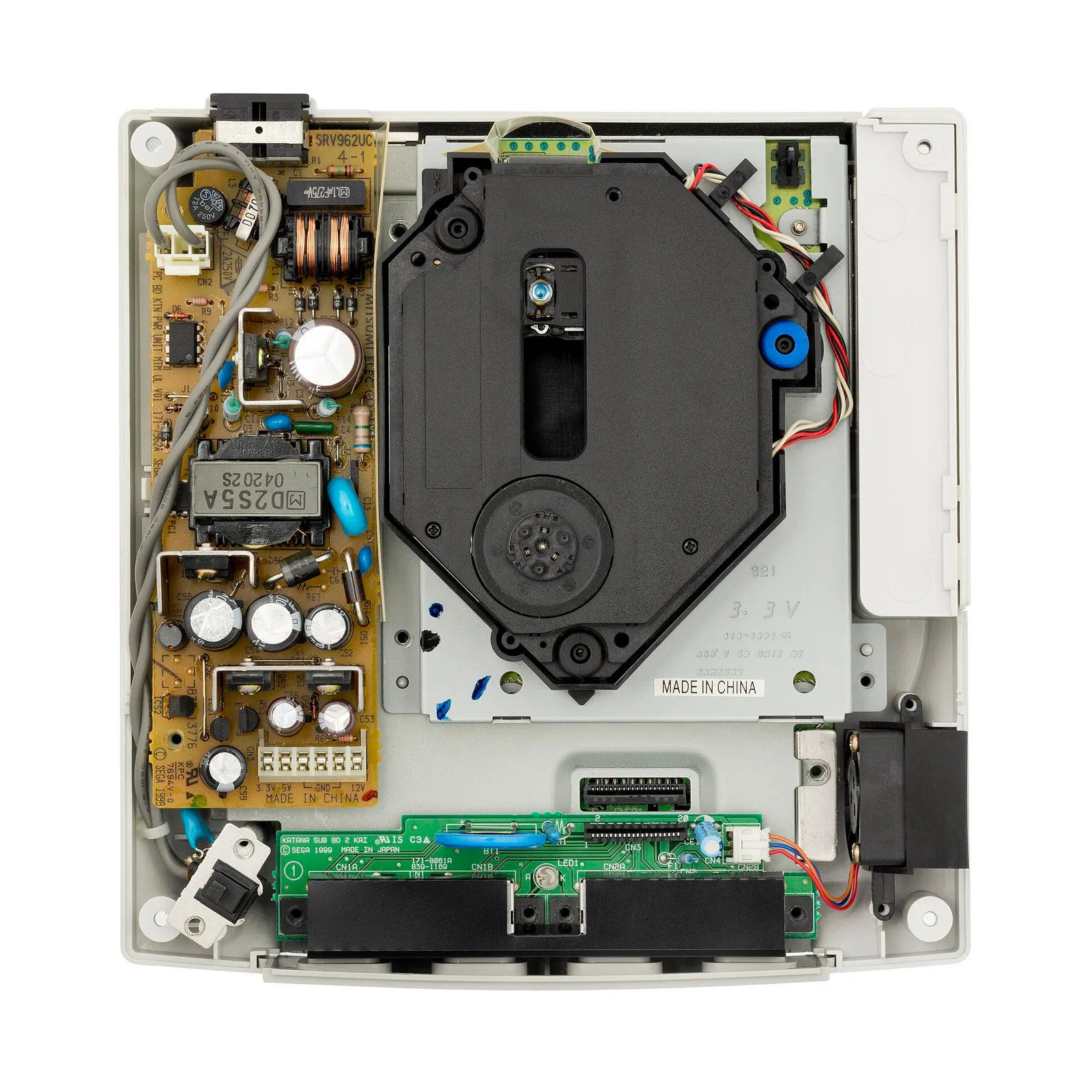
Dreamcast internals
SEGA · 1998
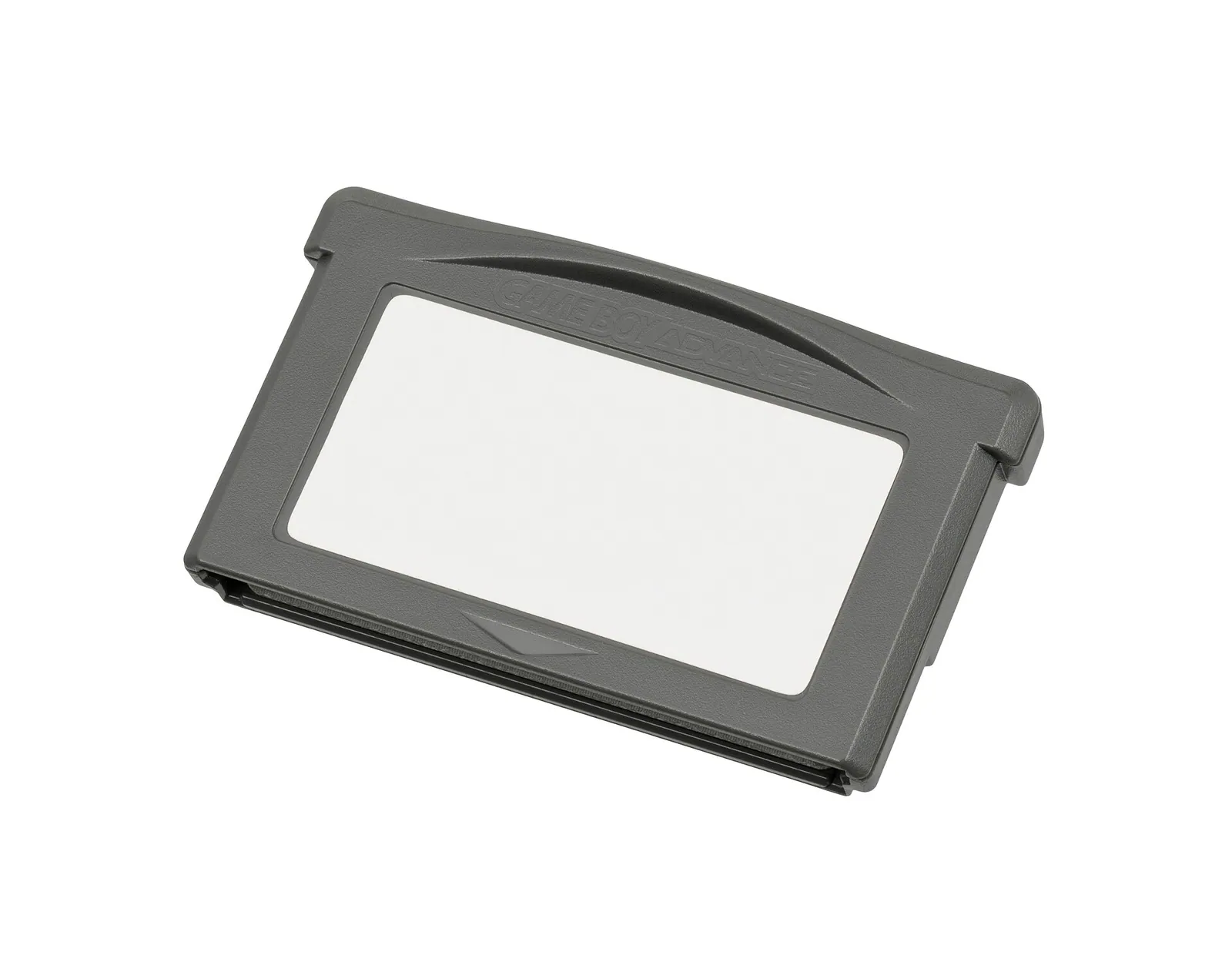
Game Boy Advance Game Pak
Nintendo · 2001
22Explore the archive