Technology & design
Hardware.
The tool in the hand, and the vessel that carries the software.
12A change in representation
From8-bitto 3D.
From dots to polygons. Every figure here is an abstract form — not a reproduction of any real game character or screen.
The screen was a grid. With few colours and little memory, every shape was designed as an arrangement of individual dots.
More colours and new capabilities brought dithered gradients and tilted planes that suggested depth on a flat screen.
Shapes came to be described by vertices, edges and faces. Cameras could move around them, and space itself became something to design.
13Controllers
Controllersthat changedhow we play.
A cross-shaped pad, shoulder buttons, six face buttons, an analog stick. Each time the tool in the hand changed shape, so did the way we played.
← Scroll sideways →
- 198301
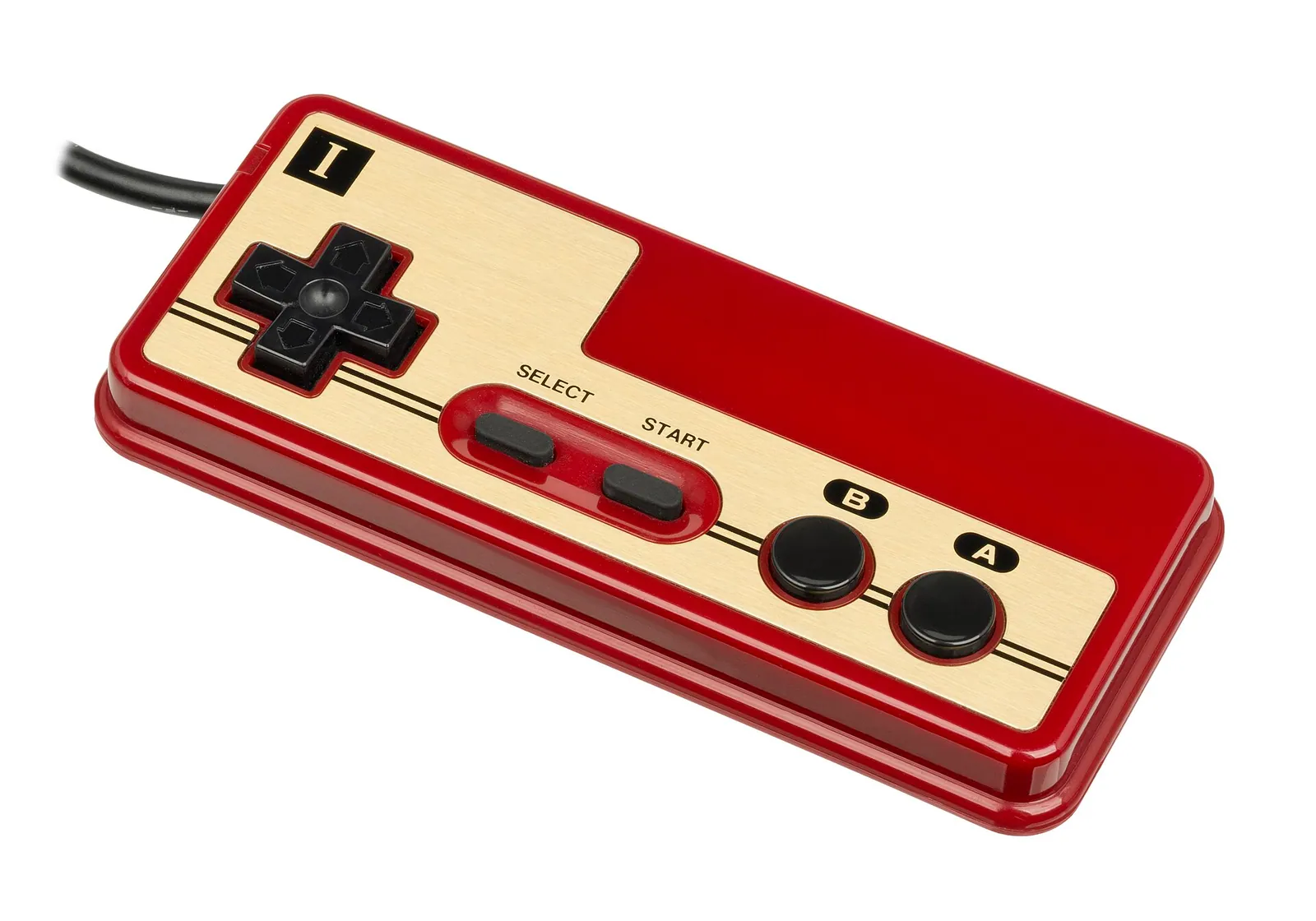
Family Computer Controller I
Nintendo · Console launch 1983
Two controllers were hard-wired to the original console; the pad uses a cross-shaped D-pad with A and B buttons, and Controller II has a built-in microphone.
- 198302
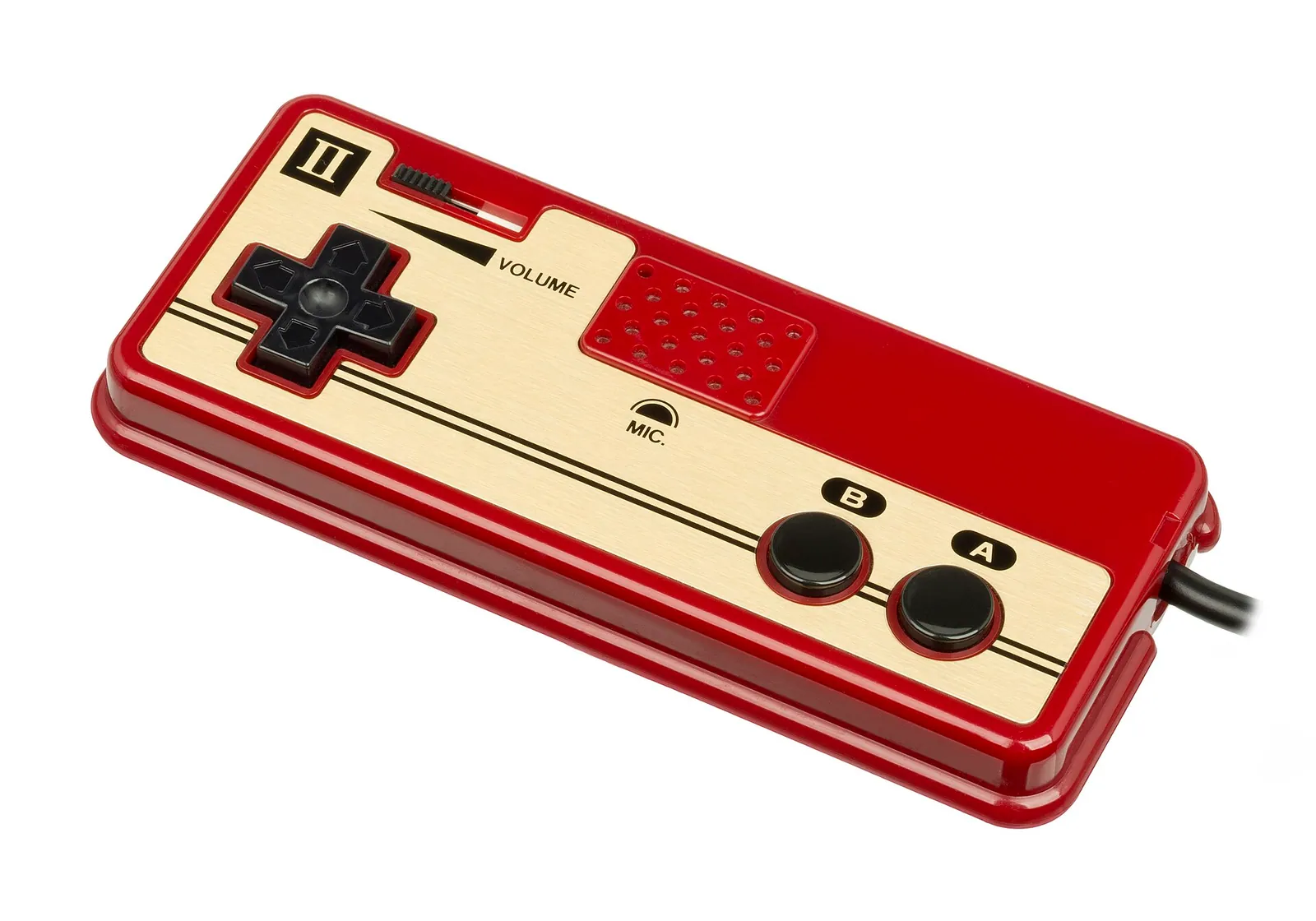
Family Computer Controller II
Nintendo · Console launch 1983
Two controllers were hard-wired to the original console; the pad uses a cross-shaped D-pad with A and B buttons, and Controller II has a built-in microphone.
- 198803
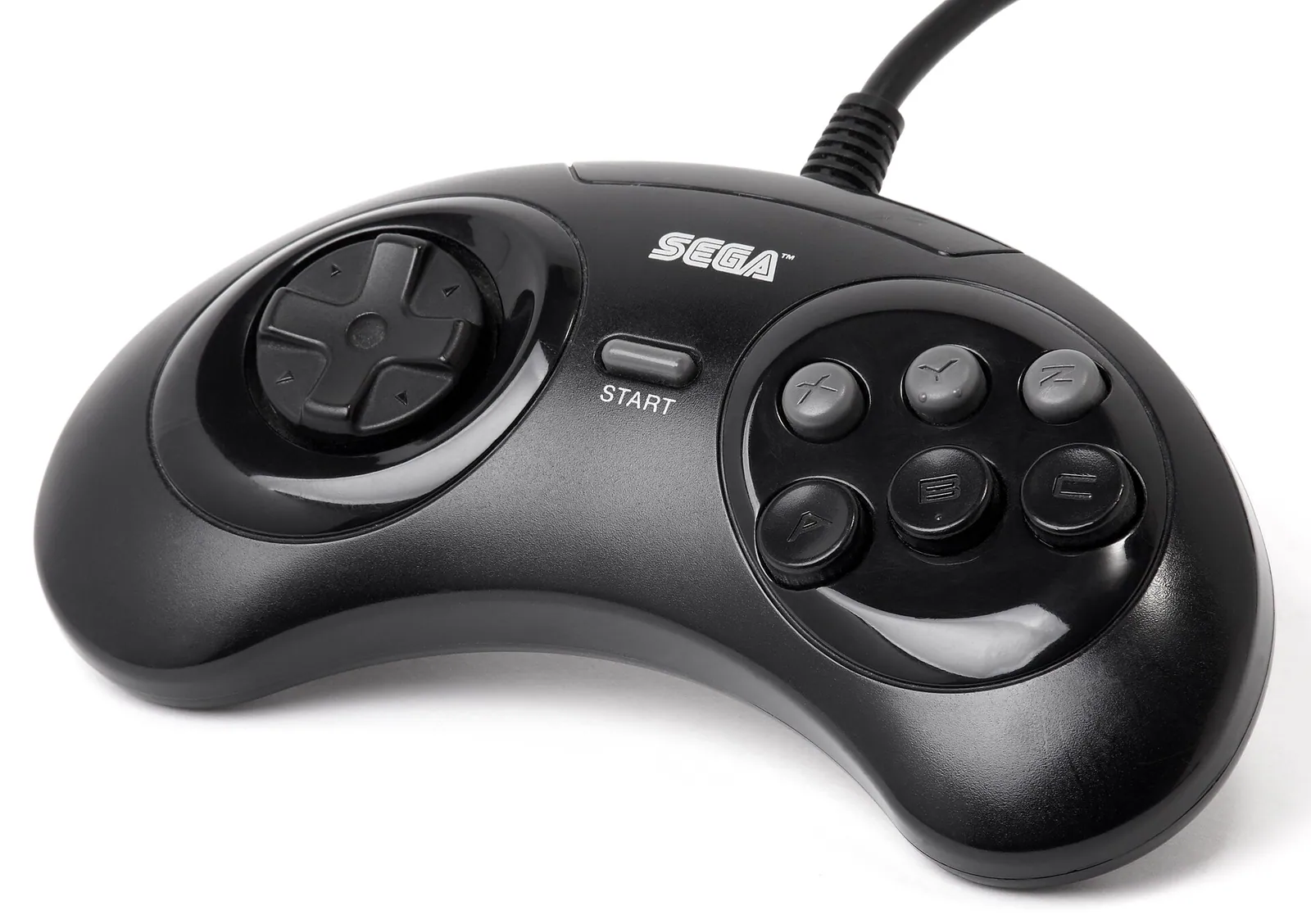
Six-button control pad (North American Genesis version)
SEGA · Console launch 1988
Launched with a three-button control pad.
- 199004
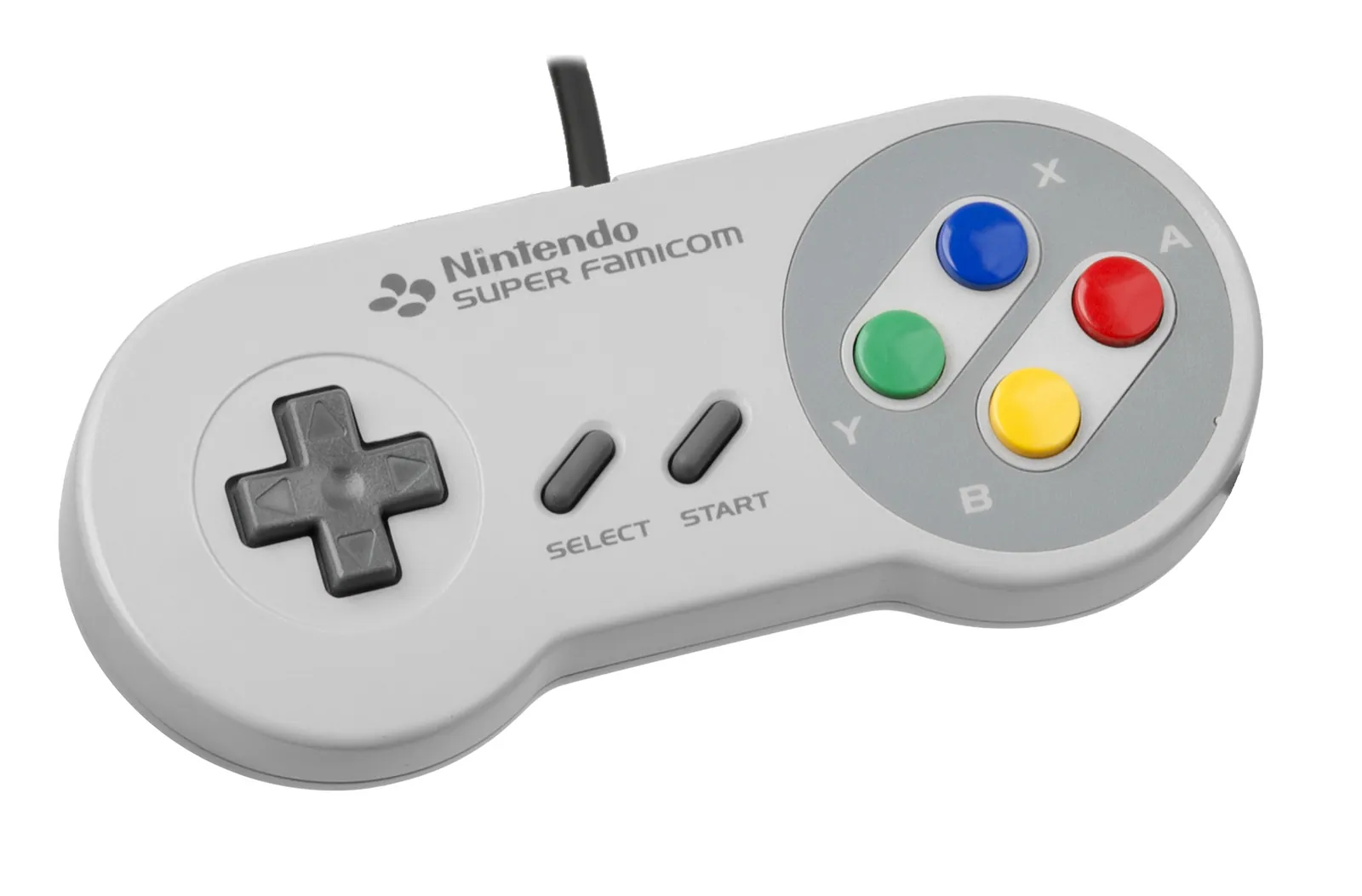
Super Famicom controller
Nintendo · Console launch 1990
The controller adds X and Y to the A and B face buttons in a diamond arrangement, plus L and R shoulder buttons.
- 199005
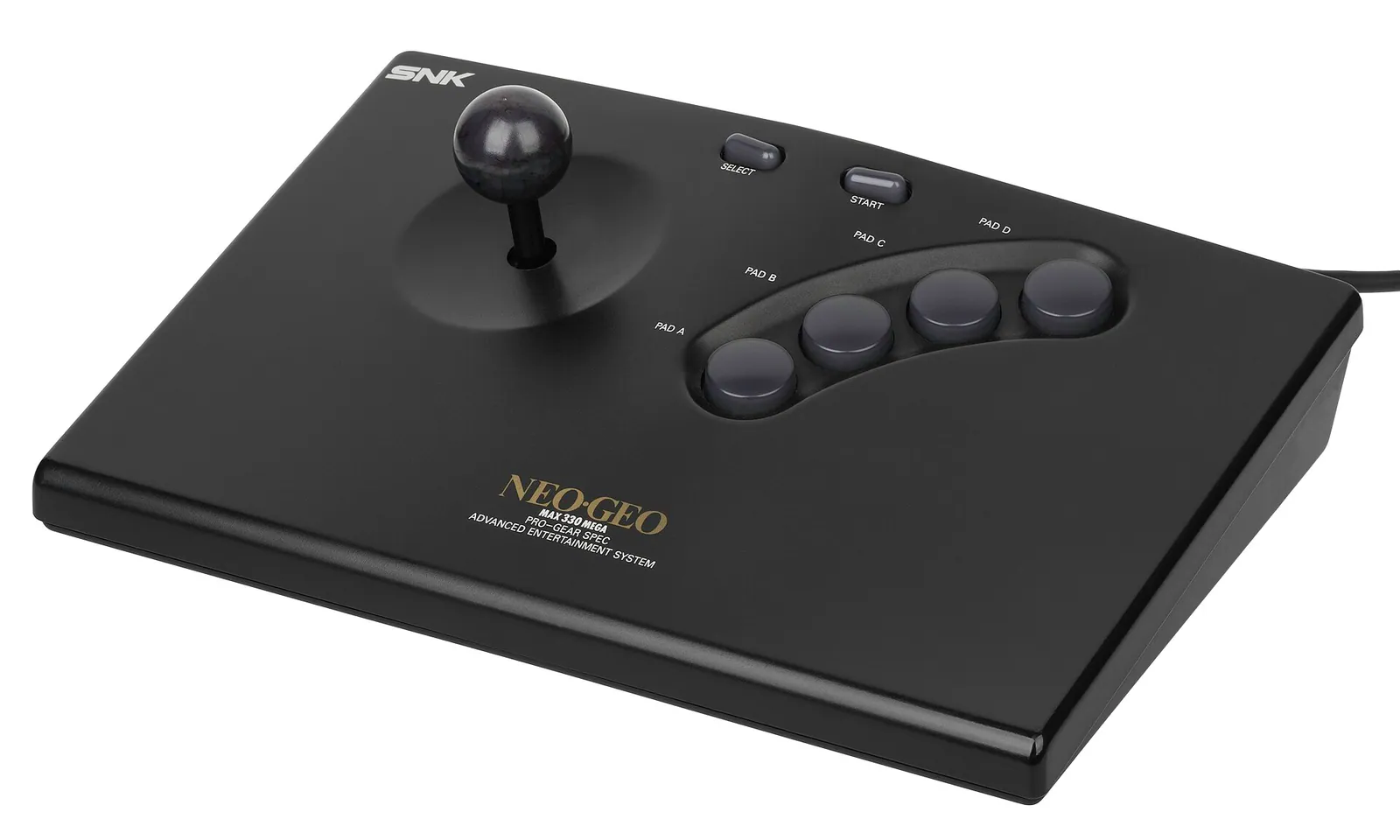
Neo Geo AES joystick controller
SNK · Console launch 1990
A large arcade-style controller with a lever stick and four buttons arranged in a gentle arc.
- 199406
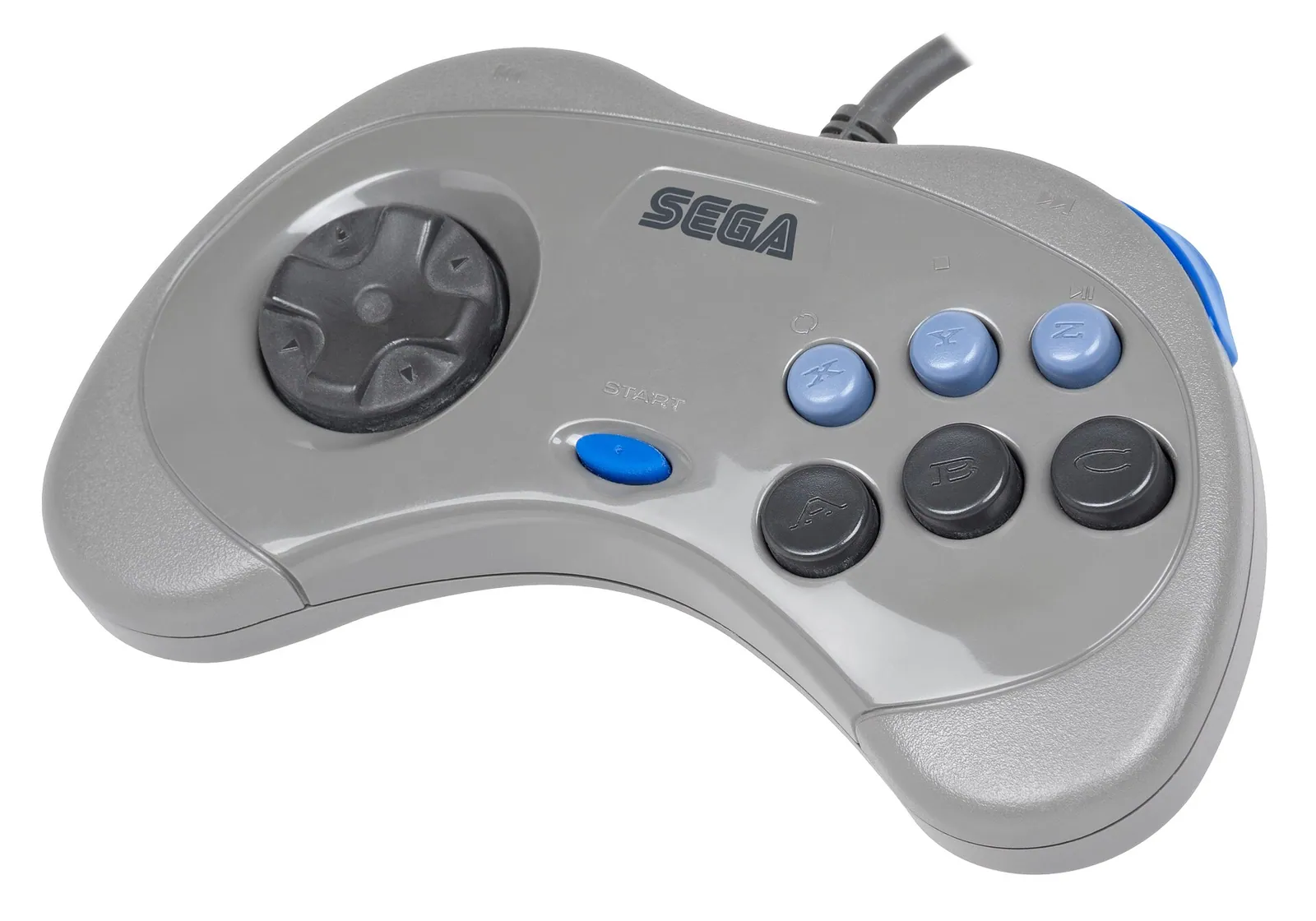
SEGA Saturn controller (Japanese model 1)
SEGA · Console launch 1994
Six-button pad (A, B, C, X, Y, Z) plus Start.
- 199407
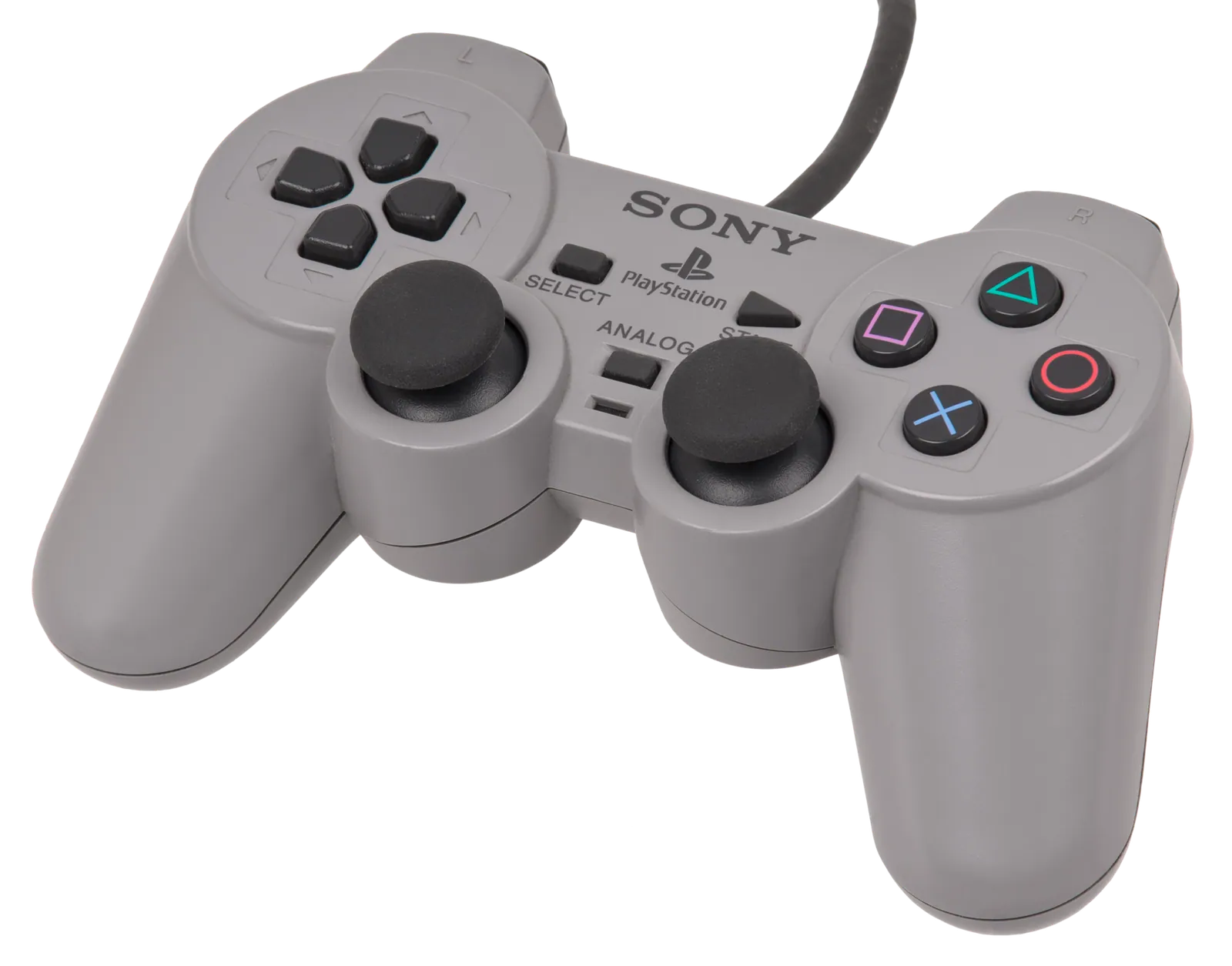
DualShock analog controller
Sony · Console launch 1994
Grip-style controller designed by Teiyu Goto, with four face buttons marked by a green triangle, red circle, blue cross and pink square.
- 199408
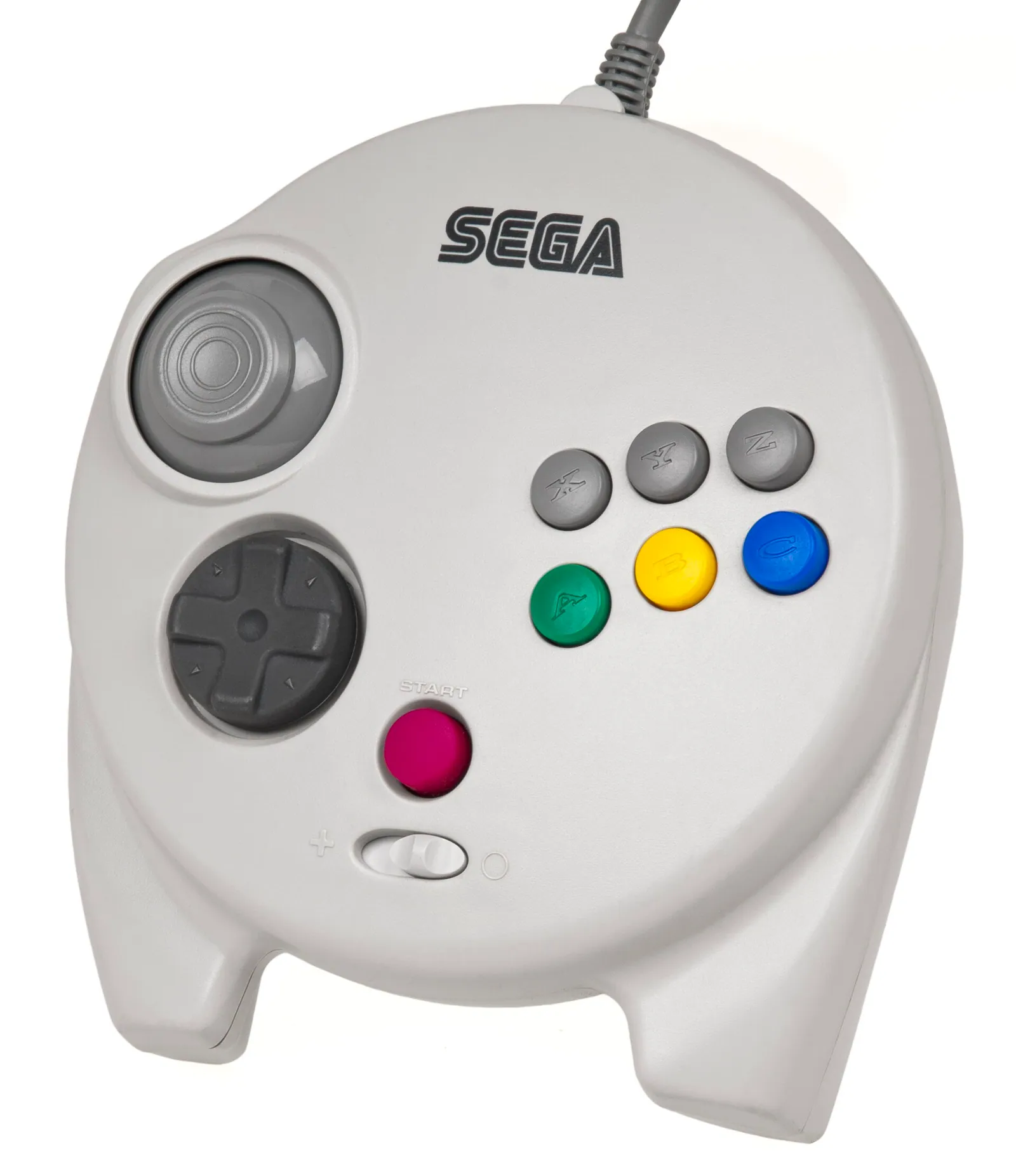
SEGA Saturn 3D Control Pad (Japanese)
SEGA · Console launch 1994
Six-button pad (A, B, C, X, Y, Z) plus Start.
- 199609
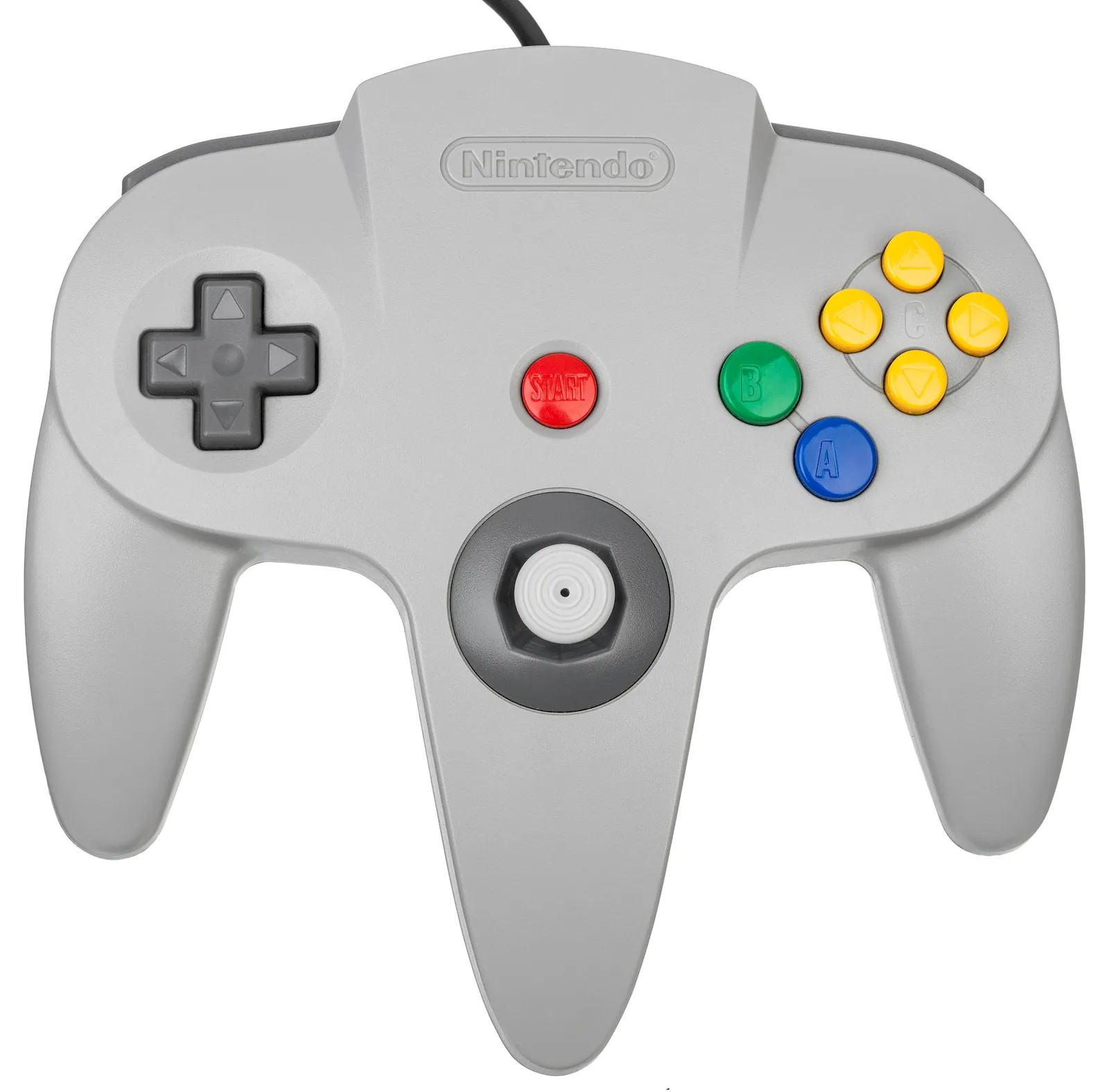
Nintendo 64 controller
Nintendo · Console launch 1996
A three-pronged M-shaped controller with an analog Control Stick (3D Stick) as standard, a Z trigger on the back, four C buttons, a D-pad, A/B and L/R buttons, and an expansion slot for the Controller Pak on the underside.
- 199810
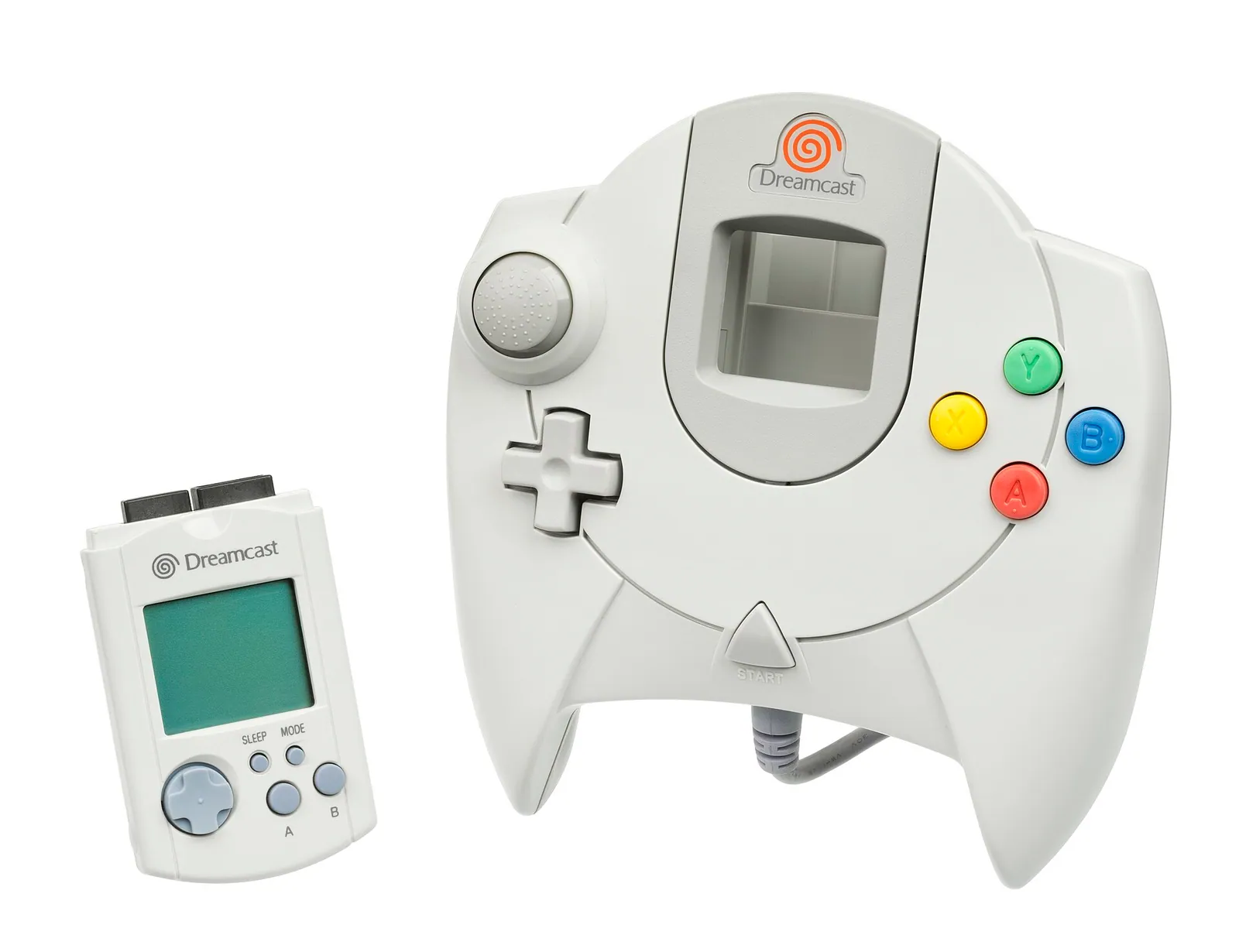
Dreamcast controller and Visual Memory unit
SEGA · Console launch 1998
Analog stick, D-pad, four face buttons and two analog triggers, with two expansion sockets for the VMU memory card.
- 200011
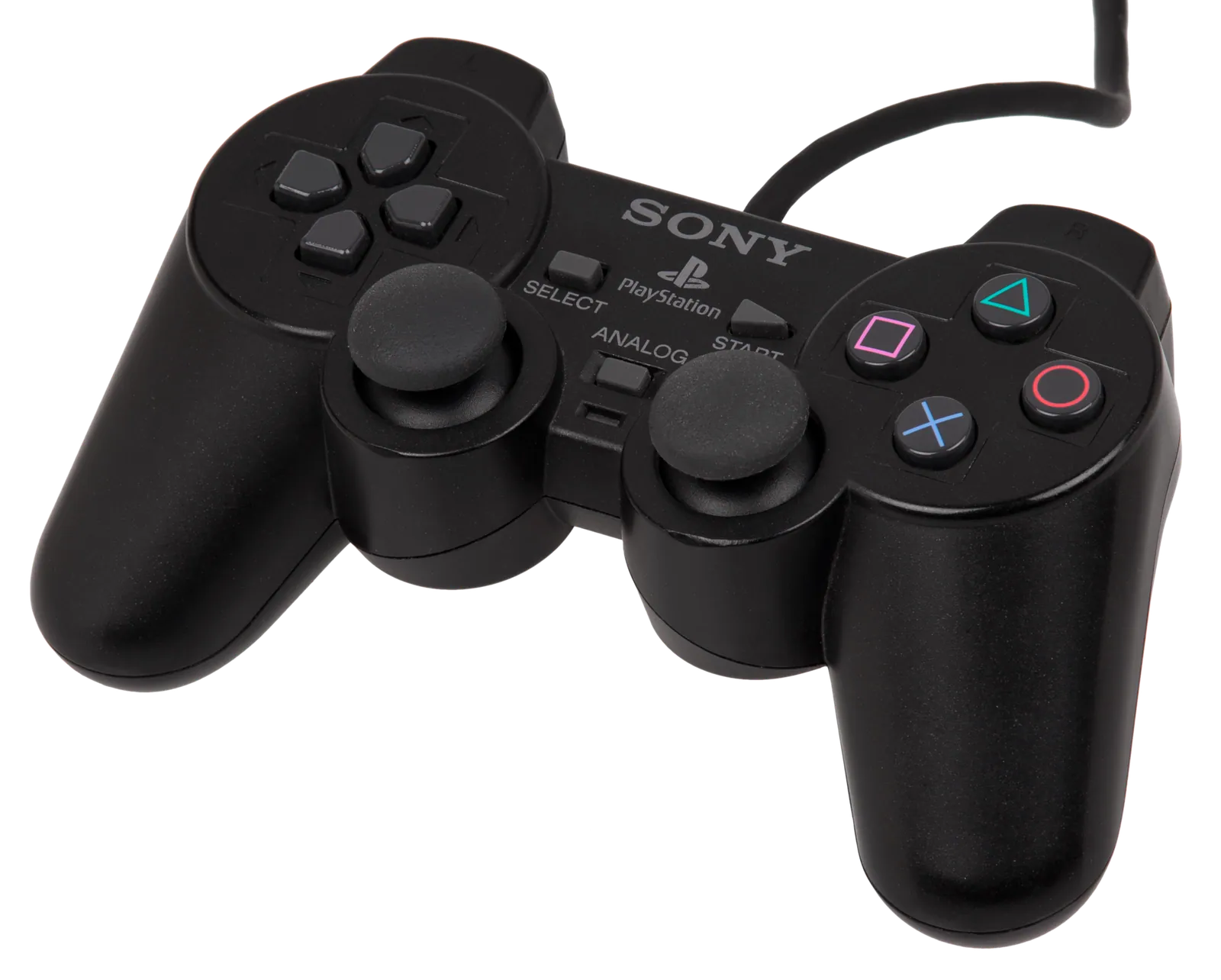
DualShock 2
Sony · Console launch 2000
Shipped with the DualShock 2 controller.
- 200112
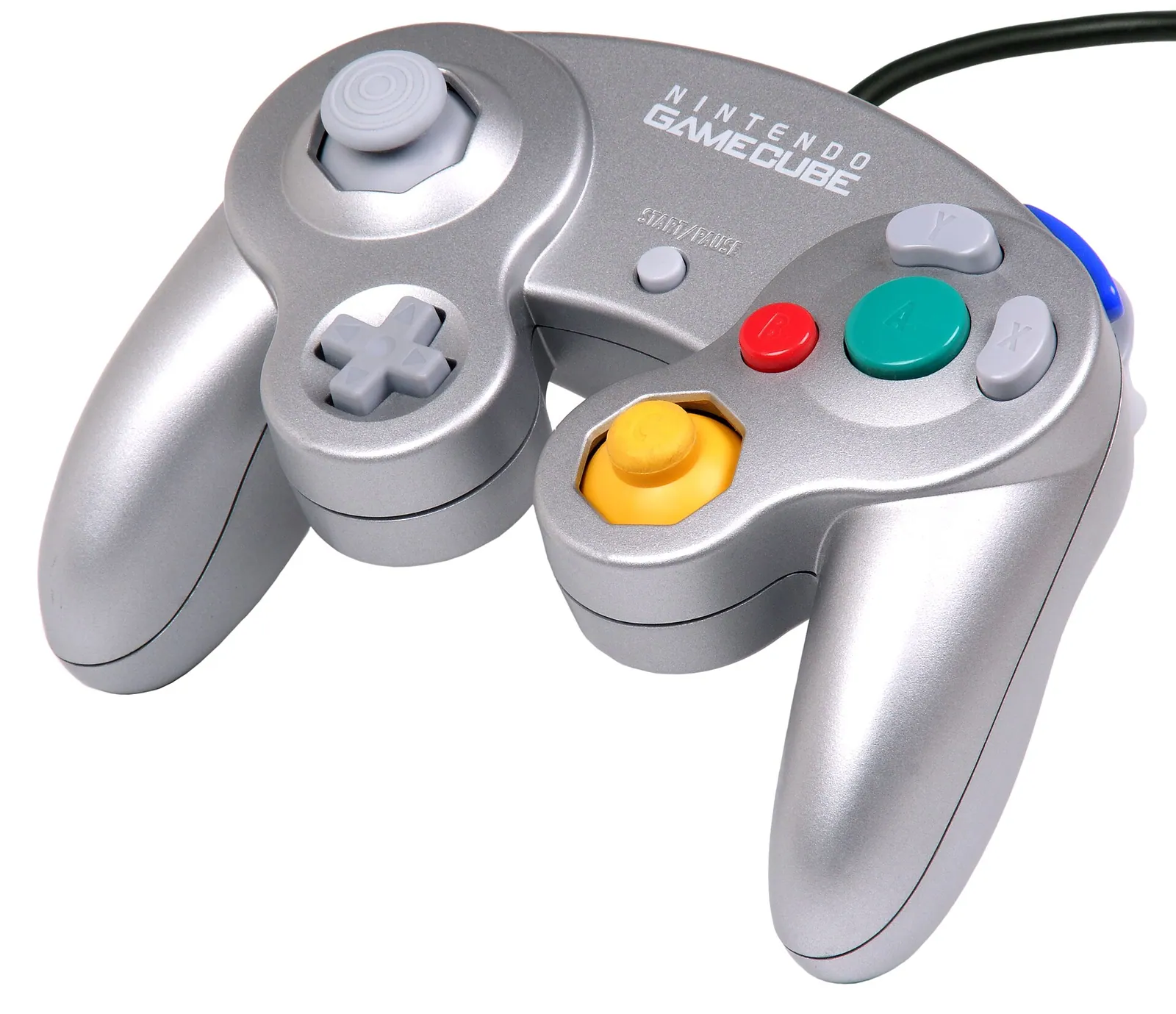
Nintendo GameCube controller
Nintendo · Console launch 2001
Centred on a large green A button, with an analog stick, a yellow C-stick, pressure-sensitive analog L/R triggers with a digital click, and built-in rumble.
14Media evolution
Cartridgeto disc.
ROM cartridges, disk cards, HuCARDs, CD-ROM and each maker's optical discs. As the vessel that carried software changed, so did the scale and shape of play.
- M-011983
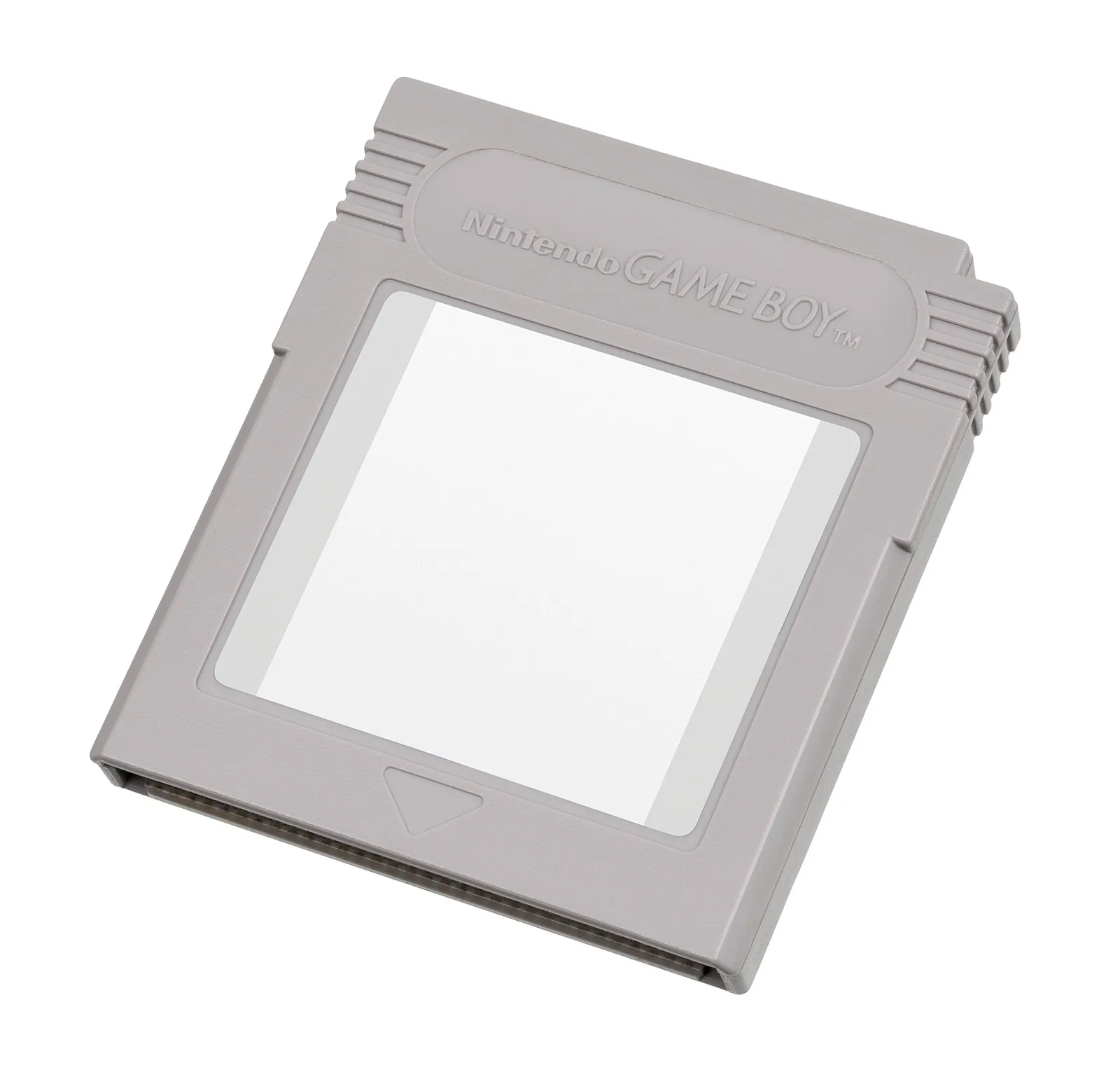
ROM cartridge
ROMカセット
A software medium housing ROM chips on a circuit board inside a plastic shell. The Famicom used this format from its 1983 launch; Nintendo's Western packaging called them 'Game Paks'.
Famicom launch title Donkey Kong: 192 kilobits (24 KB); Neo Geo cartridges later reached 716 megabits
Family Computer / Neo Geo AES / Neo Geo Pocket / WonderSwan / SG-1000
- M-021986
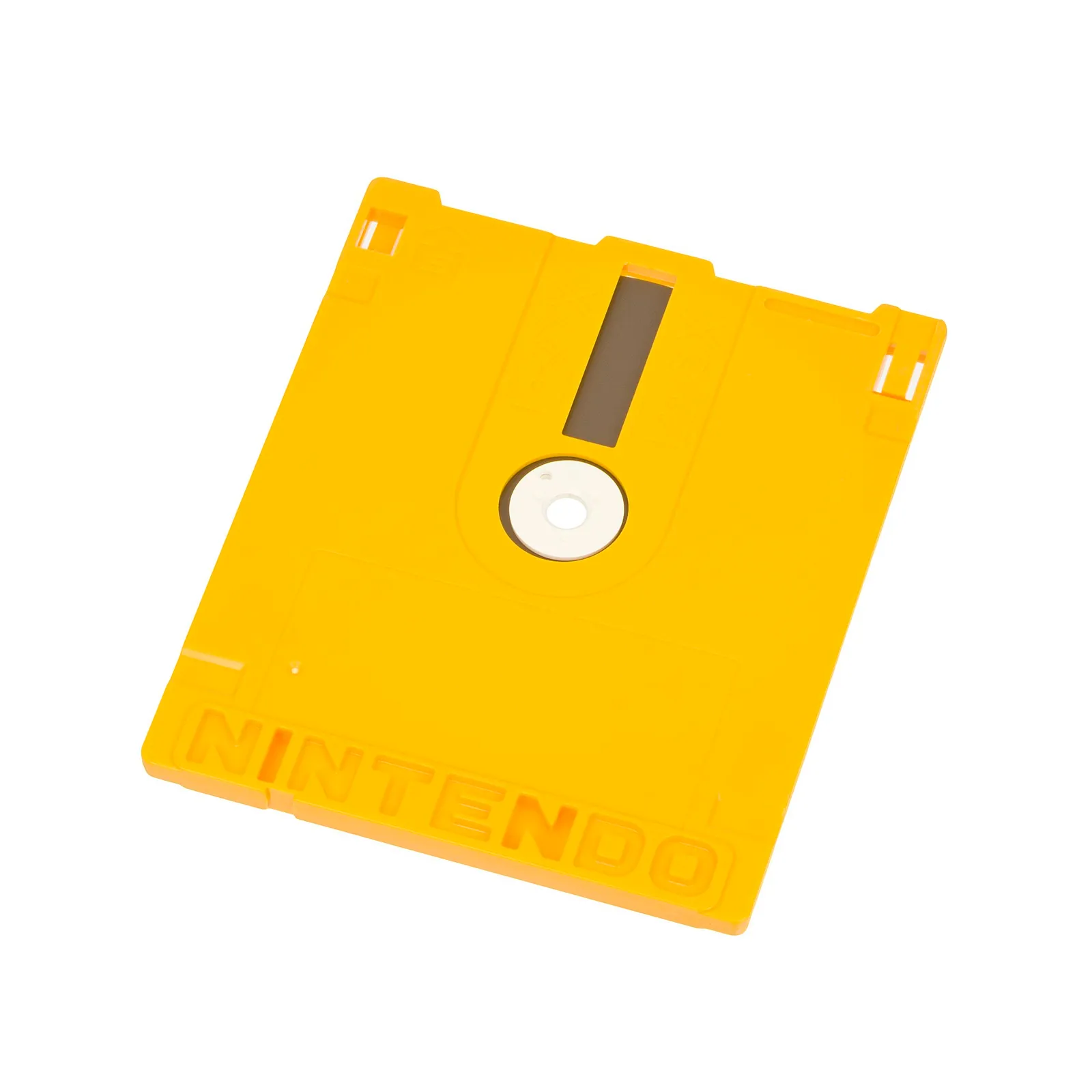
Disk Card
ディスクカード
The magnetic disk medium of the Famicom Disk System, based on Mitsumi's Quick Disk. Disks could be rewritten with a different game at in-store Disk Writer kiosks for ¥500.
56 KB per side, 112 KB per disk
Famicom Disk System
- M-031987
HuCard
HuCARD
A thin, credit-card-sized ROM cartridge designed by Hudson Soft, introduced in 1987 as the PC Engine's software medium.
1–20 Mbit (early cards up to 2 Mbit)
PC Engine
- M-041988
CD-ROM
CD-ROM
Optical discs sharing the audio CD format, used for data. Sources describe the PC Engine's CD-ROM² (1988) as the first use of CD-ROM as a home console game medium.
Approx. 540 MB (as cited for CD-ROM²)
PC Engine CD-ROM² System / PC-FX / Mega-CD / Neo Geo CD / PlayStation
- M-051994
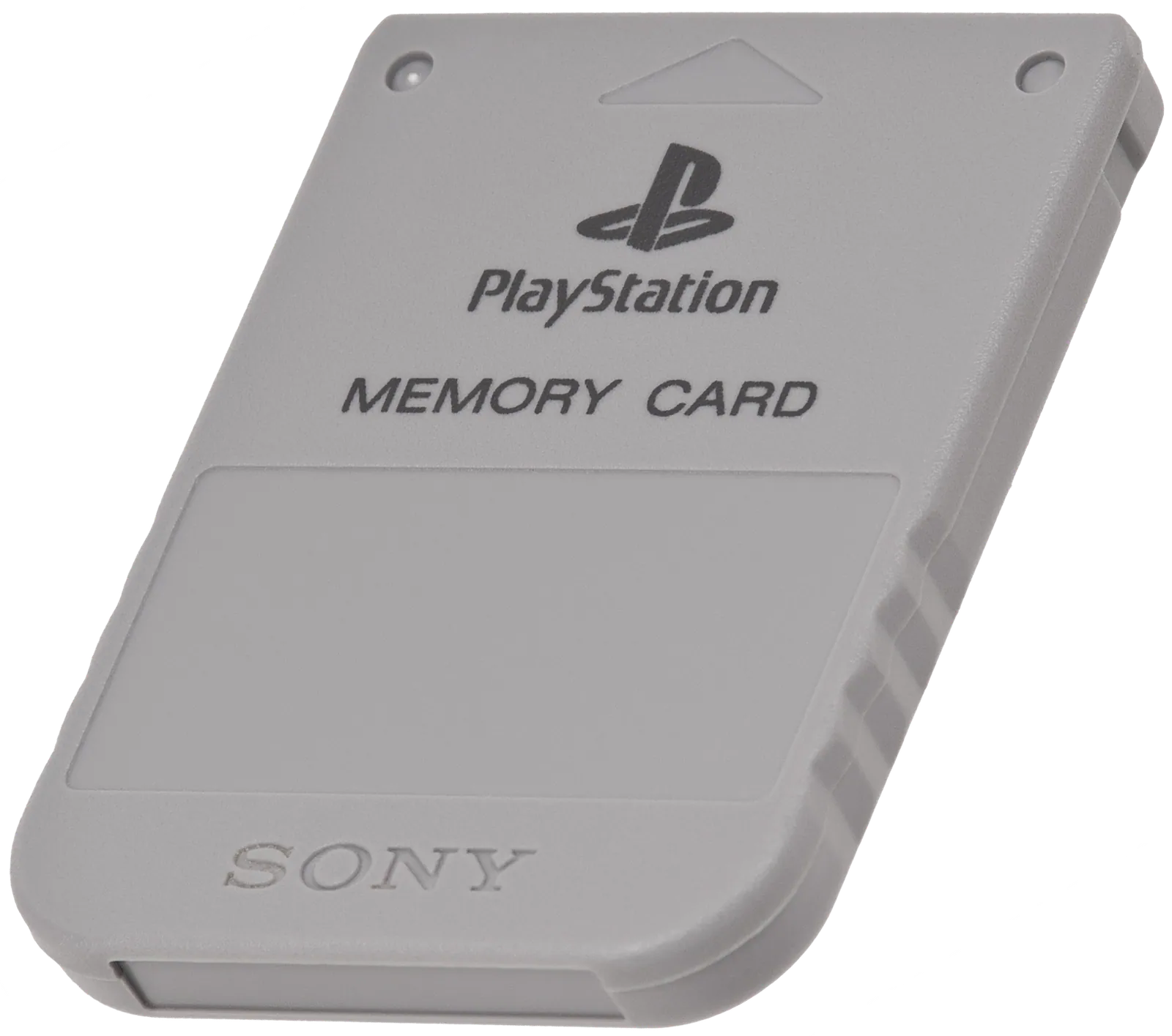
PlayStation Memory Card
メモリーカード(プレイステーション)
A flash-memory card for storing PlayStation save data. Its 1-megabit (128 KB) capacity is divided into 15 usable blocks.
128 KB (1 Mbit), 15 blocks
PlayStation / Neo Geo AES
- M-061998
GD-ROM
GD-ROM
A proprietary optical disc developed by Sega and Yamaha for the Dreamcast. It could be mass-produced at a cost similar to CD-ROM, avoiding the expense of DVD-ROM.
Up to 1 GB
Dreamcast
- M-072000
DVD-ROM
DVD-ROM
The primary software medium of the PlayStation 2, which could also play DVD films.
PlayStation 2
- M-082001
Nintendo GameCube Game Disc
ゲームキューブ用光ディスク(8cm)
An 8 cm proprietary optical disc based on miniDVD technology, created by Matsushita/Panasonic.
1.46 GB
Nintendo GameCube
- M-092004
Universal Media Disc (UMD)
UMD(ユニバーサル・メディア・ディスク)
A roughly 64 mm optical disc developed by Sony for the PSP, used for games as well as films and music.
Up to 1.8 GB (dual-layer); 900 MB single-layer
PlayStation Portable
Years are the Japanese launch year of the console that used each format, per sources. Formats without a verified photograph are shown as diagrams.
15Handhelds
Portableworlds.
From the living-room television to the palm of the hand. Small battery-powered screens changed where and when play could happen.
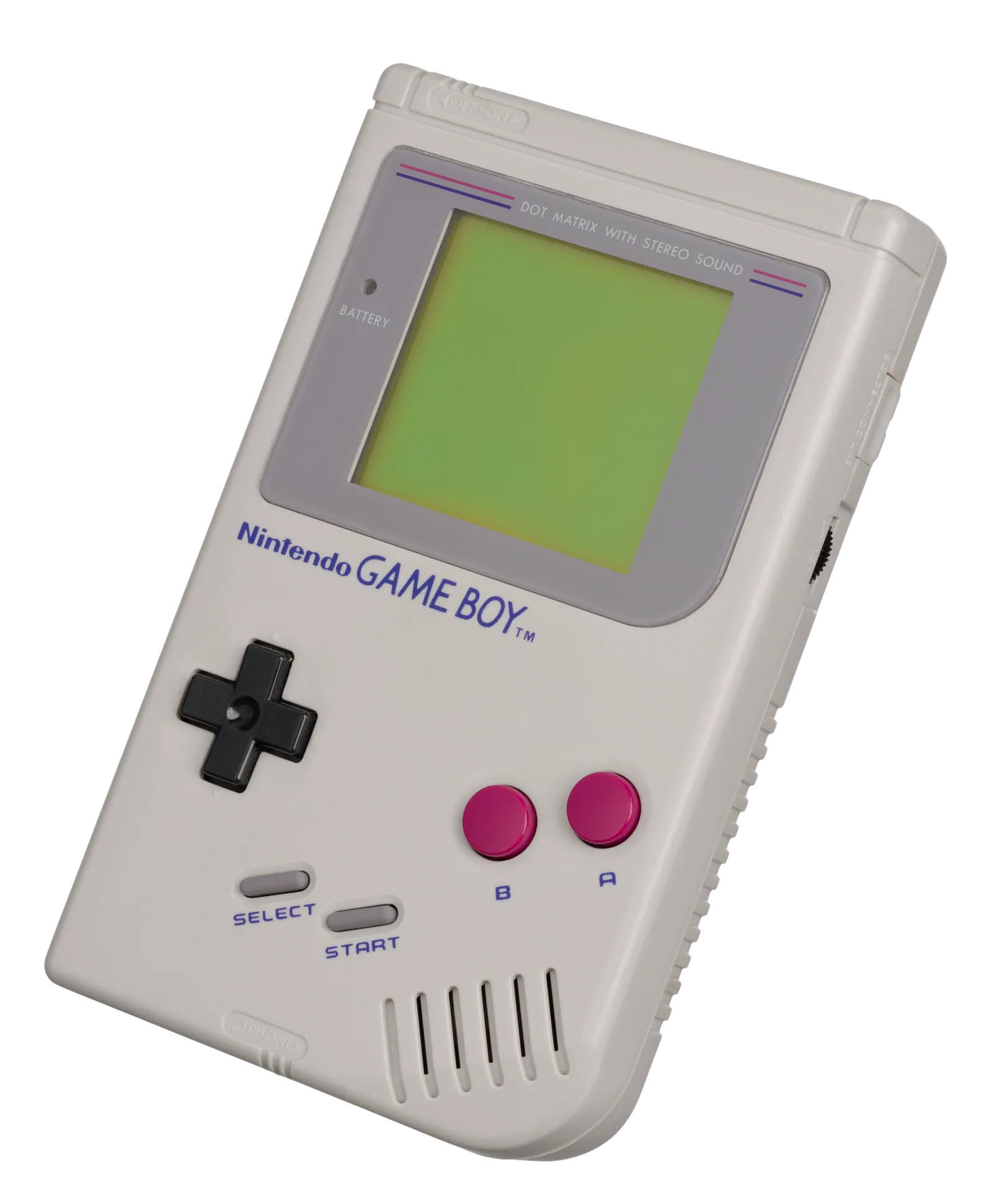
Game Boy
1989ゲームボーイ
Nintendo · JP 1989.04.21
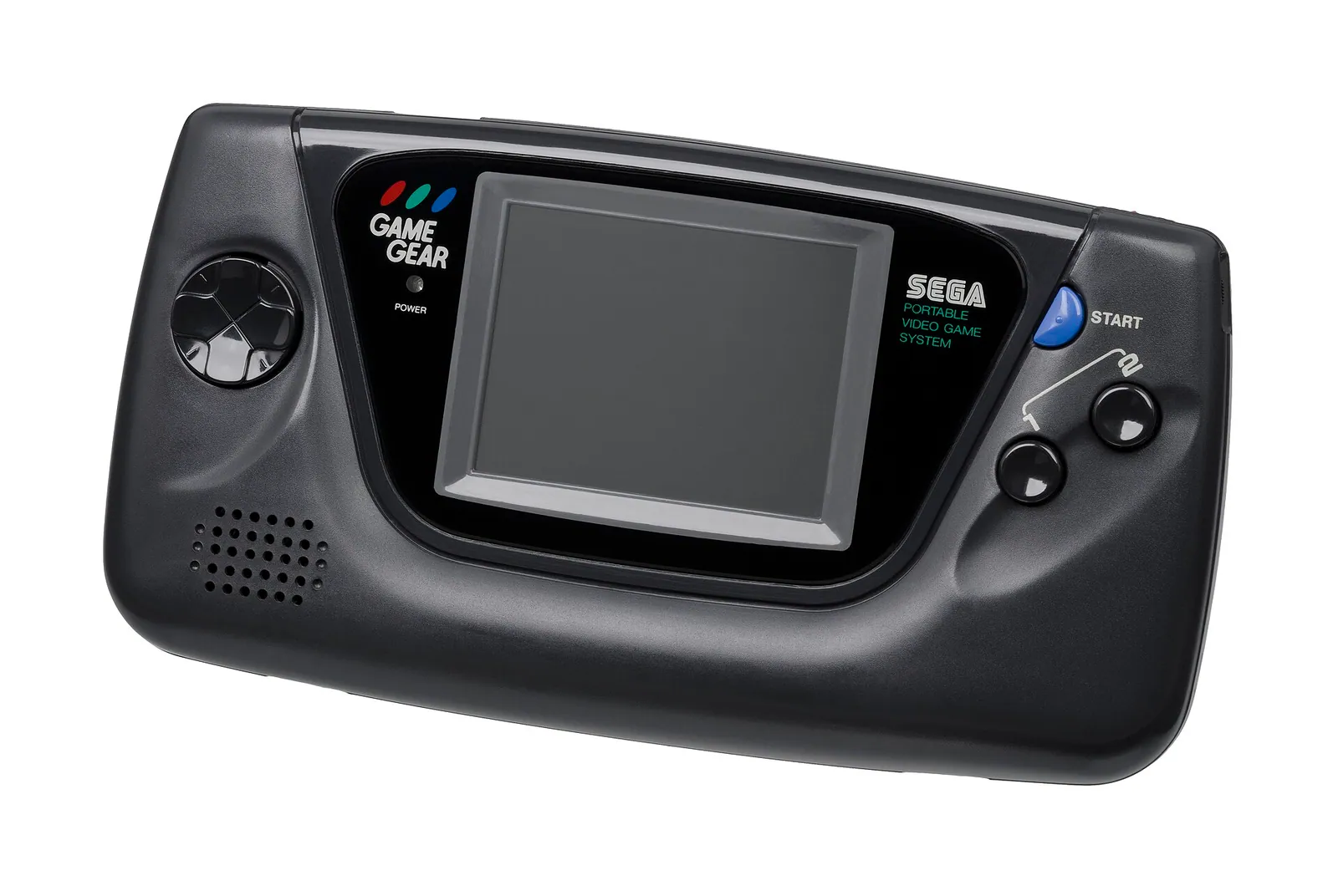
Game Gear
1990ゲームギア
SEGA · JP 1990.10.06
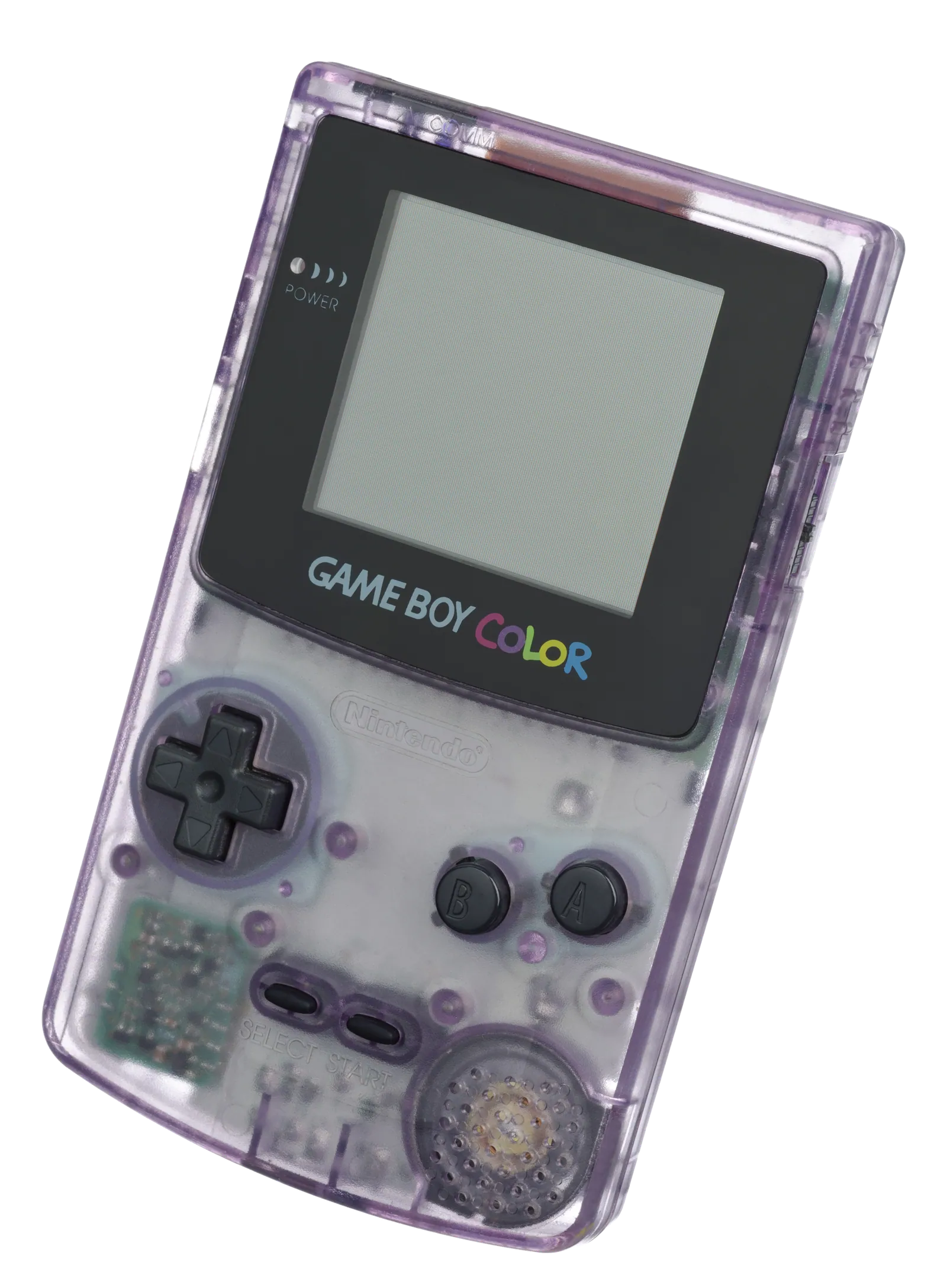
Game Boy Color
1998ゲームボーイカラー
Nintendo · JP 1998.10.21
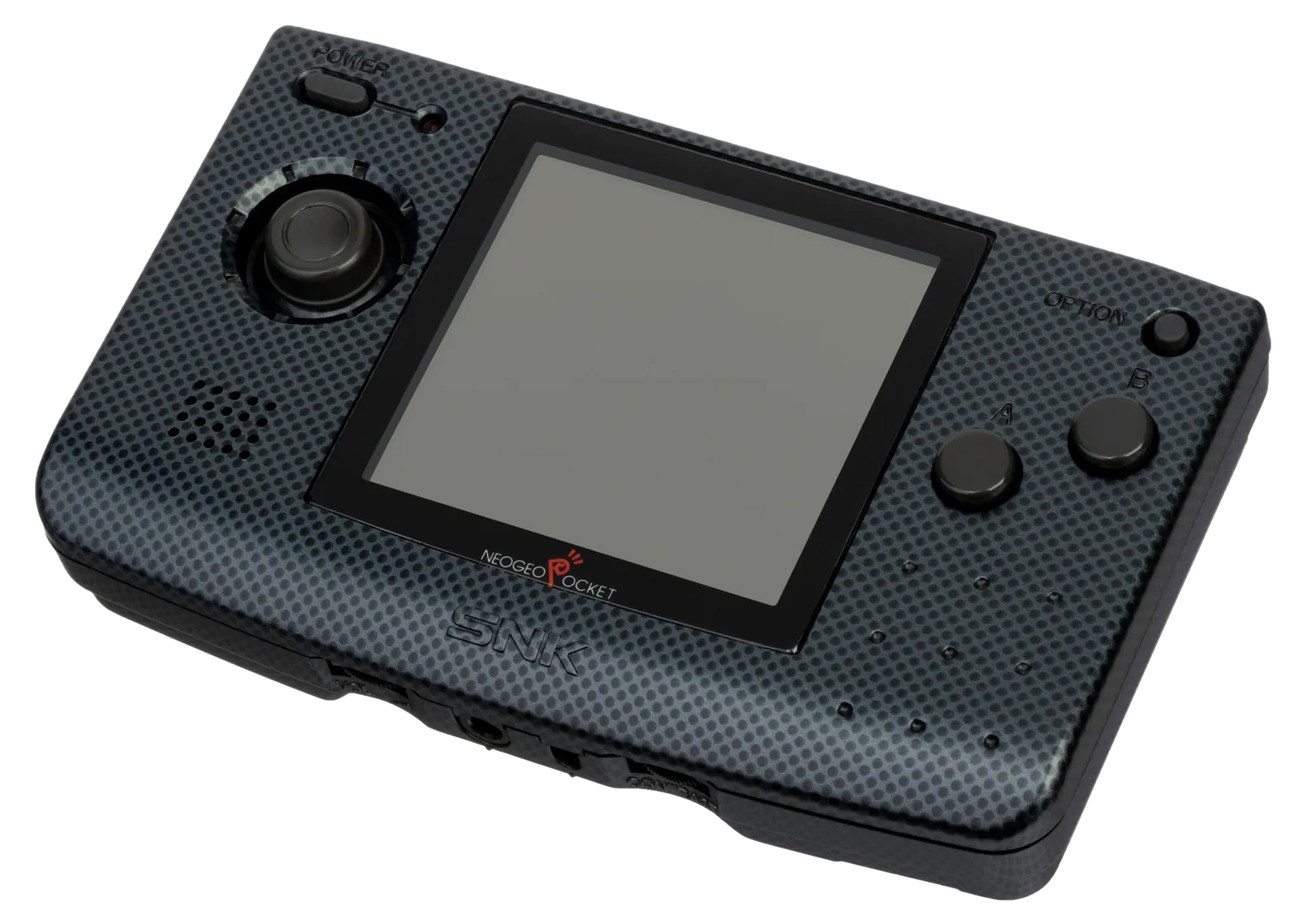
Neo Geo Pocket
1998ネオジオポケット
SNK · JP 1998.10.28
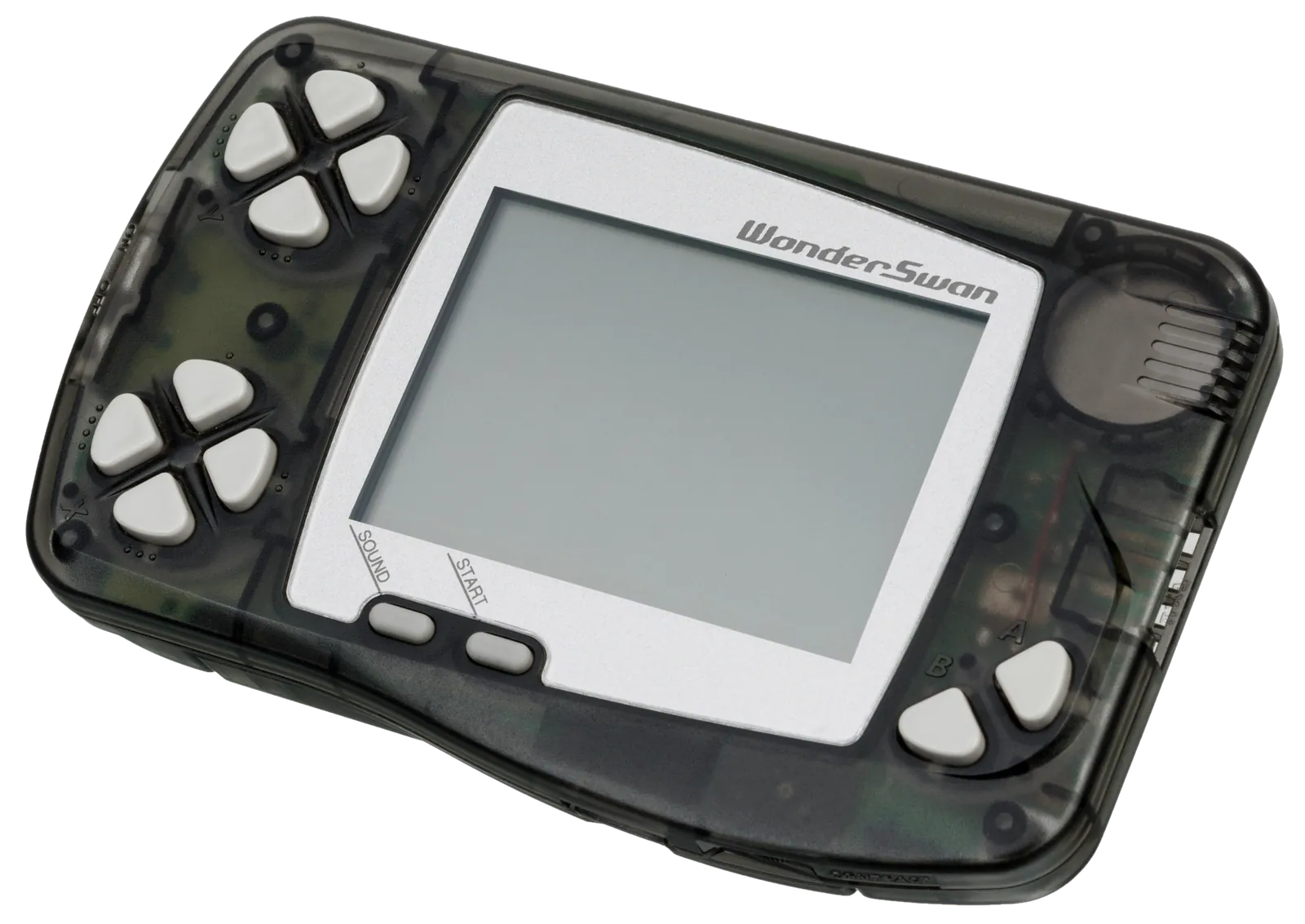
WonderSwan
1999ワンダースワン
Bandai · JP 1999.03.04
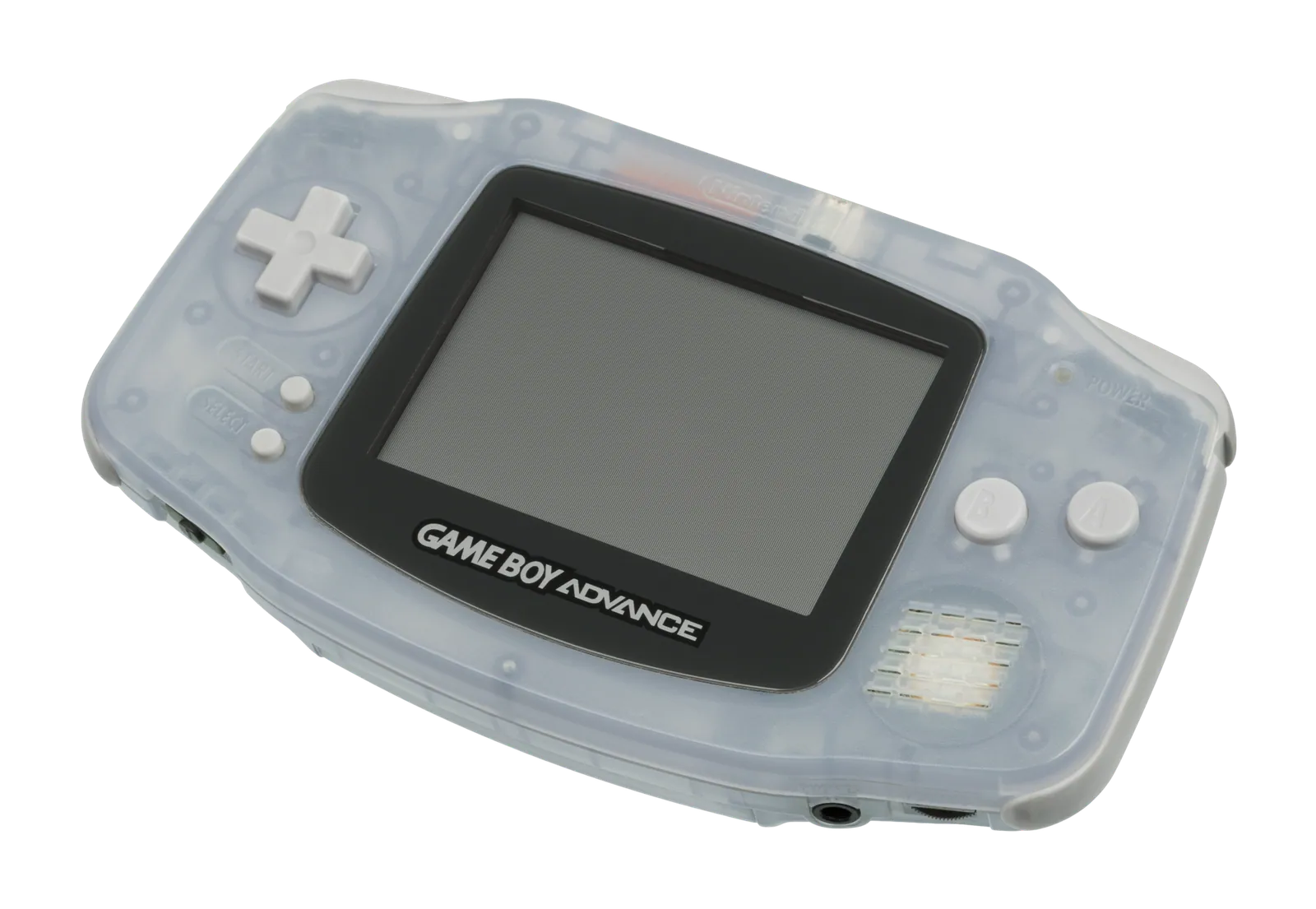
Game Boy Advance
2001ゲームボーイアドバンス
Nintendo · JP 2001.03.21
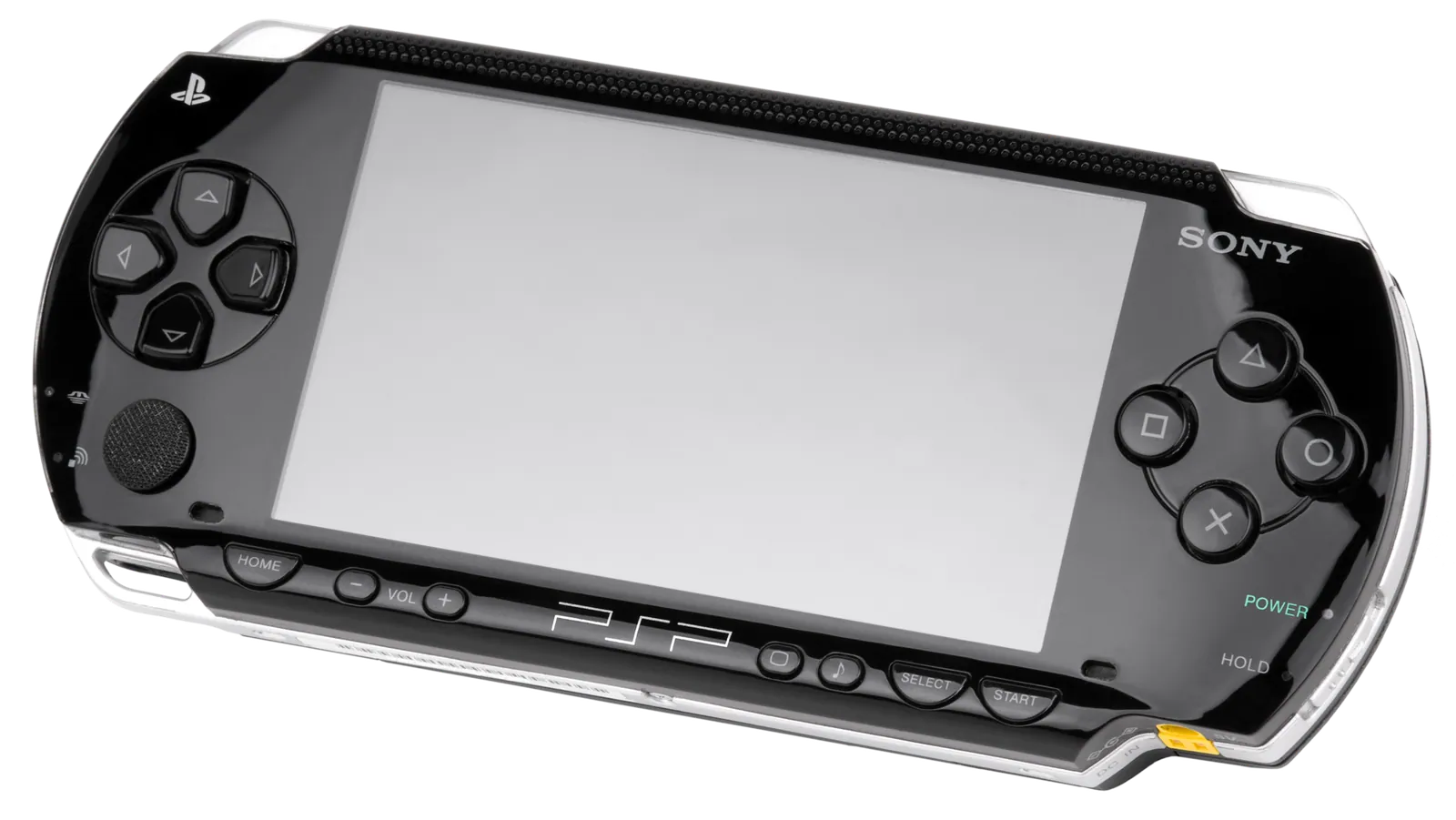
PlayStation Portable
2004プレイステーション・ポータブル
Sony · JP 2004.12.12