Story
Cartridge to disc
カセットから、ディスクへ
How changes in the vessel that carried software reshaped the scale and form of play.
14Media evolution
Cartridgeto disc.
ROM cartridges, disk cards, HuCARDs, CD-ROM and each maker's optical discs. As the vessel that carried software changed, so did the scale and shape of play.
- M-011983
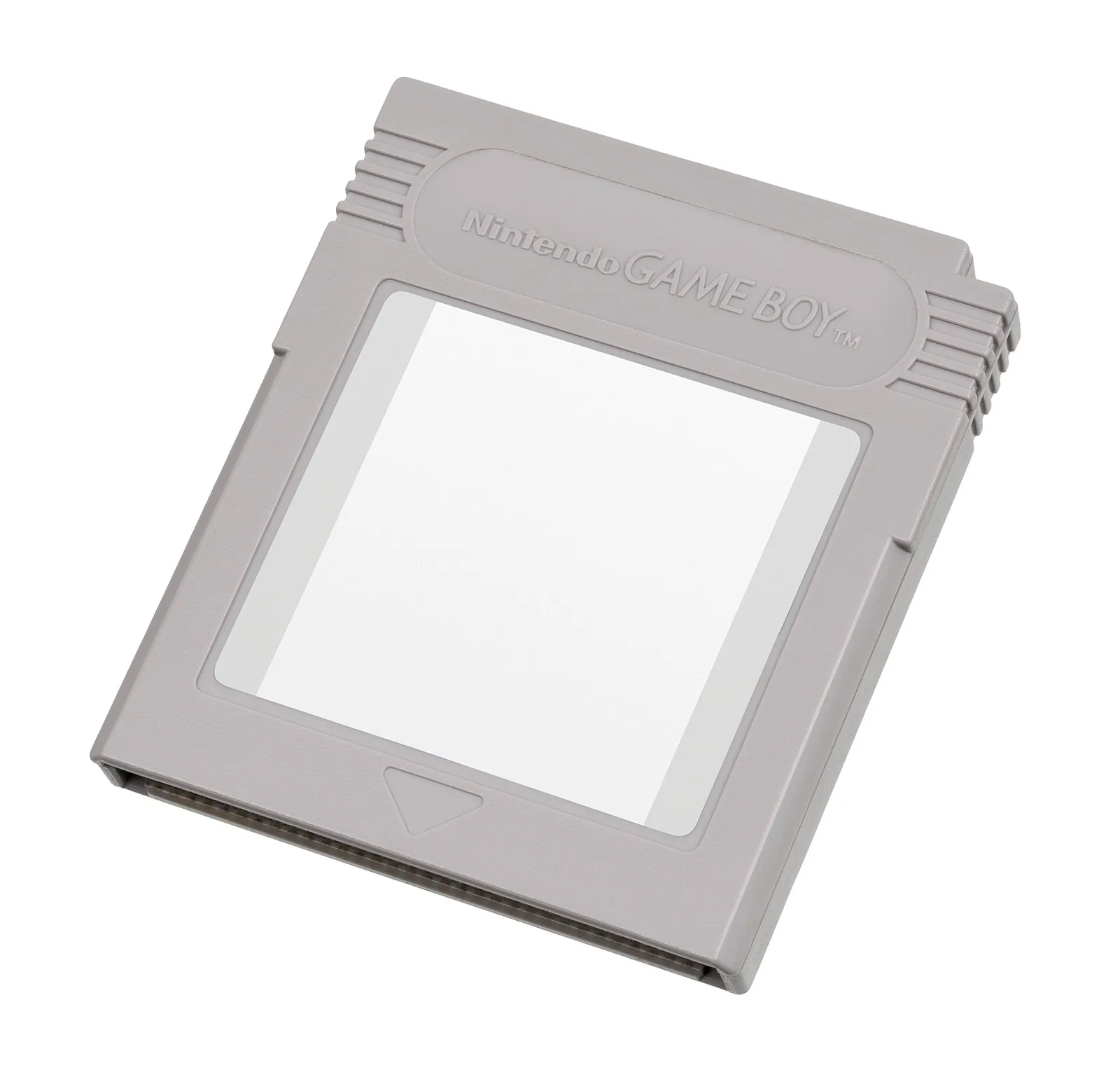
ROM cartridge
ROMカセット
A software medium housing ROM chips on a circuit board inside a plastic shell. The Famicom used this format from its 1983 launch; Nintendo's Western packaging called them 'Game Paks'.
Famicom launch title Donkey Kong: 192 kilobits (24 KB); Neo Geo cartridges later reached 716 megabits
Family Computer / Neo Geo AES / Neo Geo Pocket / WonderSwan / SG-1000
- M-021986
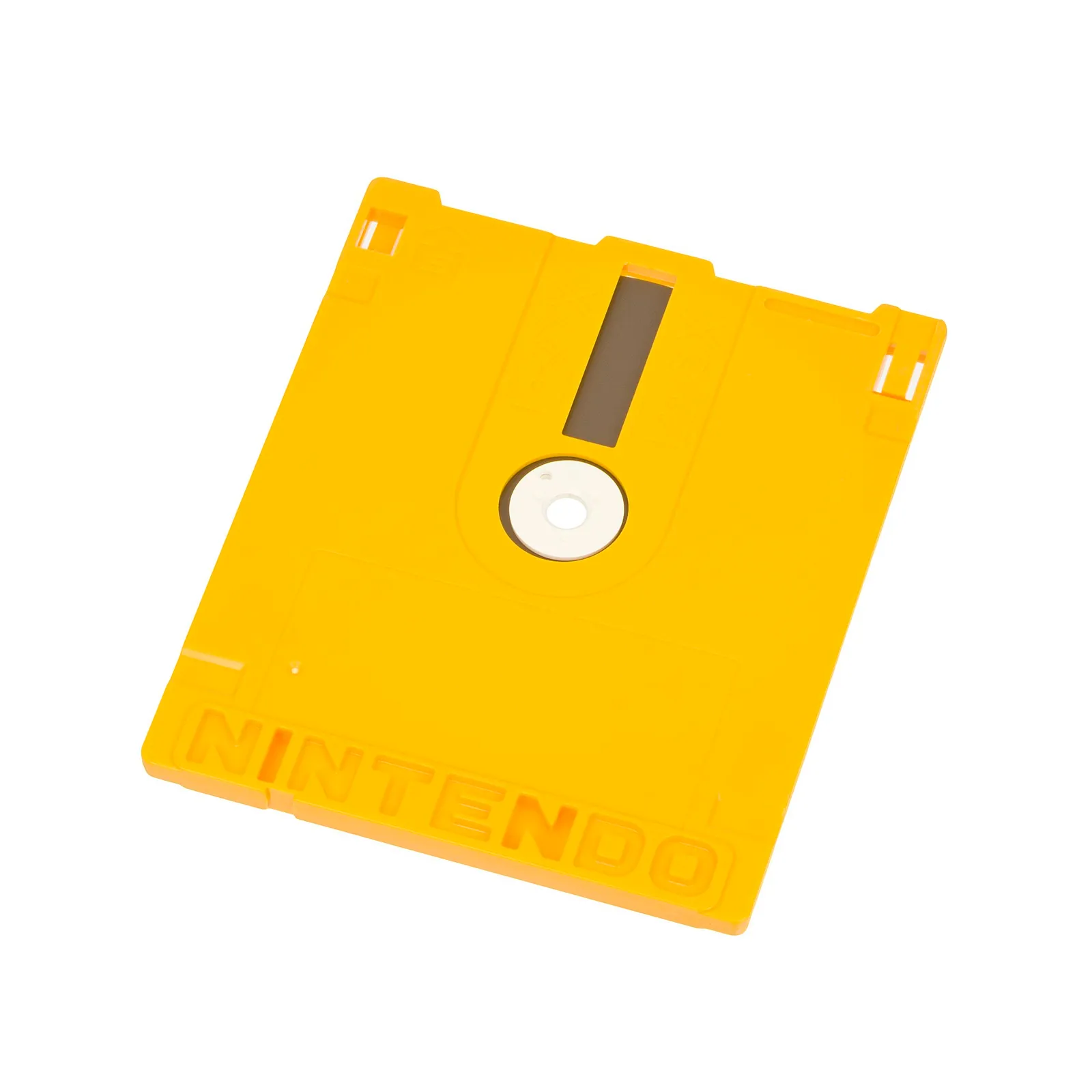
Disk Card
ディスクカード
The magnetic disk medium of the Famicom Disk System, based on Mitsumi's Quick Disk. Disks could be rewritten with a different game at in-store Disk Writer kiosks for ¥500.
56 KB per side, 112 KB per disk
Famicom Disk System
- M-031987
HuCard
HuCARD
A thin, credit-card-sized ROM cartridge designed by Hudson Soft, introduced in 1987 as the PC Engine's software medium.
1–20 Mbit (early cards up to 2 Mbit)
PC Engine
- M-041988
CD-ROM
CD-ROM
Optical discs sharing the audio CD format, used for data. Sources describe the PC Engine's CD-ROM² (1988) as the first use of CD-ROM as a home console game medium.
Approx. 540 MB (as cited for CD-ROM²)
PC Engine CD-ROM² System / PC-FX / Mega-CD / Neo Geo CD / PlayStation
- M-051994
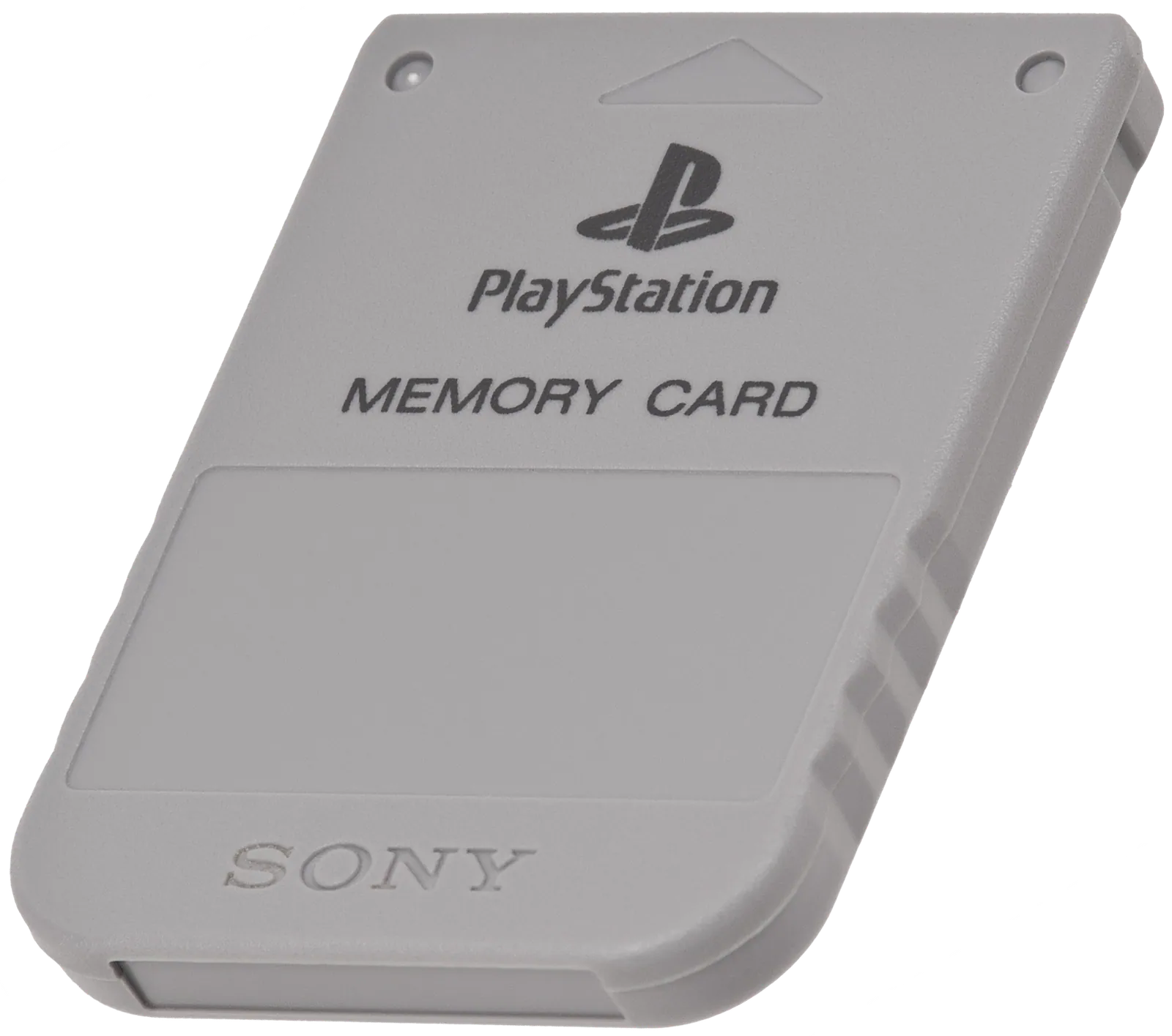
PlayStation Memory Card
メモリーカード(プレイステーション)
A flash-memory card for storing PlayStation save data. Its 1-megabit (128 KB) capacity is divided into 15 usable blocks.
128 KB (1 Mbit), 15 blocks
PlayStation / Neo Geo AES
- M-061998
GD-ROM
GD-ROM
A proprietary optical disc developed by Sega and Yamaha for the Dreamcast. It could be mass-produced at a cost similar to CD-ROM, avoiding the expense of DVD-ROM.
Up to 1 GB
Dreamcast
- M-072000
DVD-ROM
DVD-ROM
The primary software medium of the PlayStation 2, which could also play DVD films.
PlayStation 2
- M-082001
Nintendo GameCube Game Disc
ゲームキューブ用光ディスク(8cm)
An 8 cm proprietary optical disc based on miniDVD technology, created by Matsushita/Panasonic.
1.46 GB
Nintendo GameCube
- M-092004
Universal Media Disc (UMD)
UMD(ユニバーサル・メディア・ディスク)
A roughly 64 mm optical disc developed by Sony for the PSP, used for games as well as films and music.
Up to 1.8 GB (dual-layer); 900 MB single-layer
PlayStation Portable
Years are the Japanese launch year of the console that used each format, per sources. Formats without a verified photograph are shown as diagrams.